Incoming Quality Control
Key components such as laser sources, laser heads, guide rails, racks, motors and reducers are checked before they enter machine assembly.
GWEIKE applies a structured quality control process to laser machine production, covering incoming component inspection, production process control, pre-delivery testing, machine running tests, cutting tests and final quality reports. Each step is designed to improve machine stability, positioning accuracy, cutting performance and delivery reliability.
The process is organized around incoming quality control, production process control and pre-delivery inspection. This helps buyers understand how key components, machine assembly and final machine performance are checked before shipment.
Key components such as laser sources, laser heads, guide rails, racks, motors and reducers are checked before they enter machine assembly.
Machine bed welding, heat treatment, gantry milling, guide rail measurement and precision installation are controlled during production.
Before shipment, each machine is checked through accuracy testing, 24-hour running, cutting tests, electrical and mechanical inspection and final reporting.
Use these related videos to review GWEIKE quality control, factory environment, manufacturing experience and laser head inspection details before evaluating a machine order.
A dedicated video showing the GWEIKE laser machine quality control workflow, including inspection, production control and pre-delivery checks.
Watch on YouTube
A factory exploration video that helps buyers understand GWEIKE production environment, factory scale and manufacturing workflow.
Watch video →
A brand and manufacturing video showing GWEIKE fiber laser machine experience, production capability and R&D background.
Watch video →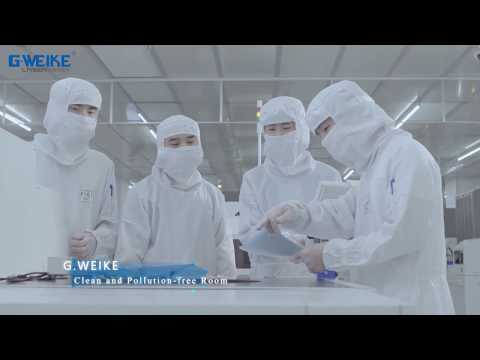
A production environment video related to dust control and clean processing conditions for sensitive laser machine components.
Watch video →
A technical video related to laser head lens cleanliness inspection and optical component quality control.
Watch video →
A laser head internal inspection video that supports the incoming quality control and laser head test section.
Watch video →Incoming quality control focuses on the quality and traceability of key components before production begins. This reduces the risk of unstable parts entering the assembly process.

Laser source performance is checked before assembly to help confirm stable power output, pulse characteristics and suitability for the selected machine configuration.

The laser head is inspected and tested for stability, assembly condition and working reliability before it enters the production process.

Guide rail flatness and straightness are checked to support smooth machine movement and stable cutting accuracy.

Rack precision and consistency are inspected to help ensure reliable motion transmission between the gear and rack.

Motor and reducer performance are checked through repeated operation tests before installation and commissioning.
Key machine parts are reviewed with quality certificates and supplier documents to support traceable incoming quality control.
During production, GWEIKE controls machine bed processing, guide rail installation, gantry accuracy and transmission component installation to support stable machine operation.
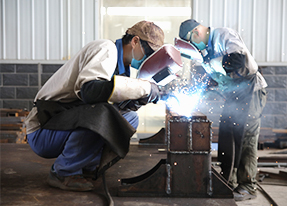
The machine bed is welded according to the required structural design to provide a stable foundation for later machining and assembly.
Heat treatment is used to help reduce internal stress in the welded machine bed and improve long-term structural stability.

Gantry milling is used to process key machine surfaces and support parallelism accuracy for the beam and machine bed.

Guide rail geometry is checked with measuring tools such as a collimator to help control perpendicularity and installation accuracy.

The gantry and related structure are checked for parallelism and installation condition before final assembly.
Guide rails, racks, motors and reducers are installed according to the production standard and checked with precision measuring tools.
Before delivery, the complete machine is tested from positioning accuracy, machine geometry, operation stability, cutting performance, electrical condition, mechanical condition and final reporting.
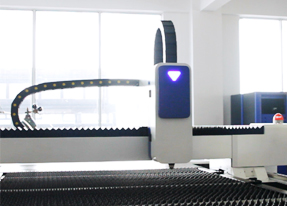
Positioning accuracy is checked and corrected with a laser interferometer before delivery.
Machine geometry, parallelism and perpendicularity are evaluated with a double ball bar test to support motion accuracy.
The machine completes a 24-hour no-load running test to verify continuous operation stability before shipment.
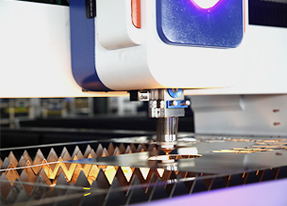
Sample cutting tests are performed with representative materials to confirm cutting performance and process settings.
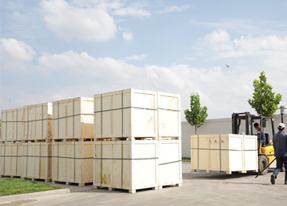
Electrical wiring, mechanical assembly, control cabinet condition and machine appearance are checked before packing.

A final quality check report records inspection results and supports delivery review before the machine leaves the factory.
The final inspection process helps confirm that the laser machine is ready for packing, shipping and installation at the customer site.
| Inspection Item | Purpose |
|---|---|
| Laser interferometer test | Verify and correct positioning accuracy |
| Double ball bar test | Check machine geometry, parallelism and perpendicularity |
| 24-hour running test | Confirm stable operation before delivery |
| Cutting test | Validate real cutting performance and process result |
| Electrical inspection | Check wiring, cabinet and control system condition |
| Mechanical inspection | Confirm assembly, transmission and moving parts |
| Appearance inspection | Review external condition before packing |
| Quality check report | Record final inspection results for delivery review |
For industrial laser equipment, buyers often need more than a quotation. Quality information can help confirm machine suitability, production readiness and delivery expectations.
Confirm laser power, working area, machine type, automation level and application requirements.
Request available inspection details or final quality information related to the machine configuration.
Share material, thickness and drawing requirements to discuss cutting tests or sample validation.
Confirm packing method, delivery preparation, training plan and after-sales support options.
Send your machine model, material, thickness, application and delivery requirements. GWEIKE can help confirm machine configuration, testing process, sample cutting result and pre-delivery inspection information.