
For most acrylic, wood, MDF, fabric and leather cutting jobs, a CO₂ laser is the practical starting point. Diode lasers can suit lighter engraving and smaller-scale work. Fiber lasers are mainly used for metal processing and selected plastic-marking applications, not general non-metal cutting. The right choice depends on the material, its finish and whether you need to cut, engrave or mark it.
Key Takeaways
- CO₂ is generally the first source to compare for regular non-metal cutting and engraving.
- Diode can fit lighter or smaller-scale work, but material response can be more sensitive to color, transparency and finish.
- Fiber should not be positioned as a general wood, MDF or acrylic cutting solution.
- Representative samples are more reliable than a power-only comparison.
Why CO₂, Diode and Fiber Lasers Behave Differently
Laser sources deliver light at different wavelengths. Materials absorb that energy differently, which is why the same wattage number does not mean the same cutting, engraving or marking result. Material color, transparency, filler, coating, thickness and surface condition can all change the outcome.
For a buying decision, the practical question is simple: which source gives the required result on your actual material at an acceptable cycle time and operating cost? A sample test is the best way to answer it.
Do not compare wattage across source types as if it were one scale. A useful comparison includes material response, beam delivery, process type and the accepted result.
CO₂ Laser: Best Starting Point for Most Non-Metal Cutting
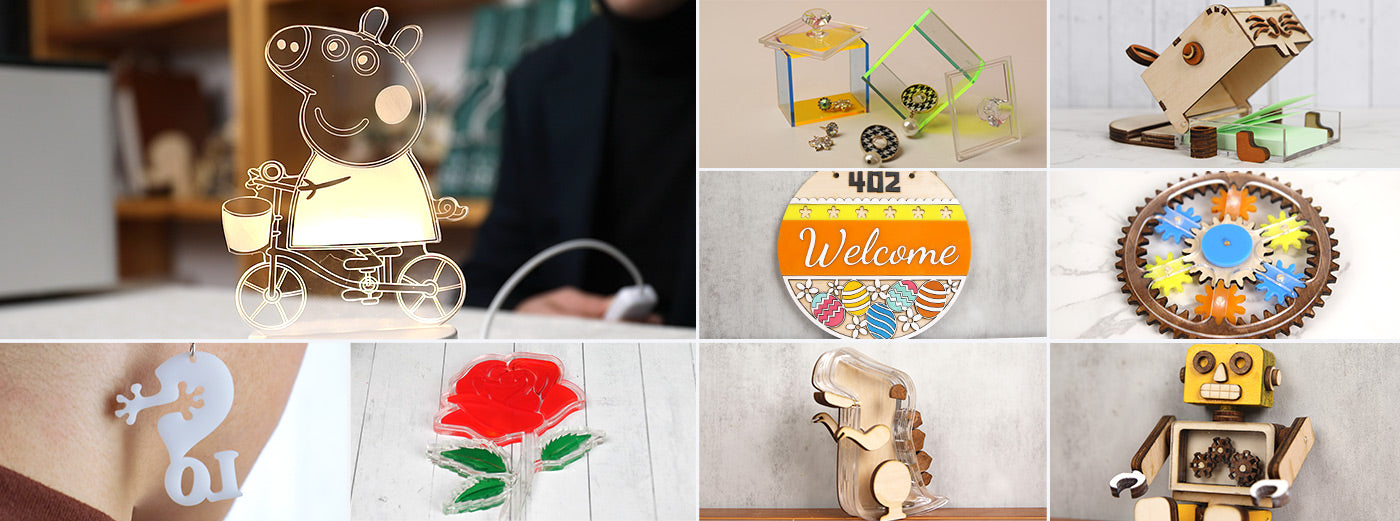
CO₂ lasers are widely used for cutting and engraving many non-metal materials, including acrylic, wood, MDF, paper, fabric and leather. They are often the relevant source to consider when the workload includes regular sheet processing, customized parts or production cutting.
| CO₂ laser is often considered for | Why it can fit | What to validate |
|---|---|---|
| Acrylic cutting and engraving | Common non-metal workflow with material-specific finish potential. | Actual acrylic type, thickness, edge requirement and sheet size. |
| Wood and MDF processing | Often suitable for cutting and engraving non-metal board materials. | Density, glue content, moisture, extraction and edge acceptance. |
| Fabric, leather, paper and cardboard | Can support flexible-material and packaging applications. | Material coating, handling, fume control and fire-safe workflow. |
| Regular non-metal production | Can be configured around bed size, material flow and repeat work. | Cycle time, loading, maintenance and operator workflow. |
For machine selection, read the CO₂ Laser Cutting Machine Buyer’s Guide. For controlled material testing, use the CO₂ laser cutting parameters guide.
Diode Laser: Where It Fits and Where It Does Not
Diode lasers are often considered for smaller-scale engraving, lighter-duty work and applications where a compact system is acceptable. Their practical performance can be strongly affected by material color, transparency and surface finish.
- Consider diode for light engraving and smaller work areas when output requirements are modest.
- Test colored, dark, clear and reflective materials separately; they may not respond the same way.
- Do not assume a diode system is the equivalent of a production CO₂ workflow for regular acrylic, wood or MDF cutting.
- Evaluate total cycle time, material handling, extraction and repeatability—not only initial machine price.
Important: “works on a sample” and “supports a stable production process” are different standards. Use the same material, files and quality checks that your business will use after purchase.
Fiber Laser: Strong for Metal, Selective for Non-Metal Marking
Fiber lasers are primarily associated with metal cutting, welding and marking. For non-metal applications, they may be relevant for selected plastic-marking jobs, depending on the polymer and required mark. They should not be presented as the standard choice for wood, MDF or transparent acrylic cutting.
| Fiber laser use case | Typical fit | Not the usual starting point for |
|---|---|---|
| Metal sheet, tube and parts | Core fiber-laser application area. | General non-metal cutting. |
| Serial numbers, codes and industrial marks | Can suit selected metal and plastic-marking applications. | Clear acrylic cutting or wood/MDF cutting. |
| Plastic marking | Material-dependent; evaluate mark contrast and heat response. | Assuming all plastics respond equally. |
For the marking route, see the Fiber Laser Marking Guide and Fiber vs. CO₂ Laser Marking Machine.
Material-by-Material Comparison
This table is a starting point for conversation and testing. It does not replace a sample trial on the actual material.
| Material or job | CO₂ | Diode | Fiber | Buying advice |
|---|---|---|---|---|
| Clear acrylic cutting | Strong starting point. | Often limited; test carefully. | Not a typical cutting choice. | Start with CO₂ and confirm edge quality. |
| Colored acrylic | Strong starting point. | May work depending on color and finish. | Not typical for cutting. | Test the actual color and thickness. |
| Wood | Strong starting point. | Can suit some light work. | Not typical. | Choose by output, sheet size and finish. |
| MDF | Strong starting point for many jobs. | May be limited for regular production. | Not typical. | Plan extraction and test board variation. |
| Fabric or leather | Often suitable, subject to material review. | Case-dependent. | Not typical. | Test finish, handling and fumes. |
| Paper or cardboard | Often suitable. | Can fit light work. | Not typical. | Validate safety and production workflow. |
| Plastic marking | Suitable for some materials. | Suitable for some light applications. | Strong for selected polymers. | Choose by mark contrast and required durability. |
| Metal sheet or tube cutting | Not the usual standard choice. | Not a production starting point. | Strong starting point. | Compare fiber-laser systems. |
Cutting, Engraving and Marking Are Different Jobs
Many buying mistakes come from treating these three processes as interchangeable. They require different results, quality checks and sometimes different laser sources.
| Process | What the result should do | Typical question to ask |
|---|---|---|
| Cutting | Separates material through its thickness. | Is the edge quality, kerf and cycle time acceptable? |
| Engraving | Removes or changes a surface layer to create a pattern or depth. | Is the detail, depth and contrast consistent? |
| Marking | Creates readable information such as text, codes or identifiers. | Is the mark durable, legible and suitable for the material? |
For a fuller explanation, see Laser Marking vs. Laser Engraving vs. Laser Etching.
What to Compare Before Buying
- Main material, supplier, colors, coatings and regular thickness range.
- Whether the job is cutting, engraving, marking or a combination.
- Largest routine sheet or part size and the expected daily output.
- Required edge quality, engraving depth or mark contrast.
- Material handling, ventilation, extraction and workplace safety plan.
- Representative samples for a production-like test.
- Service, maintenance, spare-parts and operator-training requirements.
- Realistic operating cost, including labor, supporting equipment and downtime.
Need to compare sources on your actual materials? Provide representative samples, required output and the intended cutting, engraving or marking result. GWEIKE can help identify the relevant source and sample-test criteria.
Explore CO₂ Laser MachinesWhen to Consider UV Laser Instead
Some plastic-marking jobs require a comparison with UV laser, especially where low heat effect, fine detail or a particular surface response matters. That is a marking decision, not a reason to replace CO₂ as the default starting point for acrylic, wood or MDF cutting.
For this narrower use case, read Laser Marking on Plastic: CO₂ vs. UV.
CO₂ vs. Diode vs. Fiber Laser FAQ
Is a CO₂ or diode laser better for acrylic?
CO₂ is commonly the practical starting point for acrylic cutting and engraving. Diode performance can depend strongly on acrylic color, transparency and the required job.
Can a fiber laser cut wood or MDF?
Fiber laser is not the usual starting point for wood or MDF cutting. It is mainly used for metal processing and selected marking applications.
Is a diode laser enough for small business production?
It depends on the material, required output, quality standard and work area. Compare complete cycle time and repeatability on representative samples.
Which laser is best for plastic marking?
The answer depends on the polymer and required mark. Fiber, CO₂ and UV can each be relevant for different materials and mark requirements.
Should I test my materials before choosing a laser source?
Yes. A representative sample test is the reliable way to confirm cutting, engraving or marking quality for the actual material and finish.