
Contents
Singapore's industrial manufacturing base creates consistent, growing demand for precision laser processing services. The companies that source these services most effectively evaluate suppliers not just on price, but on material capability, process integration, and response speed.
For procurement managers and engineering teams sourcing custom laser-cut components in Singapore, the challenge is not simply finding a supplier. It is finding one whose process capability, material range, and communication reliability actually match the complexity of modern industrial projects.
Why Singapore's Industrial Sector Demands More from Laser Processing
Singapore's manufacturing base is compact but sophisticated. The industries driving demand for precision laser processing include:
Semiconductor & Electronics
Equipment housings, precision brackets, shielding components, and electronic assembly fixtures requiring tight tolerances, clean edges, and specialty material compatibility.
Marine & Offshore Engineering
Structural flanges, pipe components, custom brackets, and corrosion-resistant parts across carbon steel, stainless steel, and duplex alloy grades.
Medical Device & Healthcare
Stainless steel components, clean-room compatible parts, and assemblies with strict surface finish requirements and documented material traceability.
Automation & Robotics
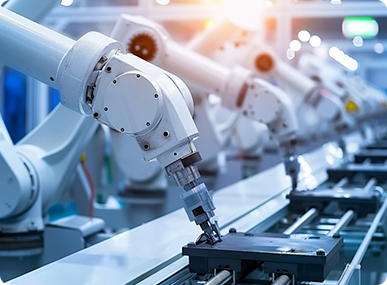
Frames, housings, precision sheet metal structures, and integration brackets requiring both cutting accuracy and consistent batch repeatability.
Construction & Steel Structures
Structural steel elements, architectural metalwork, and custom fabricated assemblies for Singapore's active construction sector.
Common Pattern
Engineering teams need a processing partner capable of handling multiple steps — cutting, engraving, bending, finishing — within a single engagement.
What Types of Laser Processing Do Singapore Companies Typically Outsource?
The most commonly outsourced laser processing tasks in Singapore's industrial sector cover a range of materials and process types. Understanding what each requires helps buyers evaluate a service partner accurately.
Precision Metal Cutting
Fiber laser cutting of carbon steel, stainless steel, aluminium, brass, copper, and specialty alloys is the largest category by volume. Industrial buyers sourcing metal cutting services in Singapore typically specify sheet thickness ranges, tolerance requirements, edge quality standards, and whether cut edges require deburring before assembly.
For high-volume production runs, the key evaluation criteria are dimensional repeatability and consistent edge quality across a full batch — not just on the first-off sample.
Glass Cutting for Technical Applications
Cutting for technical applications — optical components, sensor covers, display panels, and equipment glazing — demands both equipment precision and material knowledge. Buyers sourcing glass cutting for electronics or instrumentation applications typically need clean break edges, controlled chip-out, and compatibility with borosilicate, quartz, microcrystalline, and other specialty glass types.
PI Film and Flexible Material Cutting
Polyimide (PI) films, electromagnetic shielding films, and flexible printed circuit (FPC) outlines are common in semiconductor and electronics assembly. Laser cutting is preferred because mechanical cutting introduces stress and deformation at the cut edge. Companies sourcing PI film cutting for electronics components should confirm that the service provider has experience with the specific film grades they use, including both black and white PI variants, and with FPC outline tolerances.
Non-Metal Material Cutting
Many industrial projects involve acrylic panels, gasket materials, rubber seals, composite laminates, leather, fabric, and wood components. Non-metal laser cutting is often needed for secondary components, packaging inserts, protective pads, and decorative or labeling elements that accompany a metal assembly.
Laser Engraving and Marking
Permanent marking on metal components — serial numbers, part codes, logos, QR codes, compliance markings — is a standard requirement across most industrial sectors in Singapore. Laser engraving on metals and non-metals provides traceability without added consumables, without surface damage from stamping, and with depth and contrast quality that holds up to handling and environmental exposure.
Laser Cleaning
Pre-weld cleaning, rust removal, oxide layer removal, and surface preparation for coating are increasingly handled by laser rather than chemical or abrasive methods. Industrial buyers choosing laser cleaning services gain the advantages of a dry, chemical-free process with no substrate damage — particularly important for stainless steel components and precision surfaces.
CNC Bending, Welding, Polishing, and Assembly
For buyers who need a complete fabricated part rather than a flat-cut blank, the ability to combine laser cutting with CNC bending, welding, deburring, polishing, and structural assembly in a single engagement saves significant time and reduces the coordination burden on internal teams. Multi-process capability is one of the most consistent differentiators between general-purpose cutting shops and serious fabrication partners.
What to Look for When Evaluating a Singapore Laser Processing Partner
Based on what industrial buyers in Singapore's manufacturing sectors consistently prioritize, the following criteria are worth applying systematically when shortlisting a processing partner.
Material Capability Breadth
A supplier who can only process carbon steel and stainless steel will not serve well on projects involving aluminium alloys, copper, brass, titanium, or specialty electronic materials. Check whether the provider supports a wide range of materials across metals, specialty alloys, glass, films, and non-metals — and whether their team has actual experience with the specific grades your project requires.
Process Integration
Can they cut, mark, bend, weld, and finish within the same facility? Every hand-off between suppliers introduces risk: dimensional shift from handling, communication gaps between operators, and scheduling delays. A processing partner offering integrated multi-process capability reduces those risks significantly.
Tolerance and Quality Documentation
Industrial projects frequently require dimensional reports, first-article inspection documentation, or material certificates. Ask specifically whether the provider runs in-process dimensional checks, what measuring equipment they use, and whether they issue outgoing inspection records. This matters especially for medical, semiconductor, and aerospace-adjacent applications.
Response Speed and Prototyping Capability
In Singapore's project-driven environment, engineering teams often need prototype parts within 24–72 hours to validate a design before committing to production. A supplier's ability to respond quickly to drawing submissions and turn around prototypes efficiently is a real differentiator — not just a nice-to-have.
File Format Compatibility
Standard file formats for laser processing include DXF and DWG for 2D cutting, and STEP and IGES for 3D reference geometry. Confirm that your processing partner can accept your native CAD output without requiring manual re-drawing, which adds cost and introduces errors.
Local Communication and Coordination
For Singapore-based projects, working with a local processing partner means faster drawing review cycles, easier site visits for first-article sign-off, and more reliable coordination when engineering changes arise mid-project. Language, time zone, and physical proximity are underrated factors in projects where responsiveness matters.
From Equipment to Service: How Professional-Grade Machines Enable Better Processing
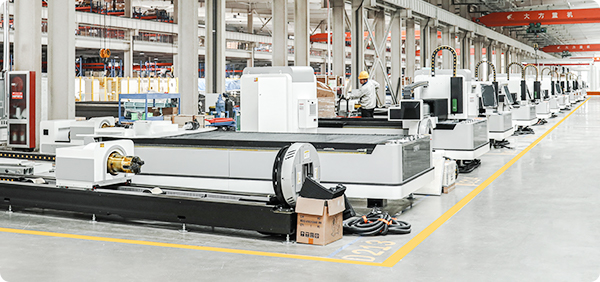
The quality of the output a laser processing service can deliver is directly linked to the capability of the equipment they operate. Industrial-grade fiber laser cutting machines — the type manufactured by companies like GWEIKE and used widely in professional fabrication shops — offer the beam quality, cutting speed, and positional accuracy that precision industrial parts require.
The gap between a professional processing shop running industrial fiber laser equipment and a general-purpose workshop running lower-specification machines is visible in edge quality, dimensional consistency, and the ability to hold tight tolerances across a full production batch.
Similarly, for glass and film cutting, the difference between a shop with purpose-configured equipment for technical materials and one treating all materials the same way is significant. Specialty materials require specific laser parameters, fixture design, and operator experience that only comes from deliberate investment in the right capability.
A Local Resource for Singapore-Based Laser Processing Projects
Lumen Future — Singapore Custom Fabrication
For engineering teams and procurement managers in Singapore looking for a local fabrication partner with broad laser processing capability, Lumen Future is a Singapore-based custom manufacturing service provider operating from Ubi Tech Park.
Their service scope covers the full range of laser processing needs common in Singapore's industrial sector — all under one roof:
They support over 100 materials including common structural metals, specialty alloys, electronic-grade glass, PI films, FPC, and a full range of non-metal materials. File formats accepted include STEP, IGES, DXF, and DWG.
The facility is positioned to serve both prototyping and production requirements for clients across semiconductor, electronics, marine, automation, construction, and medical industries throughout Singapore and the ASEAN region.
Summary
Singapore's industrial manufacturing base creates consistent, growing demand for precision laser processing services across metals, glass, specialty films, and non-metals. The companies that source these services most effectively are the ones who evaluate suppliers not just on price, but on material capability breadth, process integration, quality documentation, and response speed.
Need industrial laser equipment for your fabrication shop?
GWEIKE manufactures industrial-grade fiber laser cutting machines, CO₂ laser systems, laser welding machines, and laser cleaning equipment used by professional fabrication shops worldwide.