

Part 1 — The Short Answer
If you ask, “How thick can a fiber laser cut?”
the honest answer is:
It depends on laser power, material type, cutting gas, and the quality level you expect.
But to give you a clear starting point, here is a simple, realistic overview used in real factories:
| Fiber Laser Power | Carbon Steel | Stainless Steel | Aluminum |
|---|---|---|---|
| 1–2 kW | up to ~10 mm | up to ~6 mm | up to ~4 mm |
| 3–4 kW | up to ~20 mm | up to ~12 mm | up to ~8 mm |
| 6 kW | up to ~25 mm | up to ~20 mm | up to ~12 mm |
| 12 kW | up to ~40 mm | up to ~30 mm | up to ~18 mm |
| 20 kW+ | 50 mm and more | 40 mm and more | 25 mm and more |
In real manufacturing, most factories choose a lower thickness for better edge quality, speed, and stability.
This guide explains why, and how to choose the right thickness range for your factory.
Why This Question Matters So Much in Real Factories
For many buyers, thickness is the first and most important filter when choosing a laser cutting machine.
Factory owners usually ask:
- Can one machine handle all my daily jobs?
- Do I need 6 kW or 12 kW, or is that overkill?
- Why can one factory cut 30 mm steel easily while another struggles at 20 mm?
- Is thicker always better?
If thickness is misunderstood, factories often:
- Buy too small → production bottlenecks
- Or buy too large → wasted budget and low ROI
What “Maximum Cutting Thickness” Really Means
When manufacturers say “this fiber laser can cut 30 mm steel”, it does not mean:
- fast cutting
- clean edges
- production-ready quality
In reality, there are three different thickness levels you should understand:
1️⃣ Maximum Possible Thickness
- The laser can cut through the material
- Speed is very slow
- Edge quality may be rough
- Mostly for demonstrations or rare jobs
2️⃣ Stable Production Thickness (Most Important)
- Clean, repeatable cuts
- Reasonable speed
- Minimal downtime
👉 This is the thickness factories should focus on
3️⃣ High-Speed Economic Thickness
- Fast cutting
- Best cost per part
- Lowest energy and gas consumption
👉 Ideal for mass production
Most factories make money in Level 2 and Level 3, not at the extreme maximum.
What Actually Limits Cutting Thickness?
Many people think:
“More power = thicker cutting.”
Power is important — but not the only factor.
Here are the five real limits in fiber laser cutting:
1️⃣ Laser Power (Obvious, but Not Everything)
Higher power:
- Delivers more energy into the cut
- Helps melt thicker metal
- Improves piercing on thick plates
But after a certain point:
- Cutting speed drops sharply
- Edge quality degrades
- Gas cost rises fast
That’s why many factories choose 12 kW instead of 20 kW, even if both can cut thick steel.
2️⃣ Material Type (This Changes Everything)
Different metals react very differently to lasers.
- Carbon steel cuts the thickest
- Stainless steel is harder to cut thick
- Aluminum reflects more laser energy
- Copper & brass are the most difficult
We’ll break this down in detail in Part 3.
3️⃣ Assist Gas (Often Underestimated)
Assist gas is not just for blowing away molten metal.
It:
- Controls heat
- Affects edge color
- Determines cutting speed
- Strongly limits maximum thickness
Example:
- Oxygen helps carbon steel cut thicker
- Nitrogen gives stainless steel cleaner edges
- Air reduces cost but limits thickness
4️⃣ Cutting Head & Focus Control
Modern fiber lasers rely on:
- Auto-focus cutting heads
- Stable focus position
- Clean optics
Without good focus control, thickness drops dramatically — even with high power.
5️⃣ Machine Stability & Design
Cutting thick plate means:
- High thermal load
- Long cutting time
- Strong vibration forces
This is why industrial machines with heavy beds and rigid frames cut thicker and more reliably than light machines.
Why Many Factories Choose “Less Than Maximum”
From a business perspective:
- Cutting 20 mm well is often more profitable than cutting 30 mm poorly
- Thinner cuts:
- are faster
- cost less gas
- need less post-processing
That’s why most:
- 6–12 kW machines
- focus on 5–20 mm daily production, even if thicker cutting is possible.
What This Guide Will Cover Next
In the next sections, we will answer:
- Exactly how thick each power level can cut
- Why carbon steel is easier than stainless
- How gas choice changes thickness
- Which GWEIKE machines match each thickness range
- How to choose thickness based on ROI, not marketing
Part 2 — How Thick Can Different Fiber Laser Powers Cut? (Real Factory Data)
Most buyers focus on laser power first — and that’s reasonable.
Power largely determines how thick, how fast, and how stable the cutting process will be.
If you are choosing a machine power for production rather than checking maximum cutting capability, use the fiber laser cutting power selection guide. It considers daily thickness, cutting speed, utilization and operating cost.
But here’s the key point many suppliers don’t explain clearly:
The thickest cut is not the most profitable cut.
Below, we break down what each power level can realistically do, based on common factory conditions.
For production cutting of stainless steel, carbon steel and aluminum sheets, compare GWEIKE sheet metal laser cutting machines by power, bed size and material thickness.
1–2 kW Fiber Laser: Thin Sheet Specialists
Typical Applications
- Electrical cabinets
- HVAC parts
- Decorative panels
- Thin brackets and enclosures
Realistic Cutting Thickness
| Material | Stable Production Thickness | Absolute Maximum |
|---|---|---|
| Carbon steel | 4–6 mm | ~10 mm |
| Stainless steel | 2–4 mm | ~6 mm |
| Aluminum | 1.5–3 mm | ~4 mm |
What This Power Is Good At
- Very fast cutting on thin sheets
- Low energy consumption
- Low purchase cost
- High ROI for light fabrication
Limitations
- Struggles with thick plates
- Slow piercing on thicker material
- Not ideal for mixed-thickness factories
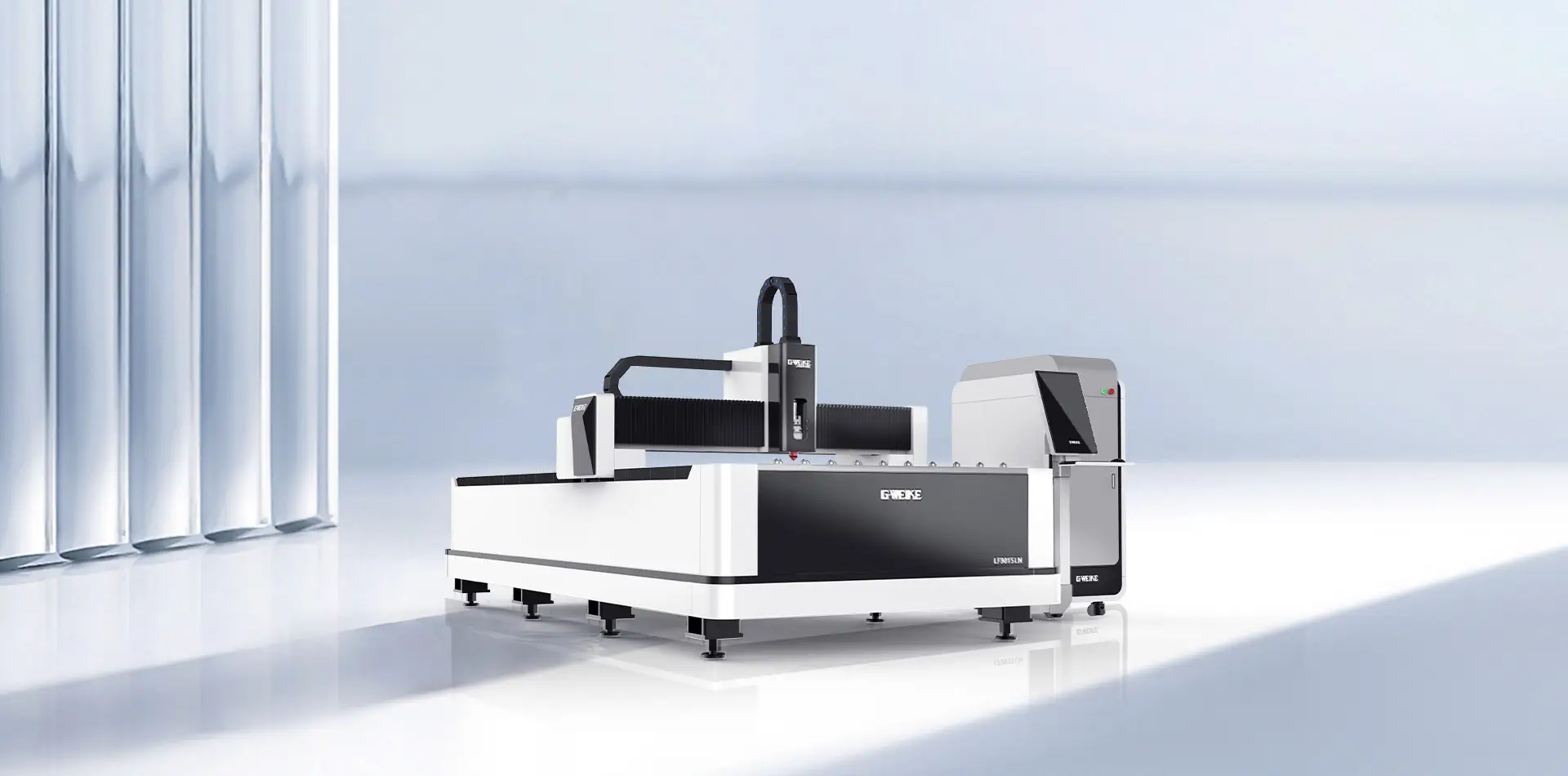
💡 Best for factories that mainly cut thin metal all day.
3–4 kW Fiber Laser : The Most Popular Entry-Level Industrial Choice
This is often the first “serious” industrial fiber laser for many factories.
Realistic Cutting Thickness
| Material | Stable Production Thickness | Absolute Maximum |
|---|---|---|
| Carbon steel | 8–12 mm | ~20 mm |
| Stainless steel | 6–8 mm | ~12 mm |
| Aluminum | 4–6 mm | ~8 mm |
Why So Many Factories Choose 3–4 kW
- Covers 80% of daily sheet metal jobs
- Good balance between cost and capability
- Easy to maintain
- Works well with air or oxygen cutting
Typical Use Cases
- General metal fabrication
- Furniture frames
- Machine housings
- Small automotive parts
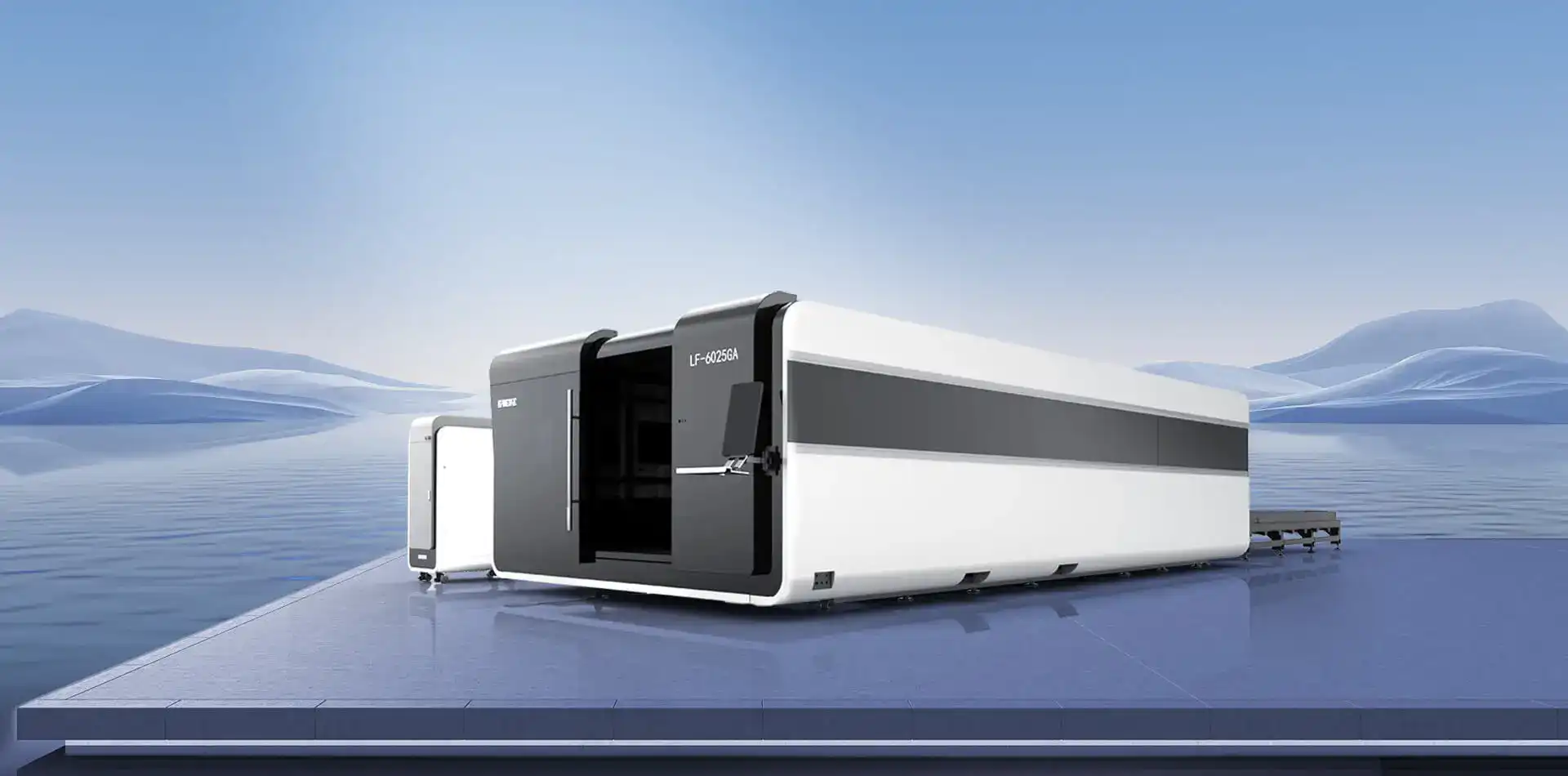
💡 If your factory mostly cuts below 10 mm, this power range is often enough.
6 kW Fiber Laser : The “Workhorse” of Modern Fabrication
6 kW is where fiber lasers truly replace older plasma and flame cutting in many factories.
Realistic Cutting Thickness
| Material | Stable Production Thickness | Absolute Maximum |
|---|---|---|
| Carbon steel | 15–20 mm | ~25 mm |
| Stainless steel | 10–15 mm | ~20 mm |
| Aluminum | 8–10 mm | ~12 mm |
Why 6 kW Is a Sweet Spot
- Strong piercing ability
- Stable cutting on medium-thick plates
- Reasonable gas consumption
- Excellent edge quality with proper settings
Production Advantage
- Faster cycle time on 8–12 mm steel
- Less downtime due to cutting instability
- Better consistency across shifts

💡 Many factories find 6 kW offers the best long-term ROI.
8–12 kW Fiber Laser : Heavy Plate Production
This range is designed for factories that cut thick metal every day, not occasionally.
Realistic Cutting Thickness
| Material | Stable Production Thickness | Absolute Maximum |
|---|---|---|
| Carbon steel | 20–30 mm | ~40 mm |
| Stainless steel | 15–25 mm | ~30 mm |
| Aluminum | 10–15 mm | ~18 mm |
What Changes at High Power
- Much faster piercing
- Thicker plates with stable kerf
- Better productivity per shift
Trade-Offs
- Higher gas consumption
- Higher initial investment
- Requires stronger machine frame and cooling stability

💡 Best for factories cutting thick plate as a core business, not occasional jobs.
20 kW+ Fiber Laser : Extreme Thickness & Productivity
Ultra-high-power lasers are impressive — but they are not for everyone.
Realistic Cutting Thickness
| Material | Stable Production Thickness | Absolute Maximum |
|---|---|---|
| Carbon steel | 30–40 mm | 50 mm+ |
| Stainless steel | 25–35 mm | 40 mm+ |
| Aluminum | 15–20 mm | ~25 mm |
Who Really Needs This?
- Heavy machinery manufacturing
- Shipbuilding
- Structural steel fabrication
- Large steel service centers
Important Reality Check
Many factories buy ultra-high power machines but rarely use full thickness capability.
If thick cutting is not your daily workload, ROI may suffer.
Why “Absolute Maximum” Is a Dangerous Buying Metric
Sales brochures love to highlight maximum thickness.
But in real factories:
- Cutting at maximum thickness is slow
- Edge quality may require post-processing
- Gas cost rises sharply
👉 Smart buyers choose power based on daily production thickness, not marketing numbers.
A Simple Rule of Thumb for Buyers
- If 90% of your work is under 10 mm → 3–4 kW
- If you regularly cut 10–20 mm → 6 kW
- If thick plate is your core business → 8–12 kW
- If you cut 30 mm+ every day → 20 kW+
Why Machine Design Matters as Much as Power
Two 12 kW machines can behave very differently.
Key differences include:
- Bed rigidity
- Thermal stability
- Cutting head quality
- Control system response
This is why industrial-grade platforms like those used in GWEIKE fiber laser cutting machines are designed specifically for thick-plate stability, not just raw power.
We’ll connect thickness ranges to specific GWEIKE models later in this guide.
In the next section, we answer another question factories ask all the time:
👉 Why can carbon steel be cut much thicker than stainless steel or aluminum?
👉 How material properties directly limit thickness
Part 3 — Why Cutting Thickness Is Different for Each Material
Many buyers assume:
“If my fiber laser can cut 30 mm steel, it should cut 30 mm stainless too.”
In reality, that is not how laser cutting works.
Different metals react to laser energy in very different ways.
Let’s break it down without physics jargon.
1. Carbon Steel — Cuts the Thickest (and the Easiest)
Why Carbon Steel Is Laser-Friendly
Carbon steel is the easiest metal to cut thick with a fiber laser because:
- It absorbs laser energy well
- It reacts strongly with oxygen
- The cutting process creates extra heat through oxidation
👉 In simple terms:
the laser + oxygen “help each other” during cutting.
Typical Thickness Capability (Production-Quality)
| Laser Power | Carbon Steel (Stable Production) |
|---|---|
| 3–4 kW | 8–12 mm |
| 6 kW | 15–20 mm |
| 12 kW | 25–30 mm |
| 20 kW+ | 35–40 mm |
Why Oxygen Makes Such a Big Difference
When cutting carbon steel with oxygen:
- The metal burns slightly
- This chemical reaction adds heat
- Less laser energy is needed to melt material
That’s why:
- Carbon steel can be cut thicker
- Cutting speed stays reasonable
- Gas cost is relatively low
💡 This is why carbon steel dominates thick-plate laser cutting.
2. Stainless Steel — Cleaner Cuts, Less Thickness
Stainless steel behaves very differently.
Why Stainless Steel Is Harder to Cut Thick
- Stainless steel does not oxidize easily
- Cutting usually uses nitrogen, not oxygen
- No extra heat from chemical reactions
👉 Result:
The laser does almost all the work alone.
Typical Thickness Capability
| Laser Power | Stainless Steel (Stable Production) |
|---|---|
| 3–4 kW | 6–8 mm |
| 6 kW | 10–15 mm |
| 12 kW | 20–25 mm |
| 20 kW+ | 30–35 mm |
Why Factories Still Choose Stainless Steel
Even though thickness is lower:
- Edge quality is excellent
- No oxidation (bright edge)
- Minimal post-processing
For many industries (food equipment, medical, enclosures),
edge quality matters more than maximum thickness.
3. Aluminum — Reflective and Tricky
Aluminum creates the most confusion for buyers.
Why Aluminum Is Difficult
- Reflects a large portion of laser energy
- Conducts heat away very quickly
- Requires higher power for the same thickness
In simple words:
Aluminum “throws energy away” instead of staying hot.
Typical Thickness Capability
| Laser Power | Aluminum (Stable Production) |
|---|---|
| 3–4 kW | 4–6 mm |
| 6 kW | 8–10 mm |
| 12 kW | 12–15 mm |
| 20 kW+ | 18–25 mm |
Important Reality
Even if a machine can cut thick aluminum:
- Speed drops quickly
- Edge quality may vary
- Process tuning becomes critical
💡 Many factories outsource very thick aluminum, even if they own high-power lasers.
4. Copper & Brass — The Most Challenging Metals
Copper and brass are:
- Highly reflective
- Extremely conductive
They are usually not thickness-focused materials for laser cutting.
Typical Use
- Thin electrical parts
- Decorative components
- Specialized applications
Typical Thickness
Usually under 5–8 mm, even with high power
For these materials:
- Machine protection
- Cutting head design
- Process safety
become more important than thickness itself.
5. Why Same Power ≠ Same Thickness Across Materials
Here’s a simple mental model you can use:
| Material | Laser Energy Absorption | Chemical Help | Thickness Result |
|---|---|---|---|
| Carbon steel | High | Yes (oxygen) | Thickest |
| Stainless steel | Medium | No | Medium |
| Aluminum | Low | No | Thinner |
| Copper/brass | Very low | No | Thinnest |
This explains why marketing claims can be misleading if material type is not mentioned.
6. Production Advice from Real Factories
Experienced factories usually follow these rules:
- Carbon steel: choose power based on thickness
- Stainless steel: choose power based on quality needs
- Aluminum: choose power + focus on process stability
- Copper/brass: keep thickness conservative
Trying to push all materials to the same maximum thickness almost always leads to:
- Slow production
- High gas cost
- Inconsistent quality
Next, we answer a question that often surprises buyers:
👉 Why changing cutting gas can increase or reduce maximum thickness dramatically
👉 Why nitrogen gives clean edges but limits thickness
👉 Why air cutting is cheap but not always suitable
Part 4 — How Assist Gas & Process Settings Change Cutting Thickness
Many buyers focus on laser power, but in real production,
assist gas and process settings often decide whether thick cutting is successful or not.
Two factories using the same laser power can get very different thickness results — simply because of gas choice and parameter setup.
1. Why Assist Gas Matters So Much
Assist gas has three main jobs:
- Blow molten metal out of the kerf
- Control heat in the cutting zone
- Affect edge quality and cutting speed
Depending on the gas, thickness capability can increase or decrease by 30–50%.
2. Oxygen (O₂): Best for Thick Carbon Steel
Why Oxygen Helps Thickness
When cutting carbon steel:
- Oxygen reacts with hot steel
- This reaction produces extra heat
- Less laser energy is needed
👉 In simple terms:
oxygen “helps the laser do the work.”
Typical Results
- Thicker cutting capability
- Faster speed on thick plate
- Lower gas cost
Trade-Offs
- Oxidized edge (dark color)
- Not suitable for stainless steel
- Not ideal for parts requiring bright edges
💡 This is why thick carbon steel is almost always cut with oxygen.
3. Nitrogen (N₂): Clean Edges, Lower Thickness
Nitrogen does not react with metal.
What Nitrogen Does Well
- Produces bright, oxidation-free edges
- Excellent for stainless steel
- Ideal for parts requiring high cosmetic quality
Why Thickness Is Lower
- No chemical heat support
- Laser must do all melting
- Higher gas pressure needed
Typical Use
- Stainless steel enclosures
- Food-grade equipment
- Medical or decorative parts
💡 Nitrogen sacrifices thickness for quality.
4. Compressed Air: Cheapest Option, Limited Thickness
Air is roughly:
- 78% nitrogen
- 21% oxygen
Why Factories Use Air
- Very low cost
- No bottled gas logistics
- Good for thin sheet metal
Limitations
- Lower cutting stability on thick plates
- Edge quality not as clean as nitrogen
- Limited maximum thickness
💡 Air cutting is great for thin parts, not for pushing thickness limits.
5. Typical Gas vs Thickness Comparison
| Material | Oxygen | Nitrogen | Air |
|---|---|---|---|
| Carbon steel | ★★★★★ (thickest) | ★★ | ★★ |
| Stainless steel | ✖ | ★★★★ | ★★ |
| Aluminum | ✖ | ★★★ | ★★ |
| Edge quality | ★★ | ★★★★★ | ★★ |
| Operating cost | ★★★★ | ★★ | ★★★★★ |
This table explains why “best gas” depends on your goal, not just thickness.
6. Focus Position: A Hidden Thickness Lever
Focus position does not move in the same direction for every thick-cutting process. The correct direction depends on the material, assist gas, thickness and optical configuration.
- Carbon steel with oxygen: positive focus is commonly used for thicker plate.
- Stainless steel with nitrogen: focus generally moves further below the surface as thickness increases.
- Aluminum with nitrogen: negative focus is commonly used, but the starting point depends on thickness and the cutting-head configuration.
Even with sufficient power, an incorrect focus position can reduce maximum thickness and cause incomplete cuts, rough striations or heavy dross. Use the fiber laser focus-position guide for process-specific starting points.
7. Cutting Speed vs Thickness: The Trade-Off
Another common misunderstanding:
“If my laser can cut 25 mm, I should run it fast.”
In reality:
- Thick cutting requires slower speeds
- Going too fast causes incomplete cutting
- Going too slow increases heat damage
💡 Thickness always trades speed for stability.
8. Nozzle Size & Gas Pressure
Thick cutting usually needs:
- Larger nozzle diameter
- Higher gas pressure
- Stable gas flow
But:
- Too much pressure can cause rough edges
- Too little pressure leaves slag
This is why industrial machines with stable gas systems perform better on thick plates.
Nozzle type and diameter must be matched to material, thickness, assist gas and laser power. See the fiber laser cutting nozzle selection guide for detailed nozzle configurations.
9. Why Thick Cutting Needs Industrial-Grade Machines
Pushing thickness is not just about laser power.
It requires:
- Rigid machine bed
- Stable motion system
- Reliable cutting head
- Consistent gas supply
Light-duty machines may technically cut thick metal,
but cannot do it consistently in production.
This is where industrial platforms like those used in GWEIKE fiber laser cutting systems show their advantage.
When NOT to Push Thickness
Experienced factories know when not to push limits:
- When edge quality matters
- When production speed matters
- When gas cost becomes too high
Cutting 15–20 mm well is better than cutting 25–30 mm poorly.
Part 5 — Choose the Right GWEIKE Fiber Laser by Thickness (Plus FAQ & Checklist)
Now you know the truth about thickness:
- Power matters
- Material matters
- Gas matters
- And “maximum thickness” is not the same as “production thickness”
So the next question becomes:
Which machine should I choose for my factory, based on the thickness I cut every day?
Thickness is only one part of machine selection. To compare sheet, tube and combination machines, bed size, automation, installation and total operating cost, use the fiber laser cutting machine buyer's guide.
Below is a practical thickness-based selection guide.
Ready to cut your material thickness?
Tell us your material, thickness and production requirement. GWEIKE can recommend the right power level and machine configuration.
Step 1: Identify Your “Daily Thickness Range” (Not the Maximum)
Before you choose a machine, answer this simple question:
What thickness makes up 80–90% of your daily jobs?
Most factories fall into one of these groups:
1) Thin-sheet factories: 0.8–6 mm
2) General fabrication: 3–12 mm
3) Medium-thick production: 8–20 mm
4) Thick plate factories: 16–35 mm
5) Extreme thick plate: 30 mm+
Once you know your group, selection becomes much easier.
Step 2: Match Your Thickness Group to the Right Machine Type
For most flat metal sheet applications, the right machine type is a sheet metal laser cutting machine selected by daily material thickness, power range, bed size and production volume.
A) 0.8–6 mm (Thin Sheet, High Speed, High Volume)
If your factory mainly cuts:
- cabinets
- enclosures
- HVAC parts
- brackets
- sheet metal components
your priority is:
- fast acceleration
- consistent edge quality
- low cost per part
✅ Recommended direction:
- High-speed sheet metal fiber laser cutting machines
- Practical power: 3–6 kW (depends on your materials)
B) 3–12 mm (General Fabrication — the Most Common Factory Range)
This is the most common industrial range, covering:
- stainless steel parts
- carbon steel structures
- job shops with mixed orders
✅ Recommended direction:
- Stable all-around platforms, optional exchange table
- Practical power: 4–8 kW
GWEIKE’s industrial fiber cutting models are typically positioned to cover this range across multiple series, and your factory should focus on:
- bed rigidity
- cutting head stability
- control system responsiveness
- gas system reliability
C) 8–20 mm (Medium-Thick Plate Production)
If your daily work includes:
- base plates
- structural parts
- machinery frames
- thicker carbon steel and stainless steel
✅ Recommended direction:
- Practical power: 6–12 kW
- Strongly recommended: exchange table for productivity
- Better dust extraction and cooling stability
This is the range where factories often see the biggest ROI jump versus plasma cutting.
D) 16–35 mm (Thick Plate Factories)
If thick plate cutting is your core business:
- construction machinery parts
- large frames
- heavy steel components
✅ Recommended direction:
- Practical power: 12–20 kW
- Heavy machine frame + stable motion system
- Strong gas and cooling configuration
For these factories, the machine must be built to handle:
- long cutting time
- thermal load
- heavy plate loading
- stable piercing on thick material
E) 30 mm+ Every Day (Extreme Thickness & High Productivity)
This is not the majority of factories, but for those who do it, the selection is very clear:
✅ Recommended direction:
- 20 kW+
- Heavy-duty platform
- Stable industrial support and uptime planning
This category is where “engineering quality and uptime” matter more than price.
Step 3: Use the Correct Gas Strategy Based on Your Goal
If your goal is maximum thickness on carbon steel:
- oxygen cutting is usually the best choice
If your goal is bright edge and high cosmetics on stainless steel:
- nitrogen cutting is usually best
If your goal is lowest running cost on thin sheet:
- air cutting can be attractive, but thickness is limited
This is important because many factories buy high power — then cut with the wrong gas and blame the machine.
Step 4: Don’t Buy “Power You Rarely Use”
A practical business rule:
If you cut 20 mm carbon steel only once a month,
do not buy a machine sized for 20 mm daily production.
Instead:
- buy for your daily thickness
- outsource rare thick jobs
- or keep plasma/flame cutting for rare cases
This is how factories protect ROI.
FAQ — Fiber Laser Cutting Thickness (Factory Questions)
1) Can a 6 kW fiber laser cut 25 mm carbon steel?
Yes, it is often possible, especially with oxygen cutting.
But for stable daily production, many factories operate closer to 15–20 mm for better quality and speed.
2) Why can carbon steel cut thicker than stainless steel?
Because oxygen cutting creates extra heat through oxidation on carbon steel.
Stainless steel usually uses nitrogen, and the laser must do most of the work alone.
3) Can fiber lasers cut aluminum as thick as steel?
Usually no. Aluminum reflects laser energy and conducts heat away quickly, so thickness capability is lower at the same power level.
4) Is “maximum thickness” useful at all?
Yes, but only as a rough reference.
For real production decisions, “stable thickness” matters far more.
5) What thickness range gives the best ROI for most factories?
For many general job shops, the best ROI often comes from the 3–12 mm daily range, because:
- demand is high
- cutting speed is strong
- edge quality is excellent
- post-processing is minimal
6) Can I improve thickness by adjusting settings?
Yes, thickness can improve with:
- correct focus position
- proper nozzle size
- stable gas pressure
- correct piercing strategy
But settings cannot compensate for an underpowered machine in thick plate production.
7) What’s the biggest thickness mistake buyers make?
Buying based on extreme maximum thickness — then discovering:
- the speed is too slow
- gas cost is too high
- edge quality is inconsistent
- ROI is worse than expected
Thickness-Based Buying Checklist (Simple and Practical)
Before buying, check these boxes:
- ✓What material do we cut most? (carbon steel / stainless / aluminum)
- ✓What thickness is 80% of our daily jobs?
- ✓Do we need bright edges? (nitrogen) or thick cutting? (oxygen)
- ✓How many sheets per day? Do we need an exchange table?
- ✓Do we run single shift or two shifts?
- ✓Do we need automation (loading/unloading) now or later?
- ✓Do we have stable gas supply and dust extraction?
- ✓What is the ROI target (6 months / 12 months / 24 months)?
If you can answer these clearly, your selection will be accurate.
Final Summary
So, how thick can a fiber laser cut?
- Carbon steel cuts thickest (especially with oxygen)
- Stainless steel cuts cleaner but usually thinner
- Aluminum is more difficult due to reflectivity and heat conduction
- Gas and settings can change thickness a lot
- Production thickness is more important than maximum thickness
If you want to select the right system for your factory, start with your daily thickness range — then match power and machine type to your real workload.
Ready to cut your material thickness?
Tell us your material (SS / CS / Al), daily thickness range, and production volume. We can match you to the right power level and machine platform.
Helpful to include: material type, thickness in mm, cut edge quality requirement, daily production hours, and whether you need flatbed or tube cutting.