

1. What Is Laser Welding?
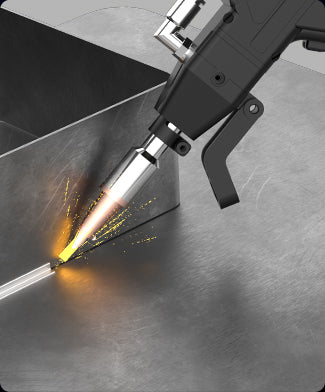
Laser welding is a joining process that uses a highly concentrated beam of light to melt and fuse metals together. The laser delivers energy into a very small spot on the workpiece, creating a molten pool that solidifies into a narrow, deep weld. Compared with traditional arc processes, laser welding can generate high-quality welds at high speed with minimal heat-affected zone (HAZ), low distortion and extremely clean appearance.
Why Laser Welding Is Replacing TIG/MIG in 2026
- Speed: 2–5× faster than TIG for thin stainless and carbon steel.
- Lower heat input: Less distortion and rework on thin sheet metal.
- Beginner-friendly: Easier to train new operators compared with TIG.
- Cleaner seams: Little to no spatter, often no grinding required.
- Automation-ready: Easy to integrate with robots, gantries and fixtures.
For factories and job shops, these technical advantages translate into higher productivity, lower labor cost and more consistent product quality. GWEIKE’s fiber laser welding systems and multi-function platforms like the GWEIKE M-Series 6-in-1 bring laser welding capabilities to both industrial production lines and compact workshops.
How Laser Welding Works — Physics & Process
Beam Generation → Transmission → Focusing
In a fiber laser welding system, the laser source generates a high-power beam at a specific wavelength (typically around 1070 nm). This beam is transmitted through an optical fiber to a welding head, where collimating and focusing lenses concentrate the beam into a tiny spot. The high energy density at the focal point melts the material and creates a weld pool. By moving the beam relative to the workpiece, a continuous weld is formed.
Keyhole vs Conduction Welding
- Conduction mode: Lower power density. Heat is conducted from the surface into the material. Welds are shallow and wide.
- Keyhole mode: Higher power density creates a vapor cavity (keyhole) that allows energy to penetrate deeply, forming a narrow and deep weld.
Most fiber laser welding in sheet metal uses keyhole mode to achieve deep penetration and high speed with minimal distortion.
Continuous Wave vs Pulsed Laser Welding
- Continuous wave (CW): Constant output; ideal for high-speed welding and continuous seams.
- Pulsed: Energy delivered in pulses; often used for thin materials, spot welds, or sensitive geometries.
Interaction Between Beam, Material and Weld Pool
The final weld quality depends on how the beam interacts with the surface (reflectivity), the material’s thermal properties, and the stability of the molten pool. Instability can lead to porosity, spatter and inconsistent penetration, so stable process control is essential.
Role of Shielding Gas
Shielding gas protects the molten pool from atmospheric contamination and stabilizes the process:
- Argon: Common for stainless steel; stable and easy to use.
- Nitrogen: Sometimes used for cost reduction on stainless and mild steel.
- Helium or mixes: Used in specific high-performance applications.
Laser Welding System Components
Fiber Laser Source
Power levels typically range from 1000 W to 6000 W for welding. For sheet metal and fabrication welding, 1000–2000 W is often sufficient for 0.8–4 mm materials. Higher power is used in thicker sections or special applications where deep penetration is required.
Handheld vs Robotic Welding Heads
- Handheld heads: Very flexible, ideal for job shops, repair and custom fabrication.
- Robotic/gantry heads: Best for high-volume, repeatable welding on production lines.
Optics (Collimation & Focus)
The collimating lens straightens the beam; the focusing lens concentrates it to the required spot size. Clean, high-quality optics are critical to consistent penetration and stable processing. Contaminated lenses reduce power at the workpiece and create spatter or defects.

Wire Feeder (Optional)
Wire feeders are used when gaps must be filled, when reinforcement is needed, or when specific alloy composition is required. Synchronizing wire feed speed with welding speed and laser power is essential for defect-free welds. Complete Wire-Feed Laser Welding Guide
Control System
Modern systems store process recipes (power, speed, frequency, gas flow) for different materials and thicknesses. Operators can switch rapidly between jobs with pre-programmed parameter sets, reducing setup time and human error.
Safety System & PPE
Because laser welding uses a high-power Class 4 laser, proper shielding, interlocks and PPE (protective glasses, gloves, clothing) are mandatory. Safety design around the work area is just as important as the laser source itself.
Materials Suitable for Laser Welding
Stainless Steel (304 / 316 / 201)
Stainless steel is one of the best materials for laser welding. It absorbs the beam efficiently and forms strong, clean welds with low spatter and minimal distortion. Stainless Steel Laser Welding Guide
- Ideal thickness: 0.8–3.0 mm for 1000–2000 W laser power.
- Applications: kitchen equipment, appliances, automotive parts, hardware, decoration.
Carbon Steel / Mild Steel
Carbon steel is also very suitable for laser welding, but it is more sensitive to oxidation and hardening. Proper shielding gas and parameter control are essential to avoid cracks and excessive hardness in the heat-affected zone.
Aluminum (1xxx / 3xxx / 5xxx / 6xxx Series)
Aluminum is highly reflective and has high thermal conductivity (Industrial Aluminum Laser Welding Guide), which can make laser welding more challenging:
- More laser power is needed vs steel of the same thickness.
- Porosity is a common issue if cleaning and parameters are not correct.
- Some alloys (e.g. 6xxx) require careful parameter tuning and sometimes wire feed.
Brass and Copper
Brass and copper reflect much of the incident laser energy, especially at fiber laser wavelengths. Laser welding is possible but requires higher power, short focal lengths and careful control, and is more common in specialized industries.
Dissimilar Metals
Laser welding can join certain dissimilar pairs (e.g. different stainless grades, some steel combinations), but metallurgical compatibility must be evaluated. For critical products, consultation with a welding engineer or standard is recommended.
Recommended Thickness Range
Laser Welding Parameters for Stainless Steel, Carbon Steel and Aluminum
| Material | Typical Thickness (Laser Weld) | Recommended Power Range |
|---|---|---|
| Stainless Steel | 0.8–3.0 mm | 1000–2000 W |
| Carbon/Mild Steel | 1.0–4.0 mm | 1500–3000 W |
| Aluminum | 1.0–3.0 mm | 1500–3000 W |

Laser Welding Joint Types
Butt Joint
Two plates are aligned edge-to-edge. Ideal when fit-up is good and access is available from one side. Laser butt welds can be extremely narrow and deep, making them suitable for visible and structural seams.
Lap Joint
One plate overlaps another. Very common in sheet metal fabrication and automotive components. Laser welding creates a continuous fused region along the overlap with minimal heat input.
T-Joint
One plate is welded perpendicular to another, forming a “T”. Laser welding can create strong fillet welds with minimal distortion, especially in stainless and carbon steel.
Edge and Corner Joints
Used for thin sheet structures, boxes and enclosures. Laser welding allows precise control near edges without burn-through when parameters are set correctly.
Which Joint Type Is Best?
For thin sheet and visible surfaces, butt and lap joints with laser welding provide clean seams with minimal grinding. For structural frames and brackets, T-joints and fillet welds are typical choices.
Laser Welding Parameters (Engineering View)
Core Parameters
- Laser power (W): Controls total energy input into the joint.
- Welding speed (mm/s or mm/min): Determines how long energy is applied per unit length.
- Spot size (mm): Smaller spots increase energy density and penetration.
- Pulse frequency / waveform (for pulsed): Affects stability and heat distribution.
- Shielding gas type & flow: Protects the weld pool and influences penetration and surface quality.
- Defocus / focal position: Slight focus adjustments change the penetration profile.
Parameter Interaction
Penetration and weld shape are controlled by a balance of power, speed and spot size:
- Higher power + lower speed → deeper penetration, higher risk of burn-through on thin sheet.
- Lower power + higher speed → shallower penetration, risk of lack of fusion.
- Too large spot → low energy density, wide but shallow weld.
- Too small spot → very deep but narrow weld, risk of undercut if misaligned.
Example Parameter Windows (Indicative)
| Material / Thickness | Laser Power | Speed | Shielding Gas | Notes |
|---|---|---|---|---|
| SS 1.0 mm | 900–1200 W | 25–40 mm/s | Argon | Keyhole mode, continuous welds |
| SS 1.5 mm | 1200–1500 W | 20–30 mm/s | Argon | Lap & fillet joints |
| Carbon steel 2.0 mm | 1400–1800 W | 15–25 mm/s | Argon / N₂ | Monitor hardness, avoid excessive cooling |
| Aluminum 1.5 mm | 1500–2000 W | 15–25 mm/s | Argon | Excellent cleaning is critical |
These values are starting points. In practice, you will fine-tune based on joint design, fit-up, fixture stiffness and quality requirements.
Wire-Fed vs Wire-Free Laser Welding
When Wire-Free Welding Is Enough
Wire-free (autogenous) laser welding is ideal when joint fit-up is very good with minimal gap, material thickness is moderate, and minimal reinforcement is acceptable. This is common in precision sheet metal and appliance components.
When Wire Feeding Is Necessary
Wire feed is helpful when gaps must be bridged, extra reinforcement is needed for strength, or composition control is required (for example, special stainless alloys or dissimilar joints).
Wire Feed Speed vs Welding Speed
Wire speed must match the welding speed and power. Too much wire causes piling and lack of fusion; too little wire leaves underfill and potential undercut. Stable feeding and consistent torch manipulation are critical to repeatable results.
Laser Welding vs TIG vs MIG
Speed & Productivity
Laser welding can be 2–5× faster on thin sheet than TIG, and often faster than MIG when you include the reduction in grinding and finishing. For high-volume production, this can dramatically increase throughput per station.
Heat Input & Distortion
Because energy is focused into a tiny spot, the heat-affected zone is much smaller than in arc welding. Parts stay flatter, fixtures can be simplified, and overall dimensional accuracy is easier to maintain.
Skill Requirements
- TIG: High skill, long learning curve, slow production speed.
- MIG: Medium skill, easier than TIG, but still operator-dependent.
- Laser welding: Relatively easy to learn with presets and guided operation.
Consumables & Operating Cost
Laser welding uses shielding gas and sometimes filler wire; there are no electrodes or contact tips. Maintenance is primarily optics care and cleanliness. While laser systems have a higher initial cost, long-term operating cost per part can be very competitive.
Summary Comparison Table
| Method | Speed (Thin Sheet) | Skill Level | Distortion | Finish Work |
|---|---|---|---|---|
| TIG | Slow | High | Medium–High | Often required |
| MIG | Medium | Medium | Medium | Grinding often needed |
| Laser | High | Low–Medium | Low | Often minimal |
Common Laser Welding Defects (and What They Mean)
Porosity (Gas Pores)
Porosity appears as tiny holes inside the weld or open to the surface. It reduces strength and can cause leaks in fluid systems.
Typical causes:
- Dirty surfaces (oil, rust, paint, moisture).
- Insufficient shielding gas or turbulence.
- Poor parameter combination, especially on aluminum.
Undercut
Undercut is a groove melted into the base metal along the toe of the weld. It weakens the joint and may fail inspection. Excessive energy density or misaligned beam are common causes.
Burn-through
Burn-through is a complete melt-through of the material, creating holes in the weld seam. This is common when welding very thin sheet with excessive power, low speed, or poor focus control.
Lack of Penetration / Lack of Fusion
The weld does not fully fuse the joint thickness or one of the sides, creating a hidden weakness. This is often caused by insufficient power, excessive speed, poor joint fit-up or wrong focus position.
Cracks
Cracks may occur during cooling due to high hardness, residual stresses or poor material compatibility. Carbon steel and certain alloys are more susceptible if not properly controlled.
Excessive Spatter
Laser welding generally produces little spatter, so visible spatter is a sign of instability, incorrect parameters, contamination or poor focus.
Surface Discoloration (Blackening)
Excessive oxidation can leave dark or colored welds, especially on stainless steel. This is usually related to insufficient shielding gas, wrong gas direction or drafts around the weld area.
Troubleshooting Guide (From Symptom to Cause)
If Penetration Is Too Deep (Burn-through Risk)
- Reduce power or increase welding speed.
- Check focus position (too tight focus on thin sheet).
- Verify material thickness vs selected power level.
If Penetration Is Too Shallow
- Increase power or decrease welding speed.
- Verify focus is on or slightly below surface.
- Check joint fit-up, clamping and gap.
If Weld Is Rough or Unstable
- Check shielding gas flow and direction.
- Inspect optics for contamination or damage.
- Ensure workpiece surface is properly cleaned.
If Spatter Appears
- Reduce power slightly and increase speed.
- Optimize focus position and spot size.
- Stabilize welding head motion and fixture.
If Weld Turns Black (Oxidation)
- Increase shielding gas flow or improve gas coverage.
- Check for drafts or turbulence around weld area.
- Use proper nozzle distance and angle for optimal coverage.
“Perfect Weld Checklist”
- Clean material with no oil, rust or paint.
- Consistent joint gap and alignment.
- Correct parameter set for thickness and material.
- Stable shielding gas coverage without turbulence.
- Verified weld penetration with test coupons before production.
Real-World Applications
Automotive Components
Laser welding is used for body parts, brackets, battery components, exhaust systems and structural reinforcements where speed and consistency are critical.
Sheet Metal Fabrication
Fabricators use laser welding for enclosures, cabinets, doors, frames and architectural elements. Combined with fiber laser cutting, it creates a fast, clean end-to-end workflow from raw sheet to finished product.
Hardware, Furniture & Appliances
High-end hardware, furniture frames, kitchen products and appliances rely on laser welding to deliver clean seams that are visible to end-users. Clean welds reduce grinding and polishing time in finishing departments.
Repair & Maintenance
Handheld laser welding is widely used for on-site repairs: fixing cracks, filling gaps, reinforcing components and extending equipment life in workshops and industrial plants.
Choosing the Right Laser Welding Machine
Power Selection (1000 W / 1500 W / 2000 W)
- 1000 W: Thin sheet (0.8–2 mm), stainless and mild steel, small parts, light fabrication.
- 1500 W: More flexibility up to ~3 mm, faster welding, improved aluminum performance.
- 2000 W and above: Thicker sections, higher productivity and automated lines.
When a Multi-Function System Makes Sense
If you need welding plus cutting and cleaning in a compact space, a multi-function platform such as the GWEIKE M-Series 6-in-1 can combine several processes into one machine, ideal for small workshops and job shops that need flexibility.
When a Dedicated Welding System Is Better
If welding is your primary process and production volume is high, a dedicated industrial fiber laser welding machine with tailored fixtures, automation and power level will provide the best long-term ROI.
Evaluating ROI
- Compare cycle time vs TIG/MIG for your main parts.
- Estimate rework reduction and scrap reduction with cleaner welds.
- Factor in training cost and operator availability.
- Consider future automation potential (robots, gantries, multi-station cells).
Safety Guidelines
Laser Class & Enclosure
Laser welding systems typically fall under Class 4, meaning direct and scattered beams are hazardous to eyes and skin. Proper shielding, interlocks and enclosures are essential to protect operators and anyone nearby.
Personal Protective Equipment (PPE)
- Laser safety glasses with correct wavelength rating.
- Protective gloves and non-flammable clothing.
- Face shield and appropriate footwear in industrial environments.
Gas Safety
Shielding gases must be handled using proper regulators, hoses and ventilation. Avoid oxygen enrichment in confined spaces and follow gas supplier safety recommendations.
Operational Safety Checklist
- Never bypass interlocks or safety devices.
- Keep reflective objects away from the beam path.
- Train operators on emergency stop procedures.
- Inspect optics, cables and covers regularly.
Laser Welding FAQ
Is laser welding always better than TIG?
Not in every situation. Laser welding excels in thin sheet, high-speed and high-volume applications. TIG is still useful for special alloys, thick sections and low-volume custom work where extreme manual control is needed.
What thickness is best for laser welding?
For 1000–2000 W systems, 0.8–3 mm stainless and mild steel is ideal. Higher power can handle thicker sections, but joint design and access also matter.
Do I always need shielding gas?
Yes. Shielding gas protects the molten pool from contamination and helps control penetration and bead appearance. Skipping shielding gas will almost always lead to defects and poor appearance.
Is laser welding suitable for aluminum?
Yes, but aluminum requires excellent cleaning and carefully optimized parameters to avoid porosity. Some alloys benefit from wire feeding and special shielding strategies.
How difficult is it to train new operators?
Compared with TIG, laser welding is easier to learn. With preset recipes and simple torch motions, many shops train operators in days instead of months.
Can I integrate laser welding into a robot cell?
Yes. Fiber laser welding is highly suitable for robotic and automated applications due to its speed, precision and low reaction forces. It is widely used in automotive, appliance and general fabrication.
How do I choose between a handheld and an automated system?
If you do varied jobs, repair and custom fabrication, a handheld system is ideal. For high-volume, repeatable parts, automated and robotic solutions deliver better productivity and consistency.
Conclusion: Is Laser Welding Right for Your Business?
Laser welding is no longer a niche technology. In 2026, it is a practical, cost-effective solution for many factories, fabrication shops and small manufacturers. It offers higher speed, lower distortion, reduced rework and a shorter learning curve than traditional arc processes.
If you routinely weld thin stainless steel, carbon steel or aluminum and struggle with distortion, low productivity or high labor cost, investigating laser welding is likely to deliver significant ROI. Combined with fiber laser cutting and laser cleaning, it becomes a powerful digital manufacturing platform for modern sheet metal.
Related Welding Guides
Deep-dive guides
By material and application
Ready to evaluate a fiber laser welding system?
GWEIKE offers handheld, automated and robotic laser welding systems from 1KW to 3KW+. Tell us your material, thickness and production volume for a starting recommendation.
Helpful to include: material type and thickness, joint type, daily production hours, and whether you need handheld or automated operation.