

Start with what the laser is waiting for
If sheets are ready beside the machine and repeated handling causes delays, evaluate automatic loading and unloading. If retrieving and changing material stacks interrupts production, evaluate a tower-connected system. Where both problems occur, storage and handling need to work as one cell.
A storage tower still needs a way to transfer sheets to and from the laser. The useful comparison is between a standalone loading/unloading arrangement and one connected to managed storage. The right scope depends on the orders, available space and the work that currently stops the machine.
- 1RetrieveFind the right stock
- 2Separate & loadPrepare one sheet
- 3CutRun the nest
- 4UnloadClear the cut sheet
- 5Sort & clearRoute parts and scrap
Follow this sequence during normal production. Record whether a stop starts with missing stock, an unfinished loading task, a full unloading position or parts waiting to be separated from the skeleton. Each points to a different improvement.
| Observed delay | Configuration to evaluate | Check first |
|---|---|---|
| Stock is ready; the machine waits for handling | Automatic loading and unloading | Whether the complete handling cycle keeps up with cutting. |
| The next material stack must be found or moved | Storage connected to sheet handling | Material identification, available positions and retrieval sequence. |
| The unloading position is full | A suitable output buffer and clearing routine | Where cut material goes and when that space becomes available. |
| Parts accumulate before bending or assembly | Sorting and downstream workflow improvements | Whether additional cutting output can be processed. |
What changes when you add storage?
A standalone automatic sheet loading system draws from prepared stock positions. Its unloading arrangement transfers cut material to a defined destination. A tower-connected system adds storage positions and the mechanisms and controls needed to retrieve the required material.
The GWEIKE GAS name appears across demonstrations with different arrangements, including a tower-connected configuration. Identify the proposed equipment by its layout, functions and technical agreement. The series name alone does not establish its storage or sorting scope.
| Selection point | Standalone loading/unloading | Tower-connected loading/unloading |
|---|---|---|
| Material source | Prepared stacks or input stations. | Assigned storage positions feeding the handling system. |
| Material changes | May require changing stacks or switching available input positions. | Can call up stored material when the installed controls support it. |
| Continuous supply | Depends on input stock and replenishment access. | Depends on usable storage capacity, stock allocation and retrieval. |
| Cut-material destination | Specified unloading stations or pallets. | Specified output stations or supported return-to-storage positions. |
| Layout | Allow for stock, handling travel and output clearing. | Also account for tower height, transfer paths, access and floor loading. |
Ask which functions are included: loading, unloading, storage retrieval, cut-material return and individual-part sorting. Define them separately in the proposal.
Repeated material orders: automate the recurring handling
Consider a run using the same material grade, thickness and sheet format. The nests may contain different parts, but the stock requirement stays the same. If a prepared stack already covers the run, repeated unloading and loading may deserve attention first.
One stock specification through the run
- A
- A
- A
- A
- A
A represents one material grade, thickness and sheet format. Each position represents a successive job using that stock; the number of sheets per job can vary.
Check when the next sheet becomes ready relative to the end of cutting. On an exchange-table machine, some preparation can take place while the other pallet is inside. The benefit depends on completing that preparation in time and keeping the unloading destination available.
A long order can contain many short cutting cycles. Repeating a quick nest for several hours can put frequent demands on handling. Measure each sheet cycle as well as the duration of the whole order.

The LF6025 GAS loading and unloading demonstration shows sheet pickup and transfer around the cutting machine. Use it to identify the handling steps to include in your own trial.
Automation may also release an operator from repetitive handling even when that work already fits inside the cutting cycle. Treat labor availability and additional cutting capacity as separate benefits. Record what the operator can do elsewhere, and whether the new arrangement changes the time between completed sheets.
A tower can still be useful for a repeated order if additional stock availability or longer operation between replenishment visits is important. Compare that requirement with the capacity already available at the input and output stations.
Frequent material changes: examine retrieval and stack changes
A job shop may cut one grade and thickness, move to another, then return to the first. A loader can transfer the next sheet only when the correct stock is available. Searching, moving stacks and checking material can interrupt an otherwise capable handling system.
Several stock specifications in one schedule
- A
- B
- C
- A
- D
Different letters represent different stock specifications. These sequences illustrate order patterns, not measured production results.
With suitable storage and controls, frequently used stock can be assigned to known positions and retrieved for the next job. Review how a material record is matched to a program, how quantities are updated and how a newly replenished stack is verified. Include batch identification where traceability matters.
Use the GWEIKE single-tower production-unit video to see how vertical storage, a loading device and a laser fit together. The relevant question for your schedule is which materials must be available and how often they are requested.
Storage does not complete every changeover task. A different material may also need a different program, cutting parameters, gas setup, nozzle or surface-protection arrangement. Time those tasks separately. A tower may improve stock access while another changeover step still limits the next start.
Check scheduling as well. Grouping compatible work may reduce stack changes where delivery dates allow it. Compare the actual sequence you need to deliver with the sequence proposed for the automation trial.
When should loading and storage work together?
Combine them when the schedule needs both repeated sheet transfer and reliable access to several prepared stock types, or when input and output capacity limit the intended operating period. Confirm how retrieval, handling and cutting share the available time and space.
The GAS Series tower-connected demonstration includes raw-material output, cutting, unloading and cut-material return to storage. This illustrates why a GAS arrangement and a tower can belong to the same system.
Use a proposed layout to identify raw-stock positions, destinations for processed material and any positions shared between them. A tower with many physical levels may have fewer positions available for new stock once the production plan reserves space for returning material.
For a broader storage-led layout, the GWEIKE dual-tower storage and laser cutting system is a separate configuration to review. The dual-tower arrangement shown below has its own specifications and should be assessed against the planned machines and orders.
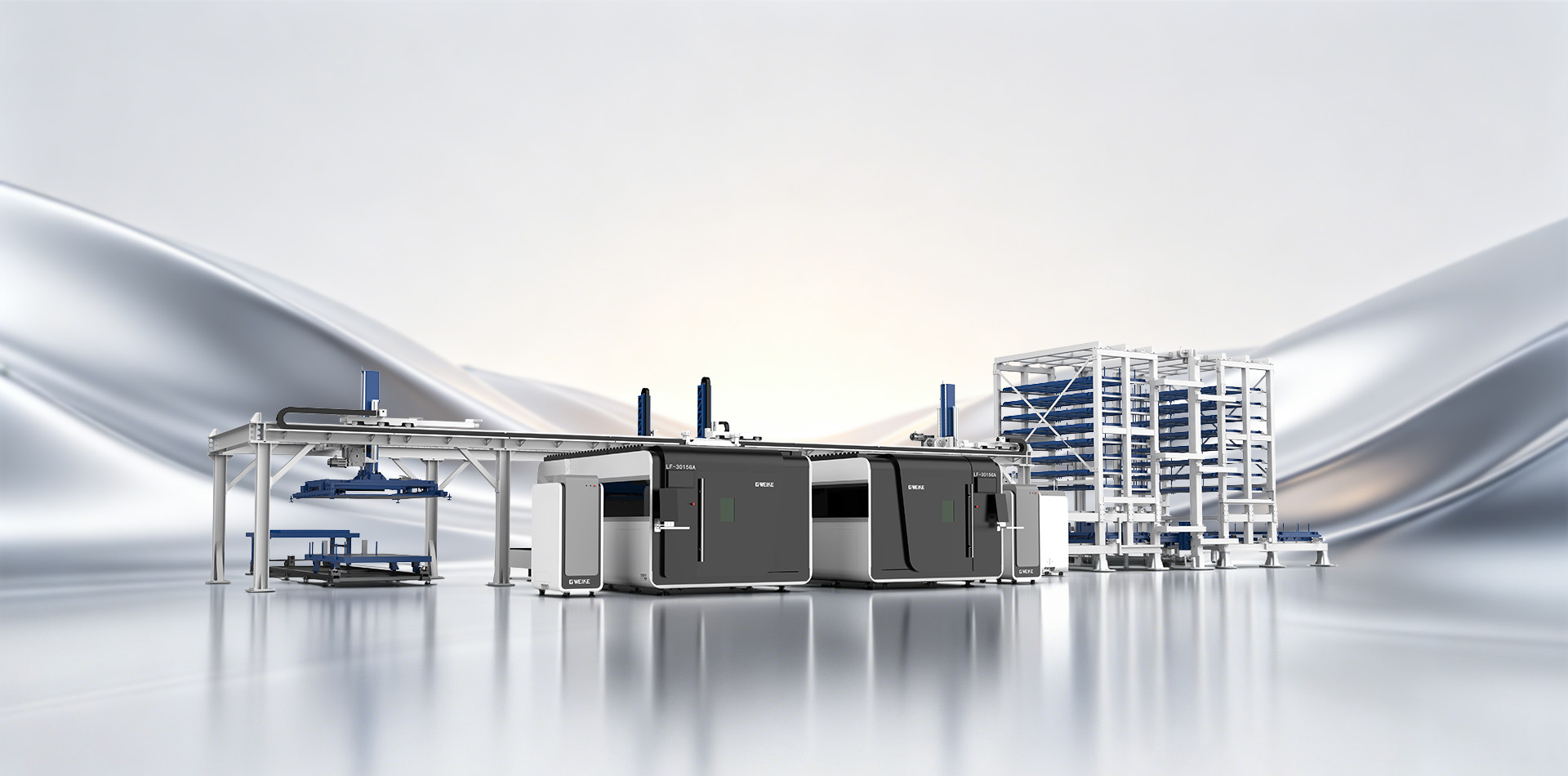
If one handling resource serves multiple cutters, test the dispatch sequence when both request service. The complete automated sheet-metal cutting line guide explains the wider storage-to-sorting workflow.
Make room for what leaves the laser
Automatic unloading can clear cut material from the machine. Individual parts may still need to be separated from the skeleton, identified, stacked and sent to the next operation. Confirm whether those tasks are manual, assisted or included in a separate sorting system.
Review representative nests for small parts, tip-up risk, retained connections and the condition of the remaining skeleton. The proposed unloading and sorting route must be demonstrated on parts that resemble your work.
A return-to-storage function can provide a buffer, but those positions eventually need clearing. Plan who removes processed material, how remnants are handled and how replenishment shares the access area. Assess the working area with transfer travel, guarding, service access and material movement included.
For longer unattended periods, agree on the actual operating scope. Stock availability, output capacity, process stability, consumables and recovery from interruptions all matter. A handling demonstration establishes visible actions; an agreed production trial establishes how the complete cell performs on your jobs.
Record a representative shift before comparing proposals
Choose work that includes normal repeat orders and material changes. Keep the nest sequence, acceptance requirements and timing boundaries consistent between the current process and the proposed trial. Include routine replenishment and clearing tasks.
| Record | What it tells you |
|---|---|
| Grade, thickness and sheet format by job | Which stock types must be supplied and in what sequence. |
| Sheets per job and consecutive jobs on the same stock | How much repeated handling occurs between material changes. |
| Actual program time per sheet | The time available for preparation where tasks can overlap. |
| Retrieval, stack changes, loading and unloading | Where handling effort and delays occur. |
| Machine waiting, with cause and timestamps | Which delays actually prevent the next cutting cycle. |
| Replenishment and output-position clearing | What interrupts continued operation and how often. |
| Sorting, scrap removal and downstream release | Whether finished work can keep moving after cutting. |
| Accepted output and operator time | The production result and staffing demand over the same period. |
Keep operator time and machine waiting separate. A handling task completed during cutting uses labor but may cause no additional machine stop. Avoid counting overlapping tasks twice when estimating recovered cutting time. The exchange-table cycle-time guide explains that timing relationship.
Start each comparison with an agreed stock condition and record the material left at the end. A run that begins with every input position full and stops before the output buffer needs clearing can miss routine work. Include that work in the comparison period or account for it explicitly.
When comparing cost, include installation and integration, the required handling and storage options, maintenance and operating labor. Tie any capacity benefit to demonstrated output and work you can actually deliver. Put the agreed jobs, configuration, timing boundaries and acceptance criteria into the trial plan.
Questions to settle before choosing a configuration
Can a storage tower be added later?
It may be possible where the equipment and controls support expansion. Confirm mechanical interfaces, transfer heights, control communication, layout space and responsibility for integration before buying the first stage. A modular description alone does not establish compatibility with every existing machine.
Does a tower always reduce the floor area?
Vertical storage can consolidate stock, but compare complete layouts. Include loading travel, replenishment access, unloading positions and maintenance clearances. Check building height and the specified floor loads for the selected arrangement.
Can the system run without an operator?
The supported operating period and tasks depend on the complete configuration and job mix. Define the stock and output capacity, exception response and process checks in the acceptance plan, then demonstrate the intended production sequence.
Request an automation layout review
Share your cutter model, material grades, thickness and sheet-format mix, typical job sequence and current loading method. Add a floor layout and records showing where the machine waits.
Ask GWEIKE to compare standalone handling and storage-connected options against those orders, including replenishment, cut-material destinations and any separate sorting work.