

Table of Contents
- Evaluation Checklist
- 1. The Price Gap: The Short Version
- 2. The Component List You Must Request
- 3. Real Manufacturers vs Assemblers
- 4. How to Test Service Before You Buy
- 5. The Test Cut Standard
- 6. Certifications: What Matters
- 7. Seven Questions to Settle Before You Sign
- 8. Where GWEIKE Fits in This Framework
- FAQ
- Conclusion
To evaluate a laser cutting machine manufacturer, verify seven areas: machine components, manufacturing capability, test-cut performance, regional service, spare-parts availability, warranty terms and total delivered cost. Do not choose a supplier from laser power and purchase price alone. Request written specifications, run your own material test and confirm service commitments before signing.
Machine specifications describe what a system is designed to do. Long-term production results also depend on the manufacturer's component choices, quality control, spare-parts availability and service capability in your region.
If you are still deciding which machine type, laser power or working area fits your production, start with the Fiber Laser Cutting Machine Buyer's Guide, then use this checklist to evaluate the suppliers on your shortlist.
7 Criteria for Evaluating a Laser Cutting Machine Manufacturer
| Evaluation area | Evidence to request | Warning sign |
|---|---|---|
| Components | Written brand and model list for the laser source, cutting head, servo system and CNC | The supplier refuses to identify exact models |
| Factory capability | Live factory tour, production address and quality-control process | Only promotional footage or third-party assembly can be shown |
| Test cut | Your material, witnessed cutting and recorded process parameters | Only prepared showroom samples are available |
| Service | Regional contacts, written response targets and reference customers | General promises without named contacts or response times |
| Spare parts | Stock location, part numbers, prices and typical delivery times | All critical parts must be shipped internationally after failure |
| Warranty | Written coverage for the machine, laser source and cutting head, including exclusions | One vague warranty statement for the complete system |
| Total cost | Delivered and installed quotation including training and required infrastructure | Freight, installation or essential options are excluded without explanation |
Vet the Supplier
The spec sheet tells you what the machine can do. The manufacturer determines whether it keeps doing it for ten years.
$60k – $300k+
Same power class, same bed size. The gap is real — and understanding where it comes from changes your decision.
Call First
Call support unannounced before you buy. The response you get is the clearest signal of what service will look like after you sign.
Component List
Ask every supplier for a written list of laser source, cutting head, servo, and CNC brands. Refusal is a warning sign.
The Price Gap: The Short Version
A 6 kW fiber laser from a leading European brand runs $180,000–$300,000. A comparable machine from a serious Chinese manufacturer at the same power level runs $60,000–$120,000. Both figures are real, and neither automatically wins.
The premium for European and Japanese machines — TRUMPF, Bystronic, Amada — reflects three things that cost money to maintain: proprietary software ecosystems with deep factory integration, fully vertical component control where every part is engineered in-house, and dense local service networks that can put a technician on-site within 24–48 hours in most major markets. For a high-volume production environment where machine downtime has direct contractual consequences, that infrastructure earns its price.
For most fabrication shops and job shops running mixed material lists on one or two machines, the same infrastructure is largely irrelevant. What matters is reliable cut quality, reasonable consumable costs, and a service network that can actually reach you. That is where serious Chinese manufacturers compete well — and where the price difference represents genuine value rather than a quality gap.
The rest of this guide is about evaluating whether a specific supplier, at whatever price point, can actually deliver on that promise. For detailed price ranges by configuration, see the Industrial Laser Cutting Machine Price Guide.
The Component List You Must Request from Every Supplier
When a supplier tells you their machine uses "high-quality components," that phrase means nothing. Before you accept any quote, ask for a written component list covering four systems. These are the parts that determine long-term cutting performance and how practical the machine is to maintain.
Laser source
The fiber laser module is the most expensive single component in the machine and the one with the most direct impact on cutting performance over time. At mid-range power levels it typically represents the largest single cost item in the machine.
The benchmark for beam quality and service life. IPG sources carry a price premium, but their track record and global service network are unmatched. A machine specifying IPG is making a meaningful quality commitment.
The most widely deployed source in mid-range industrial machines. Performance is solid across the 1.5–15 kW range. For standard sheet cutting on carbon steel, stainless, and aluminum, the practical difference from IPG in day-to-day production is small.
Broadly comparable to Raycus. Widely used in the same segment with reasonable service support.
Originally pulsed and marking lasers, now producing CW cutting sources. Found in some mid-range configurations.
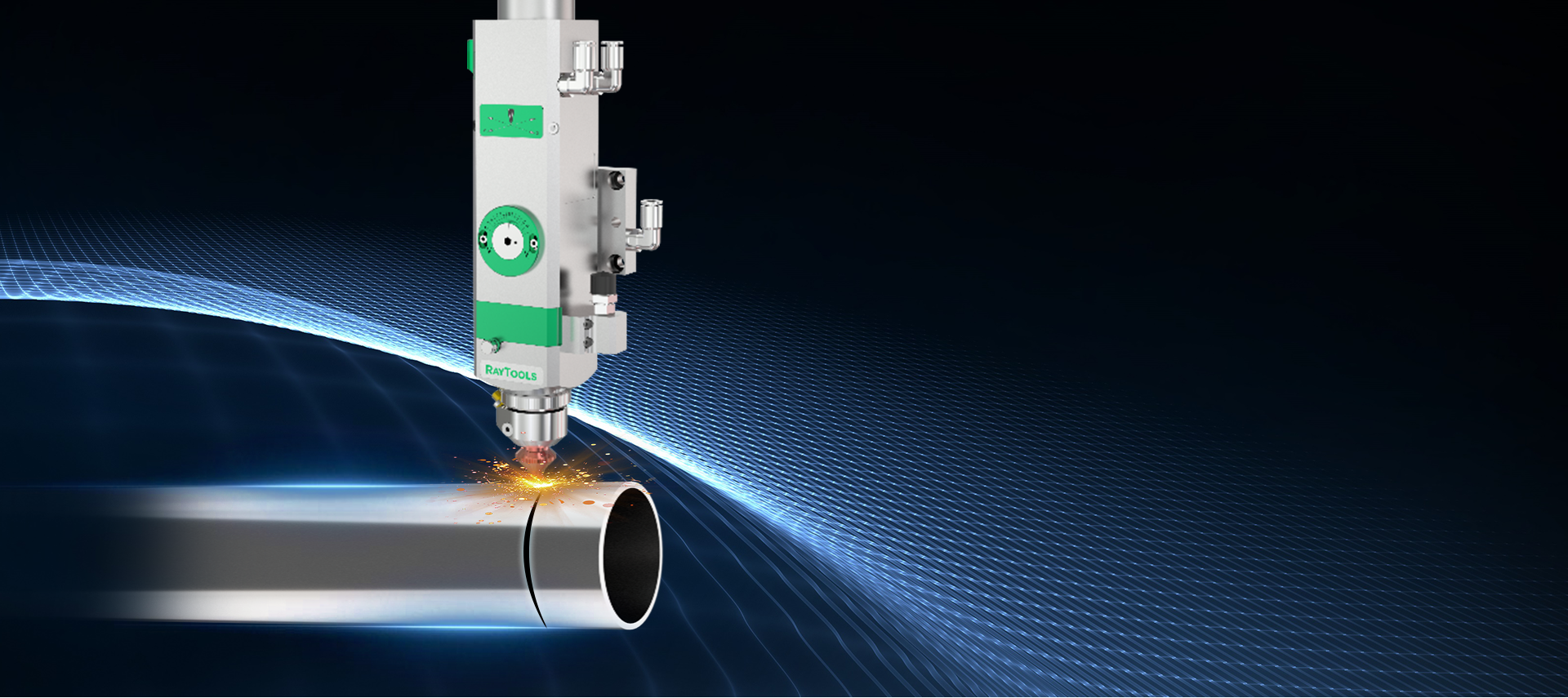
Cutting head
The cutting head holds the focusing optics and autofocus system. It directly determines cut edge consistency, particularly on thicker material and at higher speeds.
The standard for serious industrial cutting at 6 kW and above. Includes autofocus and collision protection as standard. Parts are globally available.
The dominant mid-market heads. Reliable, well-supported, increasingly available outside China.
High performance within the manufacturer's ecosystem, but parts and service come only from that manufacturer.
Drive and motion system
Servo motors and linear guides determine how precisely and consistently the cutting head follows its programmed path — especially at high speeds and on complex geometry.
The benchmark servo systems on serious Chinese industrial machines. Strong global parts availability. A machine specifying Yaskawa servos is a reliable quality signal.
The standard for linear guide rails on tier-one Chinese machines. Reliable and well-supported.
Present in lower-cost configurations. Not automatically a problem, but service life and precision data are less proven than established international brands.
CNC control system
The controller handles motion coordination, laser parameter management, and the operator interface. It determines how easily your team can run the machine and develop new cutting programs.
The most widely deployed controller on Chinese fiber laser machines. Well-designed, actively updated, with regular free software releases. Covers standard flat sheet cutting well.
Comparable alternatives with strong domestic service networks.
More open architecture, better for complex automation integration, but requires more operator expertise.
Deeply integrated with each manufacturer's software ecosystem. Powerful within that system, but full dependency on that manufacturer for updates and support.
Manufacturing Substance: What Separates Real Manufacturers from Assemblers
The Chinese laser cutting machine market ranges from companies with large, vertically integrated production operations to trading companies that source machines from third parties and put their own badge on them. The difference matters: a trading company cannot provide direct technical support, cannot guarantee parts supply from their own stock, and cannot resolve problems that require engineering input.
What a real manufacturer looks like
Own production facilities
Ask for the factory address, then ask for a visit or a video factory tour. What you want to see: in-house welding and fabrication of machine frames, assembly lines, quality control stations, and a test floor with machines running. A trading company cannot show you this.
Production scale and history
A company running 5,000+ units per year has genuinely industrialized processes. One at 20,000+ units — GWEIKE's annual capacity, across a 200,000 square meter production base operating since 2004 — has the financial stability and supply chain depth to support machines for their full operating life.
R&D investment
A manufacturer that does not develop new technology is selling a design that is aging. Patent count is an imperfect signal but a useful one. Ask when they last released a major new product, and how many engineers work in their R&D department — a manufacturer at industrial scale should have tens of dedicated development engineers.
Warranty terms
Warranty scope is one of the clearest signals of how much confidence a manufacturer has in their own product. A one-year warranty is the baseline. A five-year structural warranty — as offered on GWEIKE's GA III series — means the manufacturer is willing to bear the financial risk of early mechanical failures.
Questions to ask any Chinese manufacturer
- Where is your factory? Can you provide the address and arrange a tour, in person or by video?
- What is your annual production capacity for laser cutting machines specifically?
- How long has your company been manufacturing — not trading — laser cutting machines?
- What warranty do you offer on the machine frame, the laser source, and the cutting head separately?
- Who manufactures your machine bed castings and structural frames?
- How many engineers work in your R&D department?
You will get some answers that are vague or deflected. That vagueness is information.
After-Sales Reality: How to Test a Supplier's Service Before You Buy
Every supplier will tell you their after-sales service is excellent. Almost none of them will volunteer their average response time, spare parts lead times, or regional parts inventory locations unless you ask directly.
Here are five specific tests you can run before you commit.
Test 1: Call the technical support line, unannounced
Do not email. Call. During your normal working hours, describe a hypothetical machine issue — a cutting quality problem, an error code, a parameter question for a specific material. Note: how long does it take to reach a live engineer? Is the engineer knowledgeable enough to actually help, or do they take a message and promise a callback? Can they communicate in your language?
This is the most accurate preview available of what your experience will be when your machine is actually down.
Test 2: Ask for parts lead times on three specific consumables
Name the nozzle, protective lens, and focus lens for the exact machine configuration you are evaluating. Ask: where are these held in stock? If you ordered them today, when would they arrive? Are they available from third-party suppliers, or only from this manufacturer?
The answer you want: regional stock, delivery within a few days, available from multiple sources. The answer that should concern you: "we ship from our factory" with a two-to-four week lead time.
Test 3: Ask for reference customers in your country or region
Request three to five customers running the same machine model you are considering. Call them and ask two questions: how long does it take to get a technician on-site when you have a problem, and what is the typical parts lead time? Ask also whether the supplier's technical team could identify faults remotely, or whether an on-site visit was always required.
If the supplier cannot provide references in your region, ask why.
Test 4: Ask specifically about remote diagnostics
Serious manufacturers should be able to access the machine's control system remotely to diagnose faults, adjust parameters, and in many cases resolve issues without a physical visit. This capability meaningfully reduces downtime on technical issues that do not require hardware replacement.
Ask: what can be resolved remotely versus requiring an on-site visit? Is remote access included in the warranty?
Test 5: Ask for the committed response time in writing
"We will respond as quickly as possible" is not a service commitment. Push for specifics: what is the guaranteed response time for a technical support call? For a machine-down situation requiring an on-site visit? If a supplier will not put a response time in writing, the commitment does not exist.
GWEIKE operates service centers in twelve countries across North America, Europe, Asia, Southeast Asia, Africa, and the Middle East, with parts supply reaching 180+ countries. That is a verifiable claim — run Tests 1 and 2 to check it.
Test GWEIKE against these five criteria
Request a direct line to our technical support team, ask for your regional parts lead times, and get a reference customer list for your market.
The Test Cut Standard: What to Ask For and How to Evaluate It
How a supplier handles a test cut request — and what the results look like — tells you as much about the manufacturer as the machine spec does. Any credible manufacturer should run test cuts on your actual materials before you commit. This is not an unusual request — it is the minimum due diligence for a purchase in the $60,000–$300,000 range.
What to bring to a test cut
Do not let the supplier choose the test material. Bring your own — specifically the grade, thickness, and surface condition that represents your most common production work. If you regularly cut 6 mm 304 stainless with nitrogen, bring 6 mm 304 stainless. If you cut galvanized sheet, bring galvanized sheet. The supplier's showroom samples are dialed in for their machine. Your materials may not behave the same way.
Bring your most challenging job, not your easiest one.
What to ask for alongside the samples
Request the cutting parameters used: laser power, cutting speed, assist gas type and pressure, focal position, and nozzle size. If you later encounter quality problems in production, you need to know whether the machine is underperforming against what the supplier demonstrated or whether the parameters have drifted. A supplier who can provide and explain the parameters understands the machine they are selling. One who cannot should raise a question.
How to evaluate the cut samples
| What to check | What good looks like | What to be concerned about |
|---|---|---|
| Dross | Minimal or no resolidified material on the underside of the cut | Excessive dross points to wrong parameters, an underperforming laser source, or cutting head focus issue |
| Taper | Cut edge close to vertical; some taper acceptable on thick material | Taper visible to the naked eye on thin sheet indicates a focus or beam quality problem |
| Surface roughness | Stainless with N₂ feels smooth; carbon steel with O₂ has some roughness | Deep striation lines indicate cutting speed or power issues |
| Dimensional accuracy | Tolerances within ±0.1–0.2 mm on standard sheet thicknesses | Deviation beyond this range indicates calibration or beam delivery issues |
| Consistency across the bed | Edge quality uniform across cuts from different bed positions | Variation across the bed indicates the machine has not been properly calibrated |
→ Sheet metal laser cutting machine selection guide
Request a test cut with your material
Send us your material spec and thickness, and we will arrange a test cut and return the samples with full cutting parameters.
Certifications and Compliance: What Matters and What Doesn't
Certifications appear in almost every supplier's marketing material. Most buyers do not know which are meaningful and which are administrative formalities.
CE Marking (Europe)
CE marking indicates the machine meets EU safety directives covering machinery safety, electromagnetic compatibility, and low voltage equipment. It is a legal requirement for EU market sales, not a voluntary quality endorsement.
For European buyers, it is a minimum check. For buyers elsewhere, it signals the manufacturer has passed a third-party conformity assessment. Verify by asking for the Declaration of Conformity document and the notified body that issued it.
A CE claim without documentation is not a CE-marked machine.
FDA Registration (USA)
Laser equipment sold in the United States must meet FDA radiation safety requirements under 21 CFR 1040. Registration applies to the manufacturer, not the individual machine.
For US buyers, this is a legal requirement. For others, it indicates the manufacturer has met US regulatory standards — a bar that serious manufacturers will have cleared.
ISO 9001
ISO 9001 covers the manufacturer's quality management system — how they control design, production, testing, and continuous improvement processes. It does not certify machine performance to any specific standard, but it does confirm an audited quality management process is in place. Check the certificate date and the certifying body.
Seven Questions to Settle Before You Sign
Once you have completed the component check, factory verification, service tests, and test cuts, you have the information to compare suppliers on substance. These are the seven questions that matter.
1. Does the machine actually fit your production?
Does the quoted configuration match your real working requirements — power, bed size, enclosure type, automation level? A machine spec'd for a different production environment is a mismatch regardless of price. Confirm that the configuration you are buying is the configuration you evaluated, not a demo unit.
2. What is in the machine, and who makes it?
Can the supplier provide a written component list — laser source model, cutting head model, servo brand, linear guide brand, CNC controller — on the quote or in a formal specification sheet? If yes: evaluate the tier of each component using Section 2. If no: treat the refusal as a warning.
3. Is this a real manufacturer or an assembler?
Have you verified the factory address? Have you seen the production floor — frame fabrication, assembly, and test areas — in person or by video? Is the annual capacity consistent with a company that will still be operating in fifteen years? Vague answers to direct factory questions are a reliable indicator of limited production depth.
4. Can you actually reach their service team when you need them?
Did your unannounced call reach a live, knowledgeable engineer? Did the supplier provide parts lead times for specific consumables with a specific number — not "we'll check and get back to you"? Did reference customers in your region confirm reasonable response times?
5. How did your material cut?
Were the test cuts made from your material, in front of you, on the same day? Did the supplier provide the full cutting parameters? Was edge quality consistent across multiple cuts from different positions on the bed? If the supplier declined to cut your material, or showed only pre-made samples, treat that with caution.
6. What does delivery and installation actually cost?
Have you confirmed the total delivered cost — machine, freight, import duties, installation, operator training, first consumable kit, and gas infrastructure setup? Two machines at the same headline price can differ by $15,000–$30,000 in total project cost. Confirm what is and is not included before comparing quotes.
7. What will this machine cost to run for ten years?
Have you estimated annual consumable costs — nozzles, protective lenses, focus lenses — and confirmed where they are sourced and at what price? Have you factored in energy consumption, gas costs, and maintenance based on reference customer data? A machine that costs $20,000 less to buy but $5,000 more per year to run is the more expensive machine over its operational life.
Where GWEIKE Fits in This Framework
Use the seven questions above to evaluate GWEIKE the same way you would any other manufacturer. Here are the direct answers for each dimension.
| Evaluation dimension | GWEIKE's position |
|---|---|
| Machine fit | Range spans E PRO (entry enclosed sheet), GA III (all-around, 5-year warranty), LN (high-speed thin-to-mid sheet), GH (20–40 kW heavy plate), and M Series (6-in-1 multi-process). Applications team can match configuration to your workload before you quote. |
| Component specification | Raycus and IPG laser sources (depending on configuration), Precitec or Raytools cutting heads, Yaskawa servo motors, HIWIN linear guides, Cypcut or equivalent CNC controllers. Full written component specifications are available as part of the evaluation process — not after you sign. |
| Manufacturing depth | Operating since 2004. 200,000 square meters of production base in Jinan, China. Annual capacity 20,000+ units. 130+ patents. CE, FDA, and ISO 9001 certifications. Factory visits and video tours are available on request. |
| After-sales service | Service centers in twelve countries across North America, Europe, Southeast Asia, Africa, and the Middle East. Parts supply to 180+ countries. Remote diagnostics available as standard. Call our support line during your business hours and ask a technical question — that is the fastest way to evaluate the service, not our description of it. |
| Test cuts | Test cuts on customer materials are standard practice before a purchase. Send your material spec and thickness and we will arrange it. |
| Certifications | CE, FDA, ISO 9001. Documentation available on request. |
Evaluate GWEIKE the same way you would any supplier
All three standard steps are available before you commit: request the component specification in writing, arrange a factory tour, and book a test cut with your own materials. Our applications team handles all of it.
FAQ
Are Chinese laser cutting machines as good as European ones?
At the top tier of Chinese manufacturers, cut quality and mechanical reliability are broadly comparable to European mid-range systems. The gaps that remain tend to be in proprietary software sophistication, local service density in some markets, and the depth of integration available for complex automated production lines. For most standard industrial fabrication work, these gaps do not affect daily production. For high-automation, multi-machine environments with complex software integration requirements, they can matter. The right answer depends on what your production actually needs.
How do I know if a Chinese supplier is a real manufacturer or just a trading company?
Ask for the factory address, then ask for a visit or video tour. Look specifically for in-house fabrication of machine frames and beds — not just assembly of purchased components — a test floor with machines running, and a quality control department. A trading company cannot show you any of this from direct knowledge. Also ask for ISO 9001 certification documents and verify the certifying body.
What should I do if a supplier refuses to provide a component list?
Treat it as a significant warning. There is no legitimate reason for a manufacturer to withhold the brand names of the laser source, cutting head, and servo system fitted to a machine they are asking you to pay $60,000 to $150,000 for. Refusal to disclose usually means the components are lower grade than competitors at a similar price point.
IPG vs Raycus laser source: does it matter for my application?
For standard sheet metal cutting in the 1–20 mm range on carbon steel, stainless, and aluminum, the practical performance difference in daily production is small. Both deliver consistent cut quality when parameters are correctly set. IPG has the longer track record and more comprehensive global service network. Raycus offers comparable performance for most standard applications at a lower component cost. The difference matters more at the extremes: very high-power cutting (20 kW+), highly reflective materials like copper and brass, or applications requiring extremely tight tolerances where beam stability over time is critical.
What is a realistic after-sales service expectation from a Chinese manufacturer?
For a serious manufacturer with regional service infrastructure: technical support response within 4–8 hours by phone or video, remote diagnostics capability for most software and parameter issues, standard consumables available from regional stock within 3–7 business days, and an on-site engineer within 3–5 business days for hardware faults requiring physical intervention. If a manufacturer cannot give you specific numbers on these points, that tells you something.
Does a five-year warranty mean the machine is more reliable?
A longer warranty reflects the manufacturer's confidence in their product and their willingness to bear the financial risk of early failures. It is a meaningful signal. But read the warranty document carefully: what is covered, what is excluded, and what conditions void it? A five-year warranty that excludes the laser source, consumables, and anything categorized as "operator error" is considerably weaker than one that clearly covers the machine frame, structural components, and electrical systems.
Should I visit the factory before buying?
For a purchase above $100,000, yes — or at minimum a thorough video tour with live Q&A, not a pre-recorded promotional video. What you learn from watching a production floor operate is not replicated by documentation. If a supplier discourages or deflects the request, that tells you something about what the factory visit would show.
Conclusion
Buying a laser cutting machine from the right manufacturer matters as much as buying the right machine. A good machine from a supplier who cannot support it is a different — and worse — investment than a comparable machine backed by real service infrastructure.
The work in this guide is not complicated: ask for the component list, verify the factory, test the service team before you buy, and cut your own material on the machine you are evaluating. Most buyers skip most of these steps. The ones who do not skip them tend to make better long-term decisions.
Run the same process on GWEIKE that you would run on any other supplier on your shortlist. Ask for the component specification in writing. Call our support line. Request a reference customer in your region. Book a test cut with your material.
All three are standard parts of our pre-purchase process. Start here: Request component spec, factory tour, or test cut →