
Table of Contents
- Quick answer (budget reality check)
- How much does an industrial laser cutter cost?
- What actually drives the price
- Recommended solutions (by scenario)
- What’s usually included in a quote
- How to get an accurate number (send this with your RFQ)
- Ownership cost (TCO): what you should budget for
- FAQ
- Related guides
- Conclusion
Quick answer (budget reality check)
Industrial fiber laser cutting machine pricing is driven mainly by power (kW), bed size, automation, and local installation/service scope.
- Typical range (most common): $60,000 – $150,000 for enclosed 3015, 3–6 kW class configurations
- High power range: $150,000 – $400,000+ for 12–20 kW+ with higher utilities and enclosure scale
- What the range assumes: Common brand components; final quote depends on options + regional delivery/installation + warranty response level.
Tip: If you share your top materials/thickness mix + desired takt time, we can recommend the right kW and automation tier quickly.
How much does an industrial laser cutter cost?
The table shows typical market reference bands for industrial fiber systems used on metal sheet and profiles. Figures reflect common configurations; your final quote will depend on options and local services.
| Band / Use Case | Typical Configuration | Reference Price (USD) | Notes |
|---|---|---|---|
| A — Thin–mid sheet (3015), 3–6 kW | 3015 bed (5×10 ft), enclosed, single/dual table | $60,000 – $150,000 | Workhorse class for general sheet metal; enclosure, shuttle table and brand components drive the spread. |
| B — High power sheet (3015/4020), 12 kW+ | 12–20 kW+, enclosed, shuttle table | $150,000 – $400,000+ | Higher power shortens cycles on thick plate and bright-edge stainless; utilities and enclosure scale with it. |
| C — Plate & tube integrated (3015) | Sheet bed + tube chuck/drive, optional auto loading | $46,900 – $110,000+ | Makes sense when tube work is ≥20–30% of long-term orders. Chuck size and tube length matter. |
| D — Tube-only (6 m line) | 6 m tubes, pneumatic chucks, optional auto loader | $19,000 – $82,000 | Wide span across chuck spec, loader, and power. |
| E — Large bed / lines (4020/6025 + automation) | Large bed plus shuttle, load/unload, tower (as needed) | $180,000+ | Starts here and rises with automation stacks and bed size. |
Desktop/CO₂ hobby machines (engravers/small cutters) typically run $2k–$5k—they are not comparable to industrial sheet fiber systems.
Quick Sizing Matrix: Match Your Job to a Realistic Budget Band
If you want a fast, accurate quote, you don’t need a full spec sheet—just align your material mix, top thickness, edge quality goal, and automation expectations. (For fundamentals, see how to use a laser cutting machine and how laser cutting works.)
| Your Typical Work | Top Thickness | Quality Goal | Suggested Power Band | Automation Tier | Gas Strategy | Maps to Your Bands |
|---|---|---|---|---|---|---|
| General sheet metal (mixed jobs) | ≤ 6 mm | Balanced cost + output | 3–6 kW (thickness guidance) | Manual + optional shuttle | N₂ / Air (mix) | Band A–B |
| Stainless-focused production | 6–12 mm | Oxide-free / premium finish | 6–12 kW | Shuttle table / semi-auto | N₂ heavy (stainless guide) | Band B–D |
| Carbon steel cost-first cutting | 6–20 mm | High throughput, acceptable oxide | 6–20 kW | Shuttle / load-unload optional | O₂ primary | Band C–E |
| Galvanized / coated sheets | ≤ 4 mm | Stable cutting + fumes control | 3–6 kW | Manual / shuttle optional | N₂ / Air (job-dependent) (galvanized guide) | Band A–C |
| High-volume automation / production line | Mixed | Lowest cost per part | Matched to thickness | Load-unload / towers / line (automation logic) | Optimized by mix | Band D–E |
Note: filtration/extraction can be a hidden driver of both compliance and operating cost. If your shop cuts coated sheets or runs long hours, read laser cutting airflow setup.
What actually drives the price
A laser cutting machine focuses a high-energy beam onto sheet metal via a cutting head/nozzle and follows programmed toolpaths with a CNC motion system. Assist gas (oxygen, nitrogen, or clean dry air) both forms the cut and influences edge chemistry/appearance.
Power (kW).
3–6 kW covers most thin–mid sheet. 12–20 kW helps thick plate and high-speed bright-edge stainless—provided your gas quality, cooling and process control keep up.
Bed size & structure.
3015 vs 4020 vs 6025 changes footprint, frame mass, enclosure and material handling; frames, drives and guarding scale accordingly.
Automation.
A shuttle table often delivers the largest real throughput gain by cutting idle between jobs. Load/unload supports high-mix queues; towers suit multi-shift lines.
Enclosure & extraction.
Full enclosure, filtration and interlocks add cost but are essential for safety, compliance and clean shop air.
Service scope.
On-site installation, operator training, warranty terms, response times and starter spares influence the true cost of ownership.
Software & connectivity.
Nesting licenses, barcode workflows, MES/ERP links and remote diagnostics are small line items with big productivity impact.
Recommended solutions (by scenario)
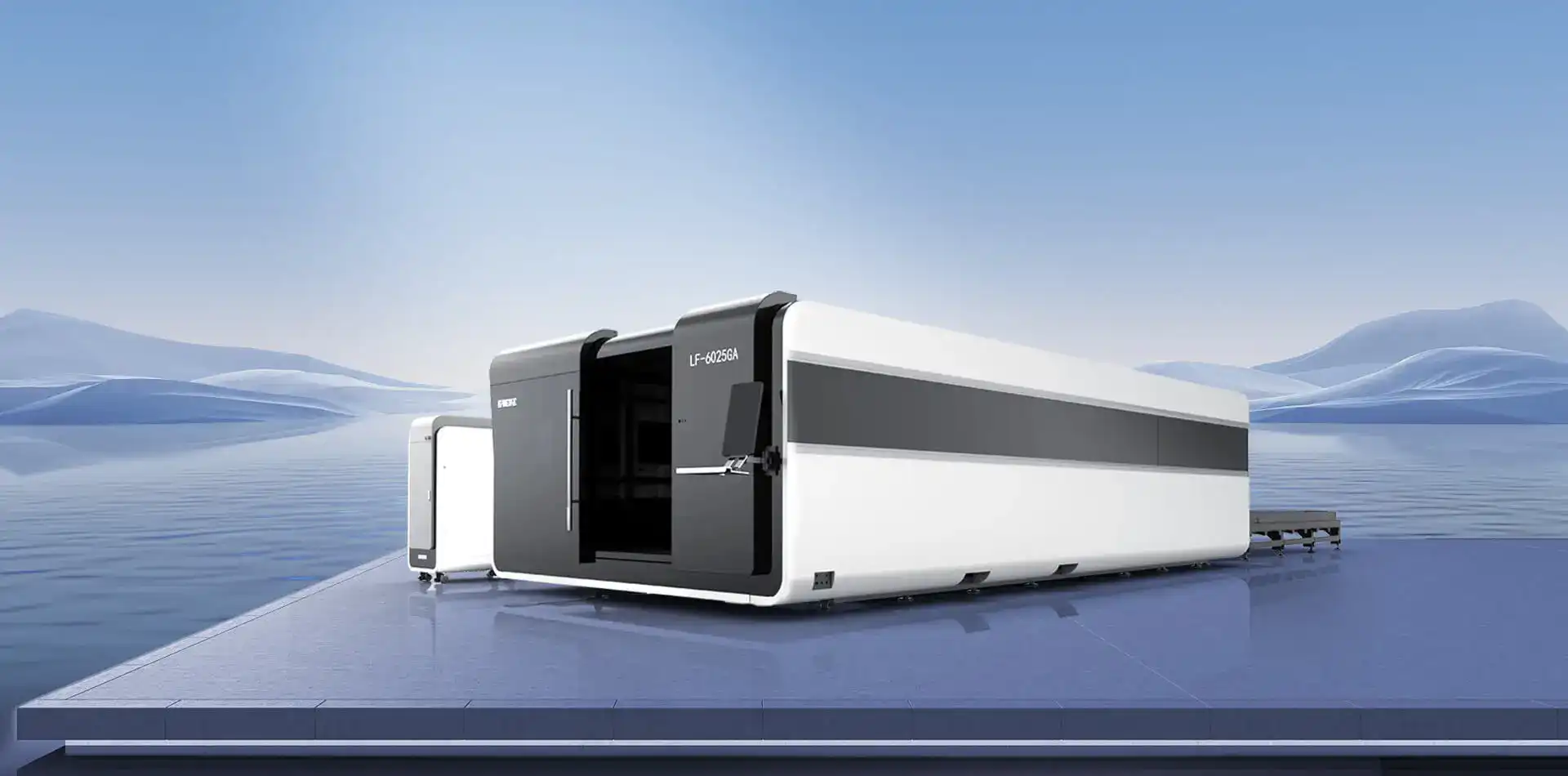
Thin–mid sheet job shops — LF3015GA (fiber, sheet)
Stable workhorse for enclosures/cabinets and general sheet metal. Start with a shuttle table.

High-speed thin–mid, bright-edge — GA3 (high-acceleration).
High contour accuracy and acceleration; excellent with N₂ bright-edge strategies.
Sheet + profiles on one line — LF3015GAR (plate & tube integrated).
One program and team for sheet and tubes. It pays when tubes are ≥20–30% long-term.

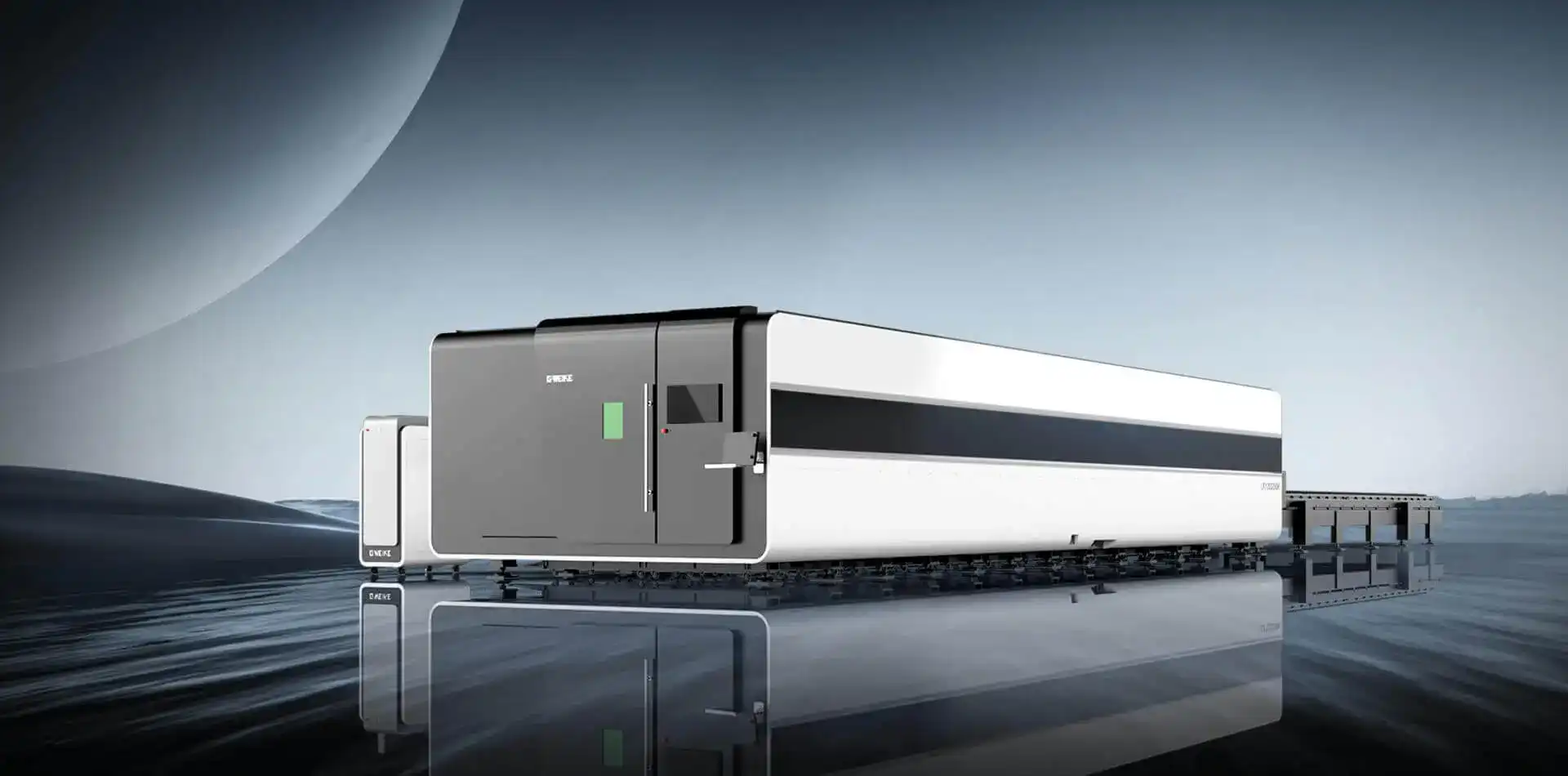
Oversized sheets / special formats — GH / large-bed configurations.
For heavy or large panels; plan handling, extraction and layout early.
What’s usually included in a quote
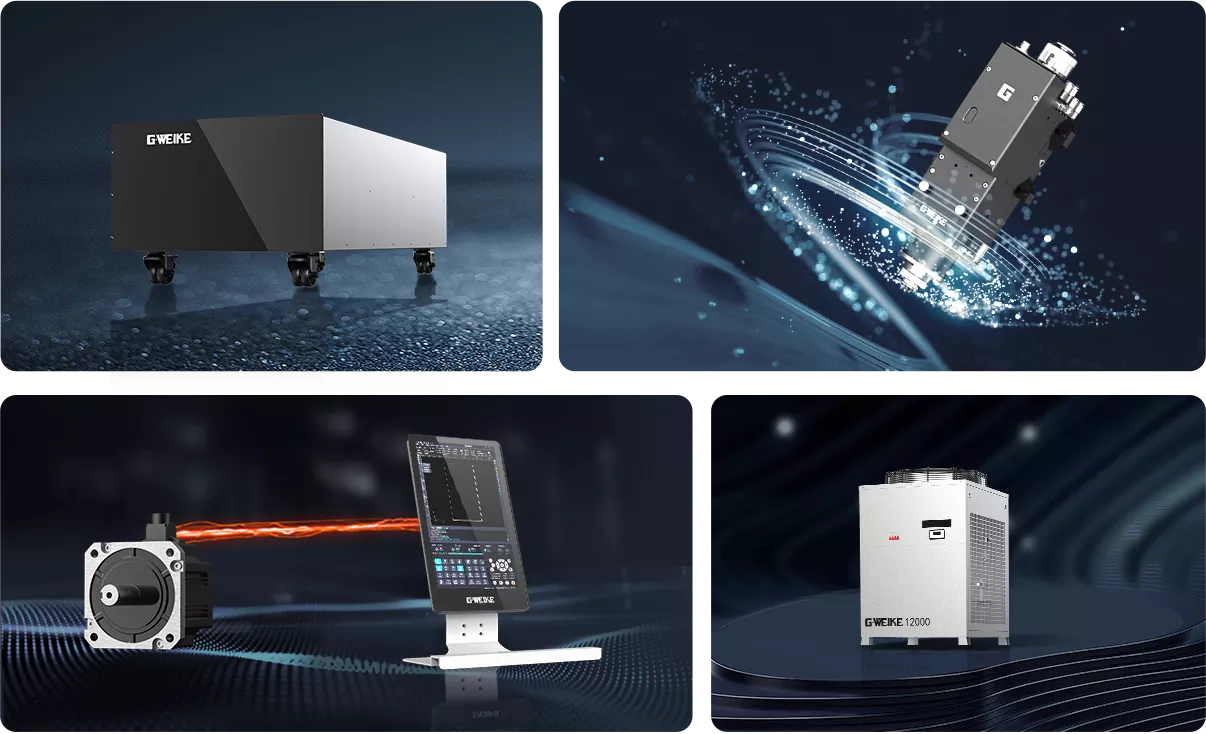
Machine with cutting head and laser source
Chiller and fume extraction/filtration (sized to the enclosure)
Enclosure/guarding, interlocks and labels
CAM/nesting license and update policy
On-site installation & operator training
Warranty terms and starter spares (nozzles, protective windows, filter media)
Lead time and acceptance test scope
How to Compare Quotes (Apples-to-Apples)
Two quotes can look similar on paper while delivering very different output and lifetime cost. Use this checklist to normalize offers.
- Laser source & cutting head: exact model, warranty scope, and whether protective windows/nozzles are standardized.
- Motion & table: bed size, shuttle table included or optional, and expected changeover time.
- Enclosure & extraction: enclosure class + dust/fume solution level (filters are a recurring cost). See airflow & exhaust setup.
- Assist gas package: regulators, valves, gas path, recommended gas strategy by your materials. (Fundamentals: how laser cutting works.)
- Software: nesting/CAM license term, updates, and post-processor availability.
- Installation & training: on-site days, number of trainees, acceptance test scope, and travel cost assumptions.
- Service level: response time SLA, remote diagnostics, local spares availability.
- Acceptance criteria: thickness targets and edge quality expectations. If bevel is needed, align it up-front: bevel cutting guide.
How to get an accurate number (send this with your RFQ)
Materials & your top-5 weekly thicknesses
Target takt time / number of shifts
Bed size / max part envelope / sheet format
Gas strategy (N₂ / O₂ / clean dry air) and available utilities
Automation intent (shuttle / load-unload / tower)
Facility readiness (3-phase power, ventilation, floor/handling)
Any certification or safety requirements
Ownership cost (TCO): what you should budget for
A purchase price is only one part of the decision. In real production, the largest cost levers are assist gas strategy, consumables, uptime, and service response.
1) Assist gas cost (often the #1 variable)
O₂ is economical for carbon steel and faster piercing, while N₂ enables oxide-free edges on stainless/aluminum but can raise operating cost. Clean dry air can be a cost-saving option in some thickness ranges if the process is tuned correctly.
2) Consumables
Nozzles, protective windows, ceramic rings, filters, and occasional lens maintenance. Stable process parameters + clean gas improve consumable life.
3) Power & utilities
Higher kW typically requires stronger cooling and stable 3-phase power. Budget for compressor/dryer (if using air), extraction/filtration, and facility readiness.
4) Uptime & service level
The difference between “basic warranty” and “fast response with local spares” shows up directly as throughput. For multi-shift operations, service scope can be worth more than a small upfront discount.
FAQ
Why do most suppliers avoid listing a single “all-in” price?
Is a higher kW always better?
What options usually change the quote the most?
What should I send to get an accurate quote quickly?
Does the quote usually include installation and training?
Related Guides (Best Next Reads)
Cutting Basics & Selection
Materials & Process Windows
Advanced Cutting & Automation
Conclusion
Price bands are a helpful starting point. The right configuration still comes down to your materials, thickness mix, takt time and the automation that keeps the machine cutting. Share your drawings and weekly mix—our applications team will recommend a matched setup and lead time.
Talk to an Engineer → Send my materials & drawings
(This page covers industrial fiber laser cutters for metal. For desktop/small-format CO₂ on acrylic/wood, please see our consumer site GWEIKE Cloud.)
Need a specific quote?
Share your materials, thickness mix, sheet format, shift plan, and a few sample drawings (DXF/PDF). Our applications team will recommend a matched setup and lead time.
Request Technical Support Explore Fiber Laser Cutting Systems