

Laser cutting has been a core process in metal fabrication for decades. For many factories, the standard workflow is still sheet laser cutting: buy pre-leveled sheets, load one sheet onto the table, cut, unload, then repeat.
That approach works well for many jobs. However, as manufacturing moves into a “high-efficiency, low-margin, fast-delivery” era, many companies realize the real limit is no longer cutting speed. The real limit is non-cutting time: loading, unloading, waiting for a forklift, re-positioning, manual sorting, and frequent stops.
This is where coil laser cutting (also called coil-fed laser cutting) becomes important. It is not just a laser cutter with a different raw material. It is a shift from intermittent single-machine production to a continuous production system.
This article explains coil laser cutting in simple terms—covering principles, line structure, ROI logic, software intelligence, industry applications, maintenance, safety, and future trends—and includes a practical selection checklist and FAQ.
1. Why Sheet Laser Cutting No Longer Fits High-Volume Production
Sheet laser cutting is straightforward: place a fixed-size sheet on the table, align it, cut, unload, and load the next sheet. In high-volume production, three common bottlenecks become visible.
1.1 Low Logistics Efficiency: The Machine Stops Too Often to “Wait for Loading”
Sheet processing is naturally “stop-and-go.” After every sheet, the system must unload, load the next sheet, and align it. The larger the daily volume, the more frequent the changeovers. Many factories eventually discover that the machine is “advanced,” but the real cutting time per day is lower than expected because it spends too much time waiting.
1.2 Material Waste: Fixed Sheet Boundaries Create Repeated Scrap
Sheets come in standard sizes (for example, 1.5 m × 3 m or 2 m × 4 m). When parts are close to the sheet boundary, when the job mix is complex, or when orders must be mixed, factories often generate “awkward leftovers”—scrap pieces that are too small to reuse for main parts and have limited value.
In short: sheet nesting is limited by sheet boundaries.
1.3 High Labor Dependence: High Volume Means High Sensitivity to Human Variation
Sheet processing usually requires frequent human actions: handling, positioning, unloading, sorting, and moving pallets. If the operator rhythm changes, if internal logistics is slow, or if sorting becomes a bottleneck, the machine stops. Manual handling can also increase the risk of surface scratches and part mixing.
2. What Is Coil Laser Cutting? From a “Tool” to an Automated Production System
Many people first think coil laser cutting simply means “cutting coil instead of sheet.” The more accurate definition is:
A coil laser cutting machine is not a single standalone machine. It is a continuous production line that integrates decoiling, leveling, feeding, dynamic laser cutting, and part handling/scrap removal.
You can think of it as: raw material enters the factory as a steel coil, and the line outputs ready-to-use parts for bending, welding, or assembly.
2.1 The Five Stages of a Coil Laser Cutting Line
A complete coil-fed laser cutting line typically includes:
- Decoiling: safely and smoothly uncoiling a heavy steel coil
- Leveling: removing coil curvature and residual stress
- Feeding: servo feeding the strip into the cutting section
- Cutting: cutting shapes while the strip is moving
- Sorting & Scrap Handling: stacking parts and continuously removing scrap
When these stages work together, continuous production becomes real: one coil can run for a long time, with fewer interruptions and less manual intervention.
2.2 The Core Vision: Higher OEE (Overall Equipment Effectiveness)
OEE is a simple way to measure “how much good product a system truly produces.” Coil-fed lines aim to reduce non-cutting time and push production toward stable, predictable output.
3. Principles and Motion Logic—The Hard Part Is Not Cutting, It’s Cutting Accurately While Moving
The key challenge is not whether the laser can cut metal. The key challenge is: while the material is moving, how can the system still cut accurately and consistently?
3.1 Flying Cutting: Keeping Shapes Correct on Moving Material
Flying cutting means the strip moves forward while the laser head moves at the same time—and the cut circle must still be a circle.
If the motion is not synchronized, typical problems appear:
- circles become “stretched” into ovals
- hole spacing drifts over distance
- edges fluctuate and burr risk increases
So the control system must synchronize feeding motion and cutting path in real time.
3.2 Dynamic Coordinate Compensation: Treat the Strip as a “Moving Coordinate System”
In sheet cutting, the workpiece is mostly stationary. In coil cutting, the workpiece is always moving. The system must continuously know the strip’s position and speed, then convert the cutting path into the strip’s real-time coordinate system.
In simple words:
- the system always knows how far and how fast the strip moved
- the laser head compensates the path accordingly
- the cut result stays stable, similar to cutting on a stationary sheet
3.3 Tension Control: Without Stability, You Get Wrinkles, Drift, and Deformation
If the strip is too tight, it can stretch; if it is too loose, it can wrinkle and vibrate. Tension instability makes flying cutting unstable.
This is why coil lines typically use closed-loop control strategies for tension and alignment, keeping the strip inside a stable “process window.”
4. Core Mechanical Modules—Every Section Exists for Stable Continuous Output
A coil line may look long and complex, but every module serves one goal: keep the strip flat, stable, and controllable in the cutting zone, and ensure parts and scrap leave the line smoothly.
4.1 Decoiler: Safety Comes First
A heavy steel coil has high inertia. During power loss or emergency stop, braking and interlock design matter. Industrial decoilers typically include expansion, braking, safety interlocks, and anti-recoil measures to keep the process safe and stable.
4.2 Leveler: Reducing “Stress Memory”
Coil material tends to “remember” its coiled shape. Leveling uses multiple rollers to repeatedly bend and straighten the strip, improving flatness and stability.
Leveling is not just about “looking flat.” It directly helps:
- stable focus and nozzle height
- more consistent cut edges
- fewer abnormal stops due to warping
4.3 Loop / Accumulator: A Buffer That Decouples Upstream and Downstream
Many lines include a loop pit or accumulator between leveling and cutting. It works like a buffer tank: it isolates upstream fluctuations from downstream cutting rhythm, making the cutting zone more stable.
4.4 Cutting Section: Dynamic Support + Fume and Slag Management
Coil cutting is continuous, so fume and scrap are also continuous. The cutting section must handle:
- stable support to reduce vibration and lift
- fast fume extraction to reduce optics contamination
- smooth slag and scrap flow to prevent jams
4.5 Unloading, Stacking, and Scrap Conveying: Solving the “Last Mile”
In many real factories, the bottleneck is not cutting—it is unloading and sorting. Cutting faster does not help if the output is blocked. A well-designed coil line integrates stacking and scrap conveying to match the continuous rhythm.
5. ROI Modeling—How Coil vs Sheet Makes Economic Sense
The business value of a coil line must be explained with a clear model, not a fixed payback promise. A reliable approach is to give a simple framework with variables.
5.1 One-Sentence ROI Framework
Annual benefit (estimate) = material savings + labor savings + recovered productive time − (additional energy/maintenance/depreciation differences)
5.2 Material Savings: The Real Point Is “Effective Utilization,” Not Only Price
Coil purchase can be advantageous in many sourcing situations, but the bigger factor is often effective utilization. Coil lines can enable continuous nesting—length is effectively “unlimited,” so you reduce repeated boundary scrap and can mix orders more efficiently.
Also, coil lines can manage tail-end strategies (cut-off, recovery, re-nesting) in a more systematic way, instead of relying on ad-hoc manual decisions.
5.3 Labor Efficiency: From “Handling Labor” to “Process Supervision”
In sheet cutting, labor is often consumed by loading, unloading, moving, and sorting. Coil cutting reduces frequent changeovers, shifting roles toward inspection, supervision, and maintenance—often reducing the impact of human variation on daily output.
5.4 Time Savings: Reducing Changeover Downtime
Sheet processing includes frequent plate changes. Coil processing can run longer on one coil, reducing stop frequency. The result is not just “a little faster”—it is more stable daily effective production time, which often matters most in low-margin production.
6. Intelligent Software—The “Soul” of Continuous Production
Without software, a coil line is simply connected hardware. With software, it becomes a modern production system.
6.1 CAD/CAM and Continuous Nesting: From “One Sheet” to “A Continuous Length”
Coil nesting is not only about packing density. It also considers:
- shortest and smoothest cutting path
- stable drop sequence (to avoid part flip/jam)
- tail-end material strategy
- mixed-order optimization (order pool nesting)
6.2 Vision / Inspection (Optional): Defect Detection and Avoidance
Coil surface defects (scratches, dents, oxidation marks) can be costly for appearance parts. Online inspection and defect avoidance helps convert “random scrap” into “controlled decisions”: critical parts avoid defect zones, while non-critical parts may use those areas.
6.3 MES Integration: Full Traceability from Coil ID to Finished Parts
In industries with strict quality systems, traceability is essential. MES integration typically supports:
- coil ID and batch binding
- parameter and alarm log recording
- yield statistics and downtime cause analysis
7. Industry Applications—Where Coil Lines Usually Create the Most Value
7.1 Automotive Manufacturing: Rhythm and Consistency First
Many structural brackets and platform parts require stable cycle time and consistency. Coil lines can support continuous output and connect more smoothly to downstream welding or assembly rhythm.
7.2 Home Appliances: Appearance Quality Turns Scratches into Real Cost
Panels and enclosures have high surface standards. Coil lines can reduce handling steps, improve leveling stability, and support defect management—helping stabilize yield.
7.3 Energy Storage and Electrical Cabinets: Long Parts and Batch Orders Benefit from Continuity
Cabinet and enclosure parts often benefit from continuous nesting and traceability, reducing rhythm fluctuation in production planning.
7.4 Kitchen and Sanitary Hardware: Thin Stainless Requires Both Utilization and Edge Stability
This sector often needs good utilization while keeping edge quality stable. Coil lines help by maintaining stable feeding and process windows.
8. Engineering Challenges and Practical Solutions
8.1 Strip Drift: Keeping Deviation Inside a Controllable Range
At high speed, strip drift can occur due to edge differences, tension fluctuation, or residual stress. Engineering solutions typically combine edge sensing, guiding actuators, and feeding coordination to keep deviation within a controllable range.
8.2 HAZ and Thermal Distortion: Stability Under Continuous Cutting
Continuous cutting can accumulate heat. Common strategies include:
- cutting sequence planning and skip strategies
- stable assist gas and nozzle height control
- parameter libraries and process windows by material/thickness
8.3 Scrap Management: Preventing Jam and Rhythm Collapse
If scrap does not leave the cutting zone continuously, jams can happen. Typical approaches include scrap conveyors, segmented drop zones, extraction coordination, and drop sequence optimization. The core rule is simple: scrap must flow out like water, not pile up.
9. Maintenance, Safety, and Future Trends
9.1 Preventive Maintenance: Continuous Production Depends on Discipline
A practical approach is a daily/weekly/monthly checklist:
- daily: nozzle, protective lens, fume extraction status, alarms
- weekly: clean leveler/feeder rollers, lubrication checks
- monthly: filtration, wear-part life tracking, spare-part planning
9.2 Safety: Enclosure, Interlocks, and Industrial Fume Control
High-power laser cutting and continuous fume generation require engineered safety: enclosure and interlocks, fume extraction and filtration, fire prevention measures, and clear SOP training. Stability starts with safety.
9.3 Industry 4.0: MES + Logistics + AGV Integration
The trend is clear: coils move in automatically, parts move out automatically, and data is traceable end-to-end. Coil lines are becoming key nodes in digital manufacturing.
10. GWK Coil-Fed Laser Cutting Solutions — Which System Fits Your Factory, and Why Choose GWK?
After understanding the macro advantages of coil-fed laser cutting, the next question is practical: which GWK solution should you choose, and what makes it a safer long-term investment? GWK’s coil-fed portfolio is built as a continuous production system—not a standalone cutter—covering stable coil handling, leveling, synchronized feeding/flying cutting, and downstream handling that protects throughput and surface quality.
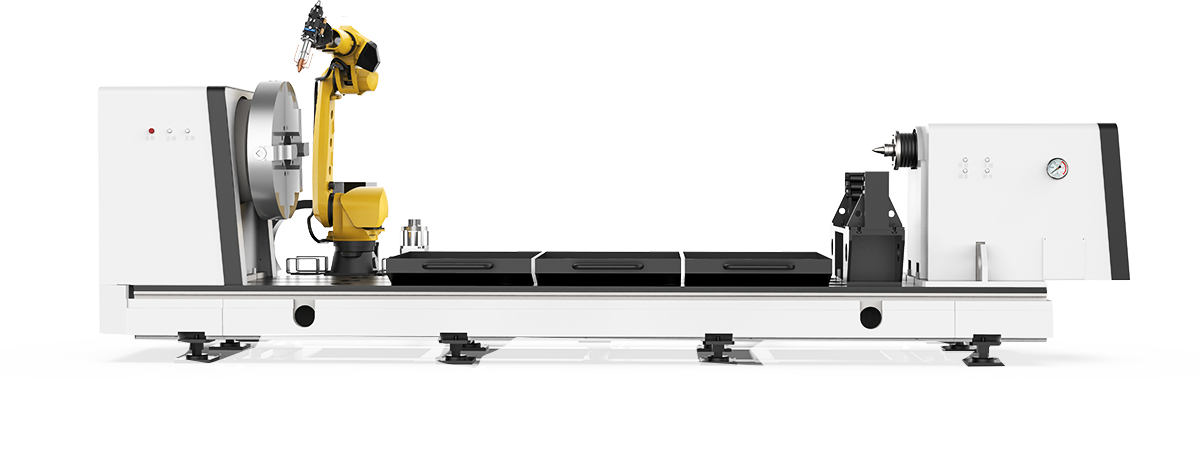
Choose the solution path based on your order structure (high-volume vs mixed orders), your downstream capability (sorting/stacking/bending), and your plant constraints (space/layout). Then use the “Why GWK” summary to understand where the engineering value comes from.
10.1 Automated Coil Material Fiber Laser Cutting Line (GKS-CPL3015B / GKS-CPLS6015B)
High-volume production, long continuous runs, reduced changeovers, and factories that want to push OEE through system-level automation.
This solution represents the complete “coil-to-part” philosophy: decoiling → leveling → stable servo feeding → flying cutting → output handling. It is designed to keep production moving with fewer stops and less manual intervention.
- Coil compatibility window (public snapshot): coil width 500–1500 mm, coil inner diameter Φ508–Φ610 mm, max coil weight 10 T.
- Material thickness range (typical): carbon steel 0.8–3 mm; stainless steel 0.8–2 mm.
- Line rhythm: feeding speed 0–20 m/min with synchronized motion logic for continuous cutting.
Why it matters: In high-volume environments, the real constraint is often non-cutting time and downstream congestion—not laser power alone. A coil-fed line reduces sheet changeover frequency and stabilizes daily output by keeping material flow continuous.
10.2 Coil Laser + Integrated Auto-Sorting System (Optional Output Upgrade)
Factories where cutting is fast but picking/sorting is the bottleneck (“last-mile” throughput problem), especially with mixed nests and high SKU variety.
In many workshops, lines do not stop because the laser is slow—they stop because parts pile up. GWK’s integrated auto-sorting concept is designed to keep the output end flowing so the cutting rhythm stays stable.
- Data-linked sorting logic: output handling is coordinated with nesting/cut information so parts can be routed consistently.
- Mixed-part sorting: supports real nesting scenarios with different shapes and sizes in the same run.
- Surface protection: reduces manual handling steps, helping lower scratch risk on appearance-sensitive parts.
Why it matters: If you cut faster but still pick slowly, the cutting zone becomes a queue. Integrated sorting reduces line blockage, lowers mixing risk, and stabilizes yield for high-finish parts.
10.3 Customized Modular Coil-Fed Line (Non-Standard / Plant-Fit Engineering)
Mid-sized factories, space-limited workshops, special workflows, and production with many part types and smaller batch sizes.
Not every factory needs a long, fully automated line. GWK’s modular approach focuses on fitting the system to the plant layout, material range, and quality/traceability needs.
- Layout flexibility: line configuration can be designed to match real shop constraints (straight, L-shape, U-shape, etc.).
- Power and process matching: system configuration can be aligned to your material mix and edge-quality targets.
- Production management options: optional workflows such as protective-film handling and part-level identification/marking can support traceability and downstream control (project dependent).
Why it matters: For multi-variety production, the best system is often the one that achieves stable output without overbuilding. A modular line can deliver continuous-production benefits while staying realistic on floor space and investment structure.
Why Choose GWK? Three Engineering Reasons That Reduce Risk and Improve ROI
Across all solution paths, GWK focuses on the fundamentals that determine whether coil-fed cutting works reliably in real production.
- 1) Motion control depth (feeding servo + laser path coupling): coil-fed accuracy depends on synchronized control while material is moving. Strong coupling improves stability of holes, spacing, and edge consistency at speed.
- 2) Heavy-duty structural design for long-term stability: continuous lines introduce vibration and dynamic load; structural rigidity and process stability help maintain geometry over long duty cycles.
- 3) Practical software ecosystem for continuous production: production-ready nesting, job release, and traceability logic helps turn “continuous cutting” into continuous output you can manage and repeat.
11. Selection Checklist
- What materials do you process (carbon steel, stainless, coated sheet, aluminum) and what is your main thickness range?
- Are your coil specs compatible (inner/outer diameter, width, coil weight)?
- Is your production mainly high-volume single part, or mixed orders with many part types? Any appearance-critical parts?
- Can downstream processes match continuous rhythm (stacking, sorting, bending, welding, internal logistics)?
- Do you need defect management, traceability, MES integration, and production statistics?
If you would like to learn more, please feel free to contact our engineers.
12. FAQ
- Is a coil line always cheaper than sheet processing?
Not always. Coil lines usually fit best when you have thin sheet, high volume, frequent sheet changeovers, and downstream processes that can match continuous output. - Can coil lines cut thick plate?
Coil solutions are typically optimized for thin to medium thickness. Always confirm the thickness window by model specification and sample validation. - Does flying cutting reduce accuracy?
Flying cutting depends on leveling quality, tension stability, feeding control, and synchronization. Accuracy should be evaluated by acceptance standards and sample parts. - Why is leveling so important?
Stable leveling supports stable focus/nozzle height, consistent edges, and fewer abnormal stops due to warping. - What about coil surface defects?
With inspection and avoidance strategies, critical parts can avoid defect zones, reducing random scrap and stabilizing yield. - How do you handle strip drift?
Edge sensing + guiding actuators + feeding coordination keep deviation within a controllable range. - Is faster feeding always better?
No. Speed must match quality targets, stability, extraction capacity, and scrap handling ability. - Will scrap jam the line?
If scrap handling is weak, yes. Proper conveyors, drop zoning, and process planning keep scrap flowing out continuously. - Do I need MES?
If you require traceability and stable quality systems (automotive, cabinets, etc.), MES integration is very valuable. - Does a coil line need more space?
Usually yes, because it is a full line. Layout planning must include logistics flow and downstream space. - How long does coil changeover take?
It depends on coil handling equipment and SOP. Treat changeover time as part of line efficiency evaluation. - Do operators need higher skills?
The role shifts from heavy handling to supervision and maintenance. With training, stability improves and human variation decreases. - Is it suitable for many-part small batches?
It can be, if your software supports mixed-order nesting and you have strong sorting/handling. Otherwise, benefits may be reduced. - How do you guarantee cut edge quality?
By a stable process window (gas/nozzle/focus), stable feeding, and a validated parameter library. - What drives payback most?
Effective material utilization, labor structure improvement, reduced downtime, and stable yield.
13. Conclusion
A coil laser cutting system is not only about cutting faster. It is about producing with fewer stops, fewer handling steps, more stable rhythm, better traceability, and stronger long-term consistency. For manufacturers focused on high-volume efficiency and stable delivery, coil-fed laser cutting is increasingly a key path toward modern continuous production.