

Can a CO₂ Laser Cut Metal?
Can a CO₂ laser cut metal? Yes—but only under limited conditions, typically thin steel with careful setup. For modern metal fabrication (especially stainless, aluminum, and production throughput), fiber lasers are the industry standard.
- Best-case: thin mild steel / thin stainless (slow, oxygen assist)
- Not recommended: aluminum, copper, brass, thicker sheet/plate
- Production reality: fiber lasers deliver faster cutting, better stability, and lower OPEX
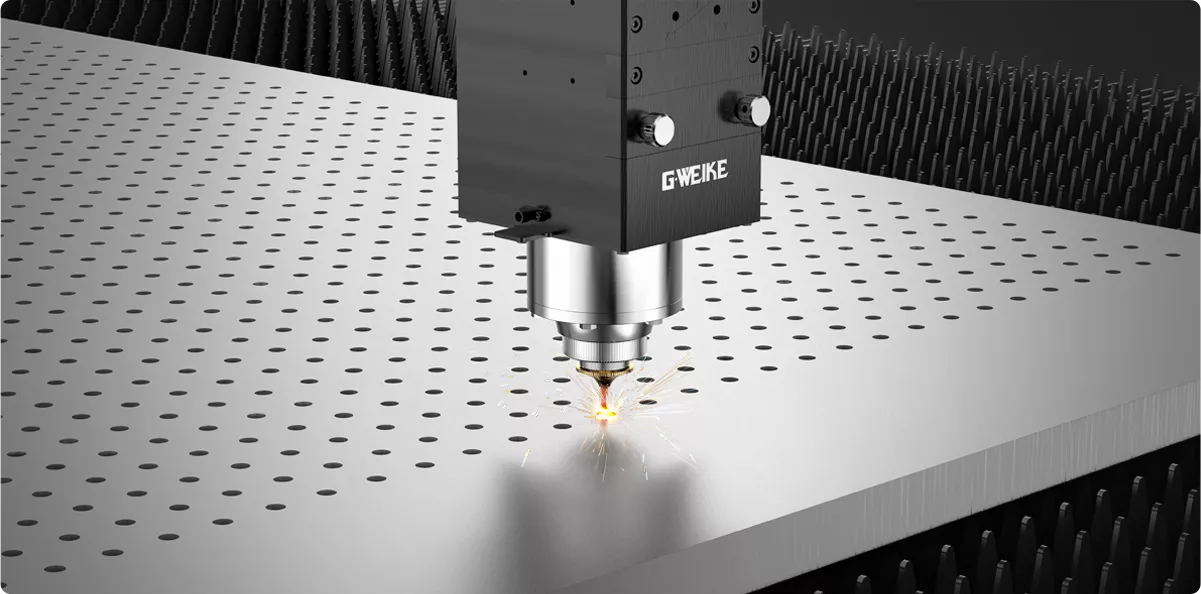
How CO₂ Lasers Interact with Metal
CO₂ lasers operate at a wavelength of approximately 10.6 μm. While that wavelength is highly effective for many non-metal materials (wood, acrylic, plastics), metals reflect a large portion of CO₂ laser energy.
From an engineering perspective, metal cutting with CO₂ lasers typically suffers from:
- Low absorption efficiency on metal surfaces
- High reflectivity, especially on aluminum and copper
- More energy required to start and sustain cutting
- Larger heat-affected zones (HAZ) compared with fiber in many metal-cutting scenarios
Key takeaway: “Can cut” does not automatically mean “production-viable.” On metal, CO₂ is often inefficient and unstable compared with fiber.
What Metals Can a CO₂ Laser Cut?
Under controlled conditions, a CO₂ laser can cut some metals, primarily:
- Mild / carbon steel (thin sheet)
- Stainless steel (very thin)
- Galvanized steel (thin, with risks)

Typical thickness range (realistic)
- Usually ≤ 1–2 mm
- Often requires oxygen assist gas
- Cutting speed is slower than fiber
- Edge quality may require secondary finishing
| Metal | CO₂ feasibility | Typical thickness | Practical notes |
|---|---|---|---|
| Mild / carbon steel | Possible | Thin sheet (often ≤ 1–2 mm) | Slow vs fiber; oxygen assist commonly used |
| Stainless steel | Limited | Very thin | Edge consistency can be challenging in batches |
| Galvanized steel | Risky | Thin only | Coating burn-off; fumes and instability risk |
Metals Not Suitable for CO₂ Laser Cutting
CO₂ lasers are generally not recommended for highly reflective metals, including:
- Aluminum
- Copper
- Brass
- Thick galvanized steel
Why?
- Very high reflectivity at 10.6 μm
- Unstable cutting process
- Higher risk to optics and lower repeatability
- Poor edge consistency for batch production
Factory reality: in modern metal fabrication, CO₂ lasers are rarely chosen for aluminum or copper cutting.
Thickness & Quality Limitations
Even when cutting thin steel, CO₂ laser metal cutting often faces production constraints:
- Lower cutting speed
- Potentially more burrs and slag
- Higher energy consumption and maintenance requirements
- More variation in edge quality from part to part
If your goal is throughput, repeatability, and cost control, these limitations usually determine the final decision.
CO₂ vs Fiber Laser: Engineering Comparison
For metal cutting, fiber lasers typically outperform CO₂ lasers across key manufacturing metrics.
| Aspect | CO₂ Laser | Fiber Laser |
|---|---|---|
| Wavelength | 10.6 μm | ~1.06 μm |
| Metal absorption | Low | High |
| Cutting speed (metal) | Slower | Faster |
| Aluminum / copper | Unstable / not recommended | Stable (process dependent) |
| Energy efficiency | Lower | Higher |
| Maintenance cost | Higher (typical) | Lower (typical) |
| Industrial adoption for metal | Declining | Industry standard |
Cutting metal in production?
Start with a fiber laser configuration matched to your materials, thickness, and throughput target—then validate with sample cutting.
Explore Metal Laser Cutting MachinesWhen Does a CO₂ Laser Still Make Sense?
CO₂ lasers can still be reasonable in limited scenarios:
- Workshops primarily cutting non-metal materials (wood/acrylic/plastics)
- Occasional cutting of very thin steel where speed is not critical
- Fully depreciated legacy equipment
- Educational or lab environments
For dedicated metal fabrication—especially aluminum and stainless steel in batch production—fiber laser systems are typically the correct choice.
Best Choice for Metal Cutting Today
If your goal is reliable metal cutting:
- Carbon steel / stainless steel → fiber laser cutting machine
- Aluminum / copper / brass → fiber laser cutting machine (recommended)
- High productivity & batch consistency → fiber laser cutting machine
For most modern metal fabrication shops, fiber laser technology is the correct long-term investment.
Recommended Next Step
If you are evaluating equipment for metal cutting, start with a fiber laser solution designed for your material thickness and production volume.
Need a Recommendation for Your Material & Thickness?
Share your material, thickness range, drawings, and edge-quality targets. We can recommend a fiber laser configuration and provide sample cutting validation.
FAQ
Can a CO₂ laser cut metal?
Yes, but typically only thin steel under limited conditions. It is not suitable for most industrial metal cutting applications.
What thickness of metal can a CO₂ laser cut?
Often up to about 1–2 mm for mild steel or thin stainless, depending on machine power and assist gas.
Can a CO₂ laser cut aluminum?
Generally no. Aluminum reflects CO₂ laser energy strongly, making the process unstable and inefficient.
Is CO₂ or fiber laser better for metal cutting?
Fiber lasers are generally better for metal cutting due to higher absorption, faster speed, and lower operating costs.
Why are fiber lasers preferred for metal cutting?
Fiber lasers operate at a wavelength that metals absorb efficiently, resulting in faster cutting and better stability.
Are CO₂ lasers still used in industry?
Yes, mainly for non-metal materials. Their use for metal cutting continues to decline.
Related Reading
- Metal Laser Cutting Machine Hub – A complete overview of metal laser cutting machines, with fiber vs CO₂ comparison, applications, and buying logic.
- Sheet Metal Laser Cutting Machine Selection Guide – How to choose laser power, bed size, and automation options for sheet metal production.
- Fiber Laser Cutting Power Selection – Engineering-based guidance on selecting the right laser power for different metals and thicknesses.
- What Is a Coil Laser Cutting Machine? – Continuous coil-fed laser cutting systems for high-volume metal processing.
- How to Cut Galvanized Sheet Metal – Safety considerations, coating burn-off risks, and quality control when cutting galvanized steel.
- Cutting Data: Stainless Steel, Carbon Steel & Aluminum – Practical cutting data and process windows based on real-world applications.
- How to Cut Steel Pipe with a Laser – Techniques and equipment considerations for laser cutting steel tubes and pipes.
- How to Cut Aluminum Pipe – Managing reflectivity, edge quality, and heat input in aluminum tube cutting.
- How to Cut Copper Pipe – Challenges of high reflectivity materials and why fiber lasers outperform CO₂ in copper cutting.