

Contents: Cost model · Labor · Power · Extraction · Sandblasting comparison · ROI worksheet · Use cases · FAQ
Quick answer: Laser cleaning can lower the total cost of frequent precision cleaning, post-weld oxide removal, mold cleaning and selective coating removal because it can reduce consumables, waste handling, rework and downtime. It is not automatically cheaper for occasional, large-area structural rust removal, where sandblasting can still provide lower cost per square metre.
The right question is not “How much electricity does a laser cleaner use?” It is “What does the complete cleaning job cost today, and what changes if the job is done with a laser?” Use local data for labor, energy, disposal and output. This page gives the calculation framework; it does not promise a universal payback period.
Key Takeaways
- Calculate cost per productive hour and cost per accepted part, not only purchase price.
- Include extraction, filters, safety, handling and downtime—not just electricity.
- Laser cleaning is strongest when the job is frequent, selective, precise or downtime-sensitive.
- Sandblasting can still be the better economic choice for large structural surfaces that require an anchor profile.
- Use real samples and a measured cycle time before approving an ROI model.
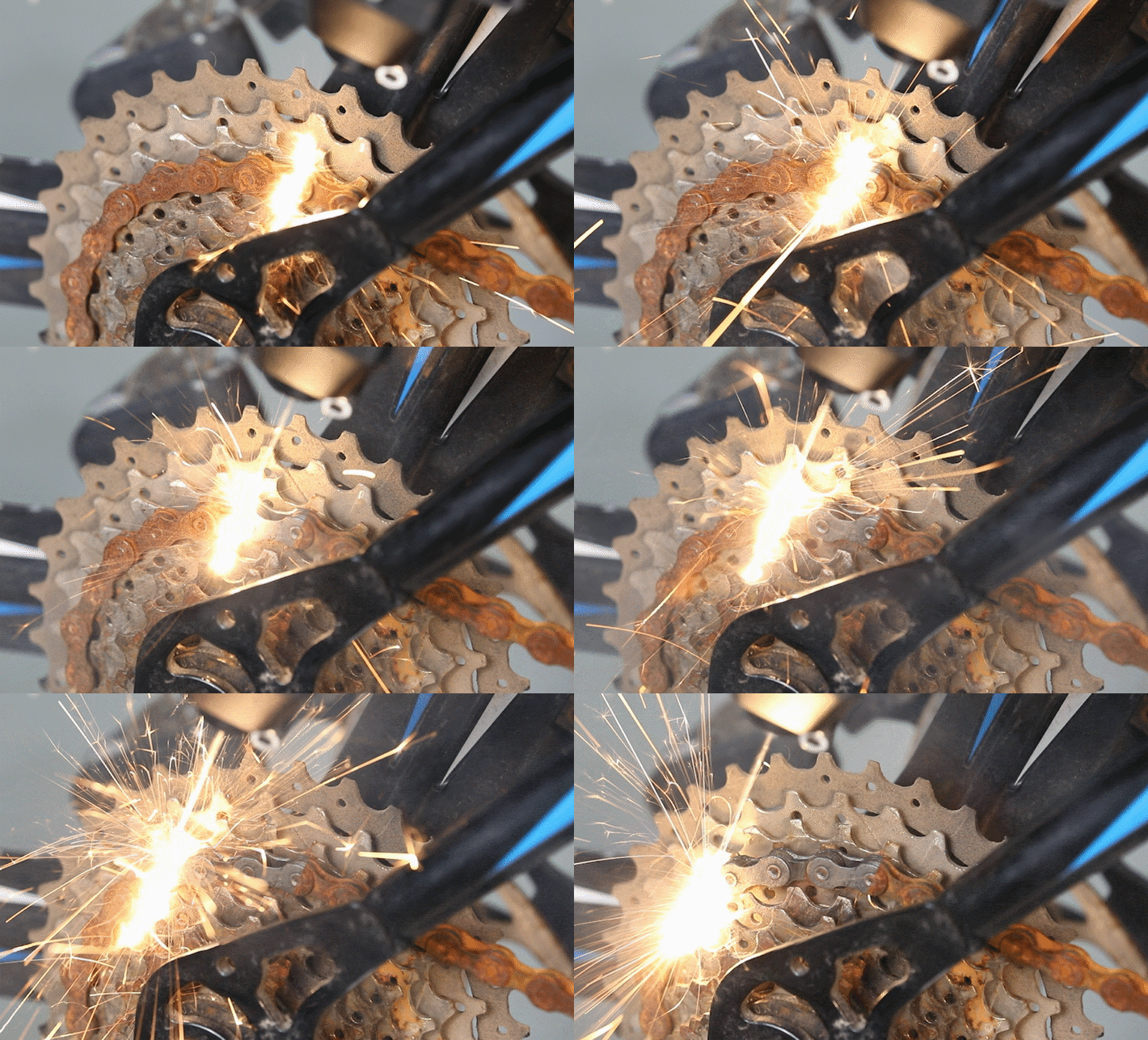
Start with a Complete Cost per Hour Model
A useful ROI calculation separates costs that occur every hour from the costs hidden around the job. This prevents false comparisons such as using only laser electricity against the full cost of blasting or chemical stripping.
= machine cost per productive hour
+ operator labor per hour
+ electricity per hour
+ extraction and filter cost per hour
+ maintenance and protective consumables per hour
+ facility, safety and compliance cost per hour
Important: productive hours are the hours actually spent cleaning accepted workpieces. Do not spread the equipment investment across 24 hours per day if the machine is only used for two productive hours.
Calculate Machine Cost per Productive Hour
The purchase price is spread across the expected useful, productive operating hours of the entire project. Include required equipment, not only the laser source.
= (machine + cleaning head + extraction + installation + training − residual value)
÷ expected productive operating hours
| Include in the installed project cost | Why it matters |
|---|---|
| Laser cleaning system | Base equipment, selected power level and required cleaning function. |
| Extraction and filtration | Required to control fumes and captured contamination; filter replacement belongs in ongoing cost. |
| Electrical and site preparation | Power connection, safe work area and any local installation work can be project costs. |
| Fixtures, carts or handling aids | These often determine whether the operator can achieve the measured cycle time repeatedly. |
| Training and sample qualification | Good results depend on validated technique, process windows and safety practice. |
Labor, Power, Extraction and Maintenance
Labor is often the largest hourly variable
Measure the full operator time: loading, positioning, masking, cleaning, inspection, rework, unloading and documentation. For mold cleaning or weld finishing, also record time saved by avoiding disassembly, chemical soaking or moving the part to another station.
Use system input power—not laser output power—for electricity
A 1500W laser output rating is not the same as total electrical consumption. Calculate from the documented input power of the cleaning system and extraction equipment, then multiply by local electricity cost and actual operating duty cycle.
= (system input kW × duty cycle + extraction kW × duty cycle) × local electricity price per kWh
Include filters and protective consumables
Laser cleaning avoids abrasive media and chemical baths, but it is not zero-cost. Include extraction filter replacement, protective windows or lenses where applicable, scheduled maintenance, PPE and any cleaning-head consumables specified for the actual configuration.
For process setup and test-piece validation, see the handheld laser cleaning parameters guide.
Compare the Same Job, Not Just the Machines
Use the same surface area, contamination level, acceptance standard and output target for every method. The comparison below is a cost worksheet, not a claim that one method always wins.
| Cost category | Laser cleaning | Sandblasting | Chemical stripping |
|---|---|---|---|
| Equipment investment | Higher initial project cost | Low to medium, depending on blast equipment and containment | Medium, including tanks, ventilation and handling |
| Recurring consumables | Filters and protective consumables | Abrasive media, nozzles and PPE | Chemicals, replenishment, rinse materials and PPE |
| Waste management | Captured fumes and filter disposal | Spent media and dust; may be hazardous with coatings | Spent chemical and rinse-water disposal |
| Selective cleaning | Strong for defined zones and precision areas | Low precision; surrounding surfaces are affected | Low precision unless masking and handling are extensive |
| Large-area throughput | Application-dependent | Often stronger for structural steel | Depends on immersion capacity and process time |
| Downtime opportunity | Can be strong for in-situ mold and weld work | Often needs containment and cleanup | Often needs disassembly, soaking and rinsing |
For the application-level decision—rather than the cost math—read laser cleaning vs sandblasting vs chemical stripping.
Build Your ROI and Payback Worksheet
Collect values from one representative cleaning job before calculating. If results vary by part or contamination level, create separate worksheets instead of averaging unrelated jobs.
- Installed laser project cost: machine, extraction, installation, training and essential handling equipment.
- Expected productive cleaning hours per month.
- Current-method cost per hour: labor, consumables, waste handling, PPE and equipment use.
- Laser-method cost per hour: labor, electricity, filters, maintenance and safety costs.
- Accepted parts or accepted cleaned area per hour for each method.
- Downtime cost, if the cleaning method affects a production line, mold or repair schedule.
= current method monthly cost − laser cleaning monthly cost
Payback period in months
= total installed laser project cost ÷ monthly savings
Cost per accepted part
= total hourly cleaning cost ÷ accepted parts cleaned per hour
Use a conservative case first: calculate with lower machine utilization, realistic operator time and actual filter or waste costs. If the project works only under an optimistic throughput assumption, it is not yet a reliable investment case.
Where the ROI Case Is Usually Strongest
Post-weld HAZ cleaning on stainless steel
The value may come from avoiding acid paste, chemical waste, manual polishing, part movement and rework. Measure the complete weld-cleaning workflow, not only beam-on time. Laser cleaning is especially relevant when cleaning happens repeatedly at the weld station.
Mold, die and tool cleaning
The ROI may be driven by recovered production time. If a mold can be cleaned with less disassembly and shorter stoppage, record the internal value of that downtime in addition to labor and consumables.
Selective paint removal and repair preparation
Laser cleaning can be valuable when only a defined zone must be exposed and surrounding coating must remain intact. The cost benefit is often reduced masking, reduced rework and less cleanup—not necessarily the fastest full-surface stripping rate.
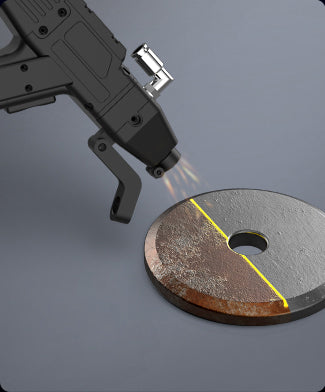
When Laser Cleaning Is Not the Economic Choice
A credible ROI page must identify cases where another process is more practical. Consider sandblasting or chemical stripping when:
- The job is occasional large-area structural rust removal and no precision or waste-management constraint changes the economics.
- The coating specification requires an anchor profile for paint adhesion.
- Deep pitting corrosion or thick coating would require excessive passes.
- The facility already has efficient blasting or chemical-processing infrastructure with low incremental cost.
- The expected machine utilization is too low to spread the project cost across productive hours.
Request a Custom Laser Cleaning ROI Estimate
To receive a useful configuration and ROI discussion, send data from a real job rather than a general description.
- Base material, surface condition and contamination type: rust, oxide, paint, oil, resin, release agent or other fouling.
- Photos, sample part size and approximate surface area per shift or per month.
- Current cleaning method, labor count, typical cleaning time and consumables used.
- Required result: visual appearance, contamination removal, weld quality, tolerance preservation or coating-preparation standard.
- Expected production frequency, downtime limitation and whether cleaning is combined with welding or cutting work.
- Destination country, electrical supply and workplace extraction requirements.
Need a recommendation based on your actual cleaning job? Share a sample, current method and production target. GWEIKE can help identify a suitable LCW configuration and the inputs required for a realistic ROI calculation.
View LCW Cleaning SystemsLaser Cleaning Cost and ROI FAQ
What is included in laser cleaning cost per hour?
Include machine cost per productive hour, labor, electricity, extraction and filters, maintenance, PPE, handling and any facility or compliance costs associated with the job.
Is laser cleaning always cheaper than sandblasting?
No. Laser cleaning can be economically strong for frequent precision work, selective cleaning, mold cleaning and weld finishing. Sandblasting may remain more economical for occasional or large-area structural steel work, especially when an anchor profile is required.
How do I calculate laser cleaning payback?
Divide the total installed laser project cost by the monthly savings compared with the current method. Use local labor, energy, consumables, waste, downtime and utilization data rather than generic online figures.
Should electricity be calculated from 1500W or 3000W laser power?
No. Use the documented input power of the complete system and extraction equipment, then apply actual duty cycle and your local electricity price. Laser output power alone is not total electrical consumption.
What is the most important input in an ROI calculation?
For many jobs, it is productive utilization and complete cycle time. A machine that is used frequently on accepted work can spread its installed cost effectively; a machine used occasionally may not justify the investment even if its consumable cost is low.