
Laser cleaning can prepare metal for welding by removing surface rust, oxide, oil, paint and other contaminants without abrasive media or chemical residue. It is particularly useful when a joint needs selective, repeatable cleaning or when minimizing consumables and cleanup matters. The correct process should always be confirmed with representative samples and the applicable welding procedure.
Key Takeaways
- Think of laser cleaning as a controlled pre-weld preparation step—not a universal substitute for every surface-treatment method.
- Match the process to the metal, contamination, joint design, required clean zone and production rate.
- Inspect the cleaned surface and validate sample welds before standardizing a production setting.
- Keep parameters in the cleaning guide; keep welding acceptance criteria in the applicable welding procedure.
Why Surface Preparation Matters Before Welding
Welding joins more reliably when the intended weld area is free from contamination that can interfere with energy transfer, shielding, fusion or inspection. Surface conditions vary by supplier, storage method, forming process and previous operations. A part that looks clean may still carry light oil, oxide, moisture or coating residue.
Contamination is only one possible contributor to weld problems. Joint fit-up, filler material, shielding gas, heat input, operator practice and welding parameters also matter. For that reason, laser cleaning should be evaluated as part of the complete welding process rather than as an isolated solution.
Practical rule: define the required surface condition and clean-zone width before choosing equipment. “Remove rust” is not yet a complete process specification.
What Can Laser Cleaning Remove Before Welding?
A laser can be used to remove or reduce selected surface layers. The achievable result depends on the base metal, contamination type, layer thickness, geometry and the verified process window.
| Surface condition | Typical use before welding | Important check |
|---|---|---|
| Light rust and oxide | Often suitable for localized joint preparation. | Confirm that deeper corrosion or pitting does not remain in the weld area. |
| Oil and light process residue | May be suitable after sample testing. | Identify the residue and verify extraction; some contaminants require a different process. |
| Paint or coating near the joint | Useful for selective removal where only the welding zone needs treatment. | Confirm coating composition, fumes and the required clean-zone width. |
| Mill scale or heavier oxide | Case-dependent; multiple passes or another method may be needed. | Inspect consistency across the complete joint length. |
| Galvanized coating | Requires process review before welding. | Address coating removal, fumes and the weld specification together. |
| Unknown adhesive or coating | Do not assume a standard setting is appropriate. | Identify material and assess safety before testing. |
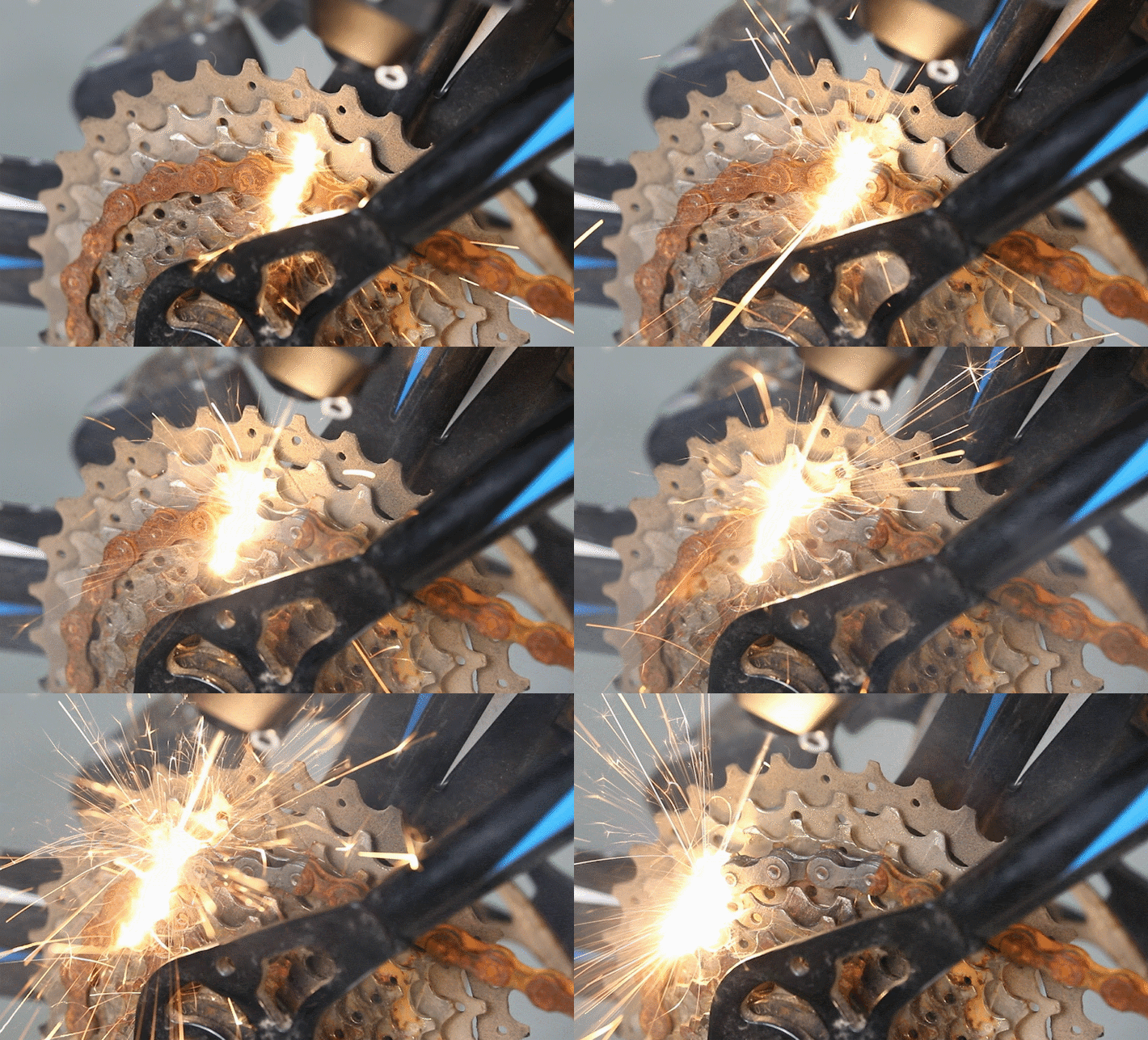
A Five-Step Laser Cleaning Workflow Before Welding
- Define the job. Record the base material, joint type, contamination, required clean-zone width and expected production output.
- Prepare the work area. Establish safe handling, extraction, personal protection and a clear material-flow path before processing parts.
- Test a representative area. Start with a sample part or non-critical section. Adjust only within a documented and safe process window.
- Inspect the cleaned surface. Check that the intended contaminant has been removed consistently and that the joint area meets the defined requirement.
- Validate sample welds. Weld representative parts and assess them using the applicable welding procedure, quality standard and customer requirements.
For setting up test passes, use the handheld laser cleaning parameters guide. It should be used with sample results, not as a substitute for material-specific validation.
Where Laser Cleaning for Weld Preparation Is Most Useful
Localized weld joints
When only a seam, lap joint, edge or repair area must be prepared, laser cleaning can avoid treating the full part surface. This is useful when surrounding surfaces should remain unchanged.
Repeatable manual or automated workstations
Where the same part returns regularly, a defined cleaning zone and verified workflow can help standardize preparation before welding. The important measure is accepted weld quality and cycle time, not laser power alone.
Repair welding and maintenance work
Repair areas may contain oxidation, coatings or field contamination. A compact laser cleaning workflow can be useful when abrasive media, chemicals or extensive cleanup create practical difficulties.
Coated parts that require a clean weld zone
Selective coating removal can be relevant when the joint must be exposed but the rest of the part should remain coated. Review fume control and coating specifications before proceeding.
Material-Specific Considerations
| Material | What to consider before welding | Useful related guide |
|---|---|---|
| Carbon steel | Check rust, mill scale, oil and storage-related oxidation. Confirm joint cleanliness over the full weld path. | Carbon Steel Laser Welding Guide |
| Stainless steel | Control cross-contamination and ensure the required appearance or corrosion-resistance process is respected. | Use application-specific sample testing. |
| Aluminum | Oxide and oil control are important; material condition and joint design must be assessed together. | Aluminum Laser Welding Guide |
| Galvanized steel | Review coating condition, fume management and the welding specification before selecting a preparation method. | Validate with representative samples. |
Do not copy a setting from one material to another. Similar-looking surfaces can respond differently because of alloy, finish, oxidation, coating thickness and part geometry.
Laser Cleaning vs. Grinding, Sandblasting and Chemicals Before Welding
The best method depends on the required result and the total workflow. Compare the same job: material handling, cleaning time, consumables, waste, inspection and rework—not only the initial equipment price.
| Method | Where it can fit | Limitation to review |
|---|---|---|
| Laser cleaning | Selective, repeatable preparation where low-media residue and controlled treatment are useful. | Needs verified setup, extraction, safety controls and adequate utilization. |
| Grinding | Small manual areas and simple local preparation. | Can introduce abrasive handling, variable results and additional cleanup. |
| Sandblasting | Larger rough surfaces where broad coverage is more important than selectivity. | Requires media handling, containment and cleanup. |
| Chemical cleaning | Specific oils or residues that suit an approved chemical process. | Requires chemical handling, rinsing or disposal controls. |
For the broader method-selection decision, read laser cleaning vs. sandblasting vs. chemical stripping.
How to Verify a Cleaned Surface Before Welding
Verification should match the joint and quality requirement. A clean visual appearance alone may not be sufficient for every application.
- Confirm that visible rust, oxide, coating or residue has been removed from the defined weld zone.
- Check that the prepared zone covers the joint, edge, overlap or bevel consistently along its full length.
- Record material, contamination condition, process window and inspection method for repeat jobs.
- Make representative sample welds after changing the cleaning method, material source or contamination condition.
- Assess sample welds according to the relevant welding procedure, inspection plan and customer specification.
- Review extraction and safety controls whenever coatings, oils or unknown contaminants are involved.
When Laser Cleaning Is Not the Right Choice
Laser cleaning is not automatically the most economical or technically suitable preparation method. Consider another approach when:
- The work is occasional, very large-area structural rust removal and selective cleaning provides little benefit.
- The next process requires a specified anchor profile or roughness that the cleaning process does not provide.
- Deep corrosion, thick layers or complex contamination would require excessive passes.
- The coating or contaminant is unknown and safe processing has not yet been assessed.
- The expected utilization is too low to support the equipment and workplace investment.
For a complete comparison of labor, electricity, extraction, consumables and utilization, see Laser Cleaning Cost per Hour: Labor, Power, Consumables & ROI.
What to Prepare for a Useful Trial
A practical recommendation starts with the actual part and process data. Share the following information when requesting an evaluation:
- Material grade, thickness, joint type and welding method.
- Photos or samples showing rust, oxide, oil, paint, coating or other contamination.
- Required clean-zone width and expected output per shift or month.
- Current preparation method, labor time, consumables and disposal requirements.
- Required weld acceptance criteria and any applicable customer or industry specification.
Need to assess laser cleaning before welding? Provide a representative sample and production target. GWEIKE can help identify a suitable cleaning configuration and define the information needed for a controlled process trial.
View LCW Cleaning SystemsLaser Cleaning for Weld Preparation FAQ
Can laser cleaning remove oil before welding?
It can help remove suitable surface oil and residue, but performance depends on the contamination and base material. Test a representative sample and inspect the surface before production use.
Does laser cleaning replace every weld preparation method?
No. The right method depends on contamination, required surface condition, joint geometry, welding procedure and production volume.
Can galvanized steel be laser cleaned before welding?
It requires a process review. Consider coating condition, fume management, the required clean zone and the applicable welding specification before testing.
How wide should the cleaned zone be around a weld joint?
The required width depends on joint design, contamination and the welding procedure. Define it in the work instruction, then confirm it with representative samples.
Do welds need to be tested after changing the cleaning method?
Yes. Evaluate representative sample welds according to the applicable welding procedure, quality requirements and customer specification.