
Laser paint removal is most useful when a coating must be removed selectively, when nearby areas need to remain protected, or when abrasive media and chemical waste are a concern. It is not automatically the fastest or lowest-cost option for every large coated surface. Coating type, area, substrate, finish requirement and production workflow should decide the method.
Key Takeaways
- Laser cleaning is often worth evaluating for local rework, weld areas, fixtures, repair zones and controlled coating removal.
- Large, uniform stripping jobs may still justify sandblasting or another bulk process.
- The goal is controlled removal—not an unverified promise that every coating can be removed without affecting the substrate.
- Use sample testing to confirm surface condition, cleaning boundary, productivity and downstream suitability.
When Laser Paint Removal Works Best
Paint removal is not one application. A maintenance team removing a small patch around a corroded edge has different needs from a manufacturer preparing a masked weld zone, or a repair shop correcting coating defects on finished equipment.
Laser cleaning is especially relevant when the job rewards control over the treated area. The process can be assessed for localized paint removal without filling the work area with abrasive media or creating a chemical stripping workflow.
| Application situation | Why laser cleaning may be worth evaluating |
|---|---|
| Local coating rework | Targets a repair zone without automatically processing the entire part. |
| Weld-zone preparation | Can help remove coating or contamination near a joint before a validated welding process. |
| Fixtures, jigs and tooling | May reduce media residue in holes, edges and detailed features. |
| Repair and maintenance work | Useful where access, containment or cleanup makes traditional methods inconvenient. |
| Selective stripping around features | Can be assessed where labels, machined faces, boundaries or adjacent surfaces need consideration. |
Typical decision logic: the smaller and more selective the removal area, and the more important the surrounding surface is, the stronger the case for evaluating laser paint removal.
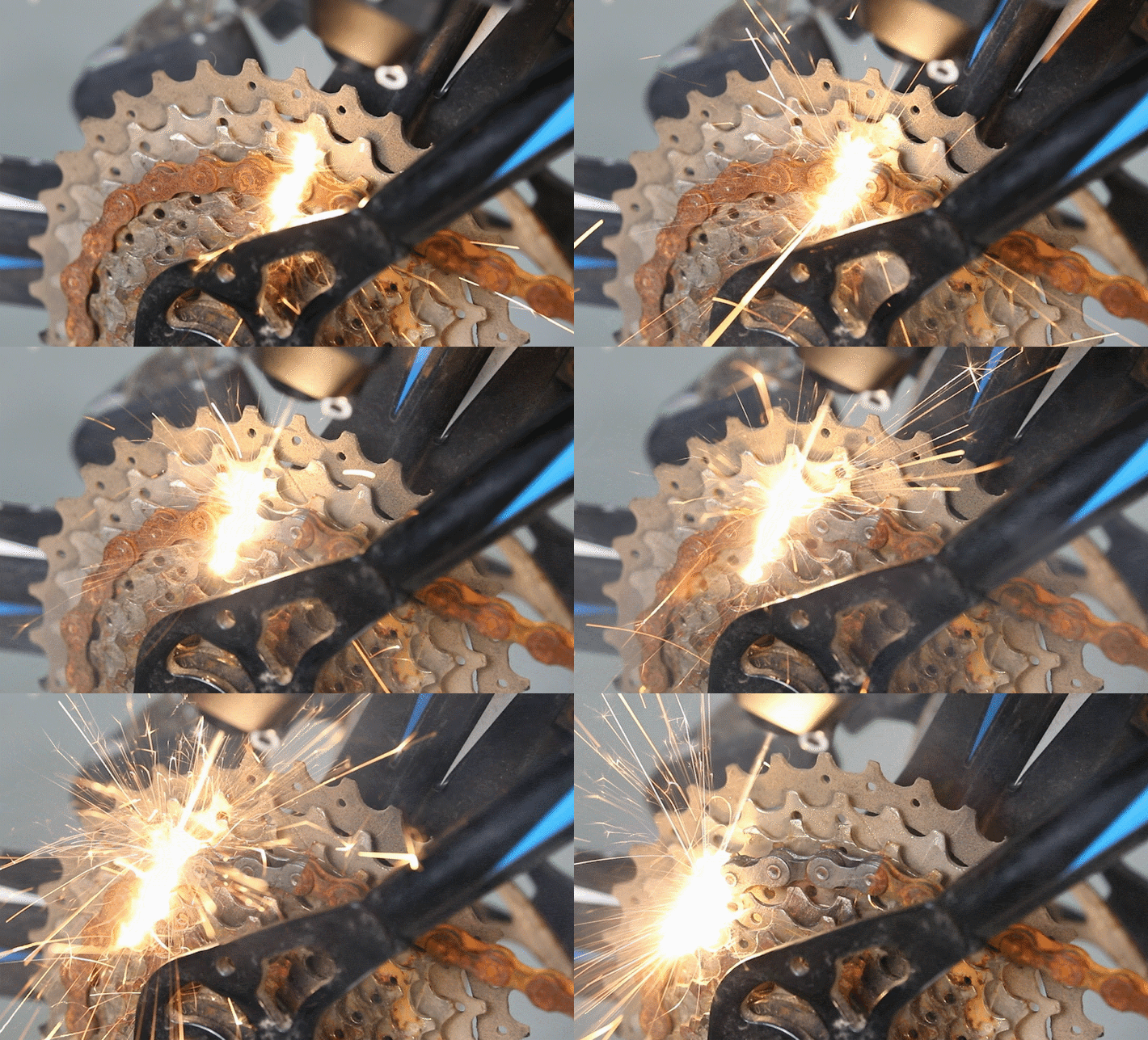
When Sandblasting or Another Method May Be Better
Laser cleaning should be part of a process selection, not a default answer. For some large, flat, heavily coated surfaces, a production line that already has proven blasting capacity, containment and dust handling may remain the more practical option.
| Situation | Why another method may deserve priority | Still check before deciding |
|---|---|---|
| Large, uniform coated areas | Bulk removal rate may matter more than selectivity. | Waste handling, masking needs and final surface condition. |
| Very thick or unknown multilayer coating | Removal behavior may be variable without testing. | Cross-section, coating history and sample results. |
| Existing high-throughput blasting line | Current equipment and trained workflow may already suit the job. | Media contamination, labor and rework cost. |
| Substrate texture is not critical | Abrasive processing may be acceptable when finish control is less sensitive. | Downstream coating or inspection requirements. |
For the broader decision framework, read Laser Cleaning vs Sandblasting vs Chemical Stripping.
Selective Removal and Base-Material Protection
“Selective” does not mean that every coating can be removed with no risk to the substrate. It means the process can be developed to focus treatment on the intended area. The outcome still depends on the paint system, substrate, surface finish, geometry and verified process window.
Steel, stainless steel, aluminum, galvanized material and previously finished surfaces should not be treated as interchangeable. Thin parts, coated metals, heat-sensitive assemblies and cosmetic surfaces need particular care during evaluation.
Avoid blanket claims. Do not promise “no substrate damage” before a representative sample test. The appropriate claim is that the process can be evaluated for controlled removal and substrate protection under the specific application conditions.
What to Check Before a Paint-Removal Test
A useful sample test begins with the job definition, not a request for a generic power setting. Record enough information to judge both removal and the surface left behind.
| Check | Why it matters | Useful question |
|---|---|---|
| Coating system | Paint, primer, powder coating and multilayer finishes can behave differently. | What layers are present, and is the coating specification known? |
| Coating thickness | Influences the amount of material to remove and expected process behavior. | Is the coating uniform, repaired or layered? |
| Base material | Controls the acceptable surface condition and risk profile. | Is it steel, stainless, aluminum, galvanized or another material? |
| Target area | Determines whether selective treatment has an advantage. | Is the entire part stripped or only a weld/repair zone? |
| Required result | Defines the acceptance standard after cleaning. | Is the next step welding, repainting, inspection or assembly? |
| Part geometry | Edges, holes, recesses and nearby components affect access and control. | What must remain untouched around the cleaning zone? |
Laser Paint Removal vs Sandblasting vs Chemical Stripping
Use the method that solves the actual production problem. The table below is a starting point, not a substitute for sample trials and site-specific safety requirements.
| Decision factor | Laser cleaning | Sandblasting | Chemical stripping |
|---|---|---|---|
| Local, selective removal | Often a strong candidate to evaluate. | Can require masking and containment. | Can spread beyond the intended treatment zone. |
| Large-area bulk removal | May not be the preferred productivity choice. | Often considered for broad uniform surfaces. | Depends on process, chemistry and waste handling. |
| Media or residue management | No abrasive media, but extraction and safety controls remain necessary. | Requires media collection and cleanup. | Requires chemical handling, rinsing or disposal planning. |
| Surface control | Must be verified by coating/substrate sample. | May alter surface texture. | Must be checked for residue and compatibility. |
Paint Removal for Rework and Weld Preparation
For repair work, coating may need to be removed from a defined area before welding or recoating. The cleaned result should be checked for remaining coating, oils, oxide and other contaminants relevant to the next process. Removing visible paint alone does not automatically confirm a weld-ready surface.
Read Laser Cleaning for Weld Preparation for the weld-specific workflow. Rust and oxide are separate problems; see Laser Rust Removal when corrosion or oxide is the primary issue.
Cost: Look Beyond the Per-Hour Number
Paint-removal cost is not just machine time. Compare labor, masking, media or chemical consumables, extraction, waste, cleanup, rework, quality risk and the time required to move parts through the process. A selective method can be valuable when it removes steps around a repair or rework job, even if it is not the fastest option for a large panel.
For an ROI framework, see Laser Cleaning Cost per Hour: Labor, Power, Consumables and ROI.
What to Send for a Laser Paint-Removal Sample Test
- Clear photos of the part and the exact coating-removal zone.
- The base material and coating or paint information, if known.
- Approximate coating thickness and whether multiple layers are present.
- The size of the area to be treated per part and expected production quantity.
- The current cleaning method and its main problem: labor, waste, masking, access, rework or surface quality.
- The required result: repainting, weld preparation, inspection, repair or another downstream process.
- Details of adjacent surfaces, seals, labels, holes or components that must be protected.
Evaluate with real job data. Share the coating, substrate, cleaning area, current method and expected output. GWEIKE can help determine whether laser cleaning should be trialed for the application and what sample-result criteria should be reviewed.
Explore Laser CleaningLaser Paint Removal FAQ
Can laser cleaning remove paint?
Laser cleaning can be evaluated for paint and coating removal, especially for selective areas, rework and surface preparation. Results depend on coating type, thickness, substrate and finish requirement.
Does laser paint removal damage metal?
The objective is controlled coating removal, but results must be verified with representative samples. Coating type, base material, surface finish and process settings all affect the result.
Can laser cleaning remove powder coating?
Powder coating may be evaluated by sample testing, but removal behavior varies with the coating system, thickness, color, substrate and required surface condition.
Is laser paint removal better than sandblasting?
Laser cleaning can be a strong option for selective work and sensitive surrounding areas. Sandblasting or another process may suit some large, uniform coating-removal jobs better.
Can laser cleaning remove paint before welding?
It can be assessed for this purpose, but the cleaned surface must be checked against the welding process requirements. Remaining coating, oil and oxide must be considered.
What information is needed for a sample test?
Provide photos, coating and substrate details, the target area, current process, required surface result, quantity and any surrounding features that must be protected.