
Laser rust removal uses controlled laser cleaning to remove rust, oxide and selected surface contaminants from metal parts without abrasive media. It can be a good fit when cleaning must be selective, controlled or low in consumables. Suitability depends on the base material, corrosion condition, part geometry, required finish, output target and whether the part will be welded, coated, painted or assembled afterward.
Key Takeaways
- “Rust” can range from light surface oxidation to heavy corrosion; one process should not be assumed suitable for every condition.
- Define the required surface result before choosing equipment: cosmetic cleaning, weld preparation, coating preparation or functional restoration can require different acceptance checks.
- Laser cleaning and sandblasting are alternatives for some jobs, but neither is universally better.
- Approve a process from representative samples and the downstream result—not from a simple visual demonstration.
What Does Laser Rust Removal Do?
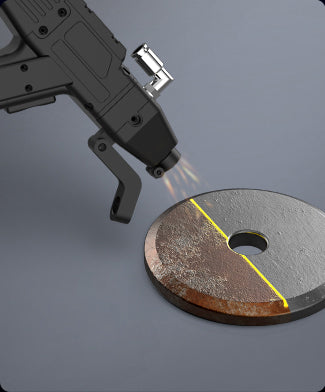
Laser rust removal is a laser-cleaning application used to evaluate the removal of corrosion products, oxide layers and selected contaminants from a metal surface. The process is non-contact and does not rely on abrasive blasting media. A controlled beam is directed at the area to be cleaned while the workpiece, fixture, handling and safety process are chosen for the application.
The right question is not simply “can a laser remove rust?” It is: what surface condition is required after cleaning, and can that result be repeated on the actual part at the required output?
Define the job by the desired result: “remove rust” may mean preparing a weld area, exposing metal before coating, cleaning a mold surface, restoring a precision component or treating selected locations on a larger structure. These are different production decisions.
Assess the Rust and Surface Condition First
Rust condition is one of the most important inputs to a cleaning trial. Light flash rust, loose scale, pitting corrosion, thick oxide and mixed oil-and-rust contamination can behave differently. Record the real condition across the regular workpiece mix, not only the easiest sample.
| Surface condition | What to record | Why it matters |
|---|---|---|
| Light surface oxidation | Area coverage, material type and whether the surface is uniform. | The target may be appearance, electrical contact or a later production step. |
| Loose rust or flaky scale | Thickness variation, adhesion and part geometry. | Removal behavior and handling needs can differ across the same part. |
| Heavy corrosion or pitting | Depth, affected area, substrate condition and structural requirement. | Cleaning can remove corrosion products but does not restore metal already lost to corrosion. |
| Rust mixed with oil or paint | Contaminant type, order of removal and fume-control requirement. | A single cleaning route may not be the best workflow for every layer. |
| Localized weld or heat-affected oxidation | Location, surrounding finish and required surface state. | The process may be evaluated as part of weld preparation or finishing. |
When Is Laser Rust Removal a Good Fit?
Laser cleaning is often considered where the process needs to be controlled at a selected area, where media handling is undesirable, or where the workpiece geometry and quality requirement justify a non-contact approach.
- Selective cleaning: remove rust or oxide from defined areas while preserving the required surrounding surface.
- Precision parts: evaluate a controlled process when abrasive media, chemical residue or manual tool contact is a concern.
- Weld and coating preparation: prepare defined areas before a downstream process with a documented cleanliness requirement.
- Repeat production: use fixture, recipe and handling controls to repeat a verified result across similar parts.
- Low-consumable workflow: assess the reduction of blasting media or chemical-cleaning consumables as part of the total process.
For the broader technology overview, see the Laser Cleaning Guide.
Laser Rust Removal vs Sandblasting: Choose by the Job
Laser cleaning should not be positioned as an automatic replacement for blasting. The better route depends on corrosion level, surface area, required finish, part access, production rate, waste handling and total operating workflow.
| Decision factor | Laser cleaning evaluation | Blasting evaluation |
|---|---|---|
| Cleaning area | Can be evaluated for defined, selective or controlled areas. | Can be suitable for broad surfaces and established high-volume workflows. |
| Consumables | Does not use abrasive blasting media for the cleaning action. | Requires media selection, supply, collection and disposal management. |
| Part geometry | Assess beam access, fixture position and line-of-sight limitations. | Assess access, masking, rebound and media removal from features. |
| Surface requirement | Validate cleanliness, appearance and downstream result on samples. | Validate roughness, cleanliness and potential effect on nearby areas. |
| Best decision method | Compare representative parts, output target and total workflow. | Compare representative parts, output target and total workflow. |
For a fuller job-by-job comparison, read Laser Cleaning vs Sandblasting vs Chemical Stripping.
Surface Preparation Before Laser Cleaning
Good sample preparation makes the result easier to assess. Before testing, identify what is on the part and what should remain after cleaning. If a part contains oil, paint, coatings, scale or masking materials in addition to rust, document the layer order and the required final surface.
| Before the trial | Why it helps |
|---|---|
| Photograph representative rust conditions | Creates a visual reference for the incoming part and supports repeatable evaluation. |
| Identify base metal and any coatings | Prevents an assumed process route from being applied to an unsuitable material or surface. |
| Mark critical cleaning areas | Separates areas requiring full cleaning from areas where only surface preparation is needed. |
| Define the next process | Welding, coating, painting and assembly can require different surface acceptance criteria. |
| Prepare inspection samples | Allows comparison of visual condition, dimensions, surface response and downstream result. |
Power, Beam Delivery and Process Selection
Laser rust removal should be selected from the production requirement, not from power alone. The same nominal power can be configured and applied differently depending on the cleaning area, beam delivery, scan strategy, part geometry, rust condition and required output.
Begin with the normal job mix: material, corrosion type, largest and smallest part, cleaning area per part, target quantity and required final surface. Then validate a process window on real samples. Do not reuse settings from a different material, coating or corrosion condition without confirming the result.
Avoid universal speed or power claims. Verified operating values depend on the system, surface condition, material and quality target. Use an application-specific test plan before defining production settings.
For a parameter-testing framework, see the Handheld Laser Cleaning Parameters Guide.
Rust Removal Before Welding, Coating or Painting
The right cleaning result is determined by what happens next. A part prepared for a weld may need a different acceptance check from a part prepared for coating, painting or display assembly.
| Next process | What to confirm after cleaning | Why it matters |
|---|---|---|
| Welding | Required area cleanliness, residual contamination and the relevant weld-quality check. | Surface condition can affect process stability and finished joint quality. |
| Coating or painting | Specified preparation condition, visual result and coating adhesion test where required. | Rust removal alone is not proof that the surface is ready for every coating system. |
| Assembly or electrical contact | Cleaned area, dimensional condition and functional contact requirement. | Selective cleaning may need precise control around features and mating surfaces. |
| Storage or shipment | Protection plan and acceptable time before the next process. | Freshly cleaned metal may require appropriate handling before further processing. |
For welding-related surface preparation, read Laser Cleaning for Weld Preparation.
Common Rust-Removal Problems and First Checks
| Observed result | Possible reason | First checks |
|---|---|---|
| Rust remains in selected areas | Uneven corrosion, difficult access or an unsuitable process window. | Check the actual rust condition, beam access, part position and target cleanliness level. |
| Uneven visual finish | Mixed surface condition, overlap variation or different base material states. | Compare incoming samples and inspect the result by area rather than using one overall visual judgment. |
| Unexpected surface response | Coating, oil, paint or material variation was not included in the original trial. | Identify all surface layers and test representative samples separately. |
| Rust reappears before the next step | Storage, humidity, handling or delay after cleaning. | Review the post-cleaning protection and the handoff time to the next process. |
| Output is below the production target | Cleaning area, part handling or the job mix differs from the test condition. | Measure the complete workflow, including loading, positioning, cleaning and inspection. |
A Practical Laser Rust Removal Sample-Test Workflow
- Send representative parts. Include normal, difficult and heavily affected examples from the regular job mix.
- Describe the incoming surface. Record the base material, rust condition, coatings, oil, paint and critical features.
- Define the target condition. Explain whether the result supports welding, coating, painting, assembly or another downstream requirement.
- Agree on inspection. Set the visual, functional or downstream acceptance method before reviewing a sample.
- Measure the complete workflow. Validate cleaning quality, handling, output and the next process before approving a production route.
Need to evaluate laser cleaning for a rusted part? Send photos and representative samples, the base material, rust condition, current cleaning method, output target and next production process. GWEIKE can help define a practical sample-test plan.
Explore Laser Cleaning SolutionsLaser Rust Removal FAQ
Can a laser remove rust from steel?
Laser cleaning can be evaluated for removing rust, oxide and selected surface contaminants from steel parts. Suitability depends on the base material, corrosion condition, geometry, finish requirement and production target.
Does laser rust removal damage the base metal?
A suitable process is selected to clean the required surface while protecting the part requirement, but results depend on material, coating, contamination, geometry and verified settings. Test representative parts before production use.
Is laser rust removal better than sandblasting?
Neither method is best for every job. Laser cleaning can be useful for selective, controlled or low-consumable cleaning tasks, while blasting may remain suitable for large-scale or heavily corroded work. Compare both methods against the actual part and output requirement.
Should rust be removed before welding or coating?
Surface preparation is commonly evaluated before welding, coating, painting or assembly. The required cleanliness level should be defined by the downstream process and verified on representative samples.
Can laser cleaning repair corrosion damage?
Laser cleaning can remove corrosion products from a surface, but it does not restore metal that has already been lost through pitting or structural corrosion. Evaluate the remaining substrate against the part requirement.