Precision laser cutting & drilling machines for materials where
microns decide yield
High-precision laser cutting and drilling for cover glass, thick glass, glass holes, FPC, PI/PET film, OCA, polarizer film and display materials. GWEIKE matches the right laser source — picosecond, UV, MOPA or CO₂ — to your part, not the other way around.
*Performance values are typical and vary by model, material, thickness, fixture and process settings. Verify with a sample test.
What makes a laser cutting or drilling machine actually precise
Precision is not one number on a spec sheet. It is a combination of laser source matching, motion accuracy, fixturing, alignment, and validated process windows on your specific material. Here is how the GWEIKE precision laser platform addresses each.
Right laser for the material
Picosecond IR for cover glass, UV / green for FPC and PCB, 1064nm laser configurations for glass drilling, and CO₂ or picosecond configurations for different film workflows. Wrong source = wasted precision.
Motion & positioning
Linear motor stages with ±0.002 mm repeatability on selected models. CCD vision alignment for print-to-cut workflows on flexible substrates.
Process windows, not single numbers
Edge quality depends on pulse energy, repetition rate, focus position and scan strategy. Each application has a validated window, not just one parameter set.
Sample-based qualification
Final acceptance is always a measured sample report: chipping, microcrack depth, edge strength, dimensional tolerance. Spec sheets alone do not qualify a process.
Find the right precision laser machine by part type
Use this quick selector to route buyers from material intent to the correct GWEIKE product page before they compare detailed specifications.
GWK-BL6050
Picosecond ultrafast laser glass cutting for cover glass, sapphire and display glass contour cutting.
Precision glass holesGKS-0605-GD
Precision glass drilling with 600 × 500 mm processing area and 532 / 1064 nm optional configuration.
Larger glass drillingGKS-1210-GD
Glass laser drilling machine for instrument glass, photovoltaic glass, display glass and medical glass applications.
Thick glassGKS-0706-GC
Integrated laser cutting and splitting system for thicker glass processing applications.
FPC / PCB / camera moduleGWK-UV4065
UV / green dual-platform precision laser cutting for electronics and camera module workflows.
PI / CVL / composite filmGKS-0605D-PI
Roll-to-sheet precision laser cutting system for FPC, PI, PET, PP, adhesive and composite films.
PET / OCA / polarizerDC0605
CO₂ sealed RF PET film laser cutting machine for OCA, polarizer, touchscreen PET and related film materials.
Precision laser cutting & drilling specs by application
Typical performance ranges across the GWEIKE precision laser cutting and drilling platform. Final numbers for your part come from a sample test report on your actual material.
| Application | Typical thickness | Typical chipping / kerf | Repeatability | Recommended source |
|---|---|---|---|---|
| Cover glass cutting | 0.1–1.4 mm | ≤10 μm chip* | ±0.01 mm | Picosecond IR |
| Glass drilling | 0.3–15 mm | 60–300 μm* | ±0.03 mm | MOPA |
| Thick glass cut + split | 2–12 mm | Low microcrack risk | ±0.01 mm | Picosecond IR + CO₂ |
| FPC / PCB depaneling | ≤2 mm | No carbon edge | ±0.03 mm | UV / Green picosecond |
| PI / CVL / composite film cutting | ≤1 mm | Narrow kerf / low carbonization* | ±0.002–0.03 mm | Picosecond 532 / 355 nm |
| PET / OCA / polarizer film cutting | ≤1 mm | Clean edge / low burr risk* | ±0.01 mm | Sealed CO₂ |
*Typical values on selected applications. Performance varies by model, material and process settings.
Looking for ultrafast (picosecond / femtosecond) systems?
Picosecond ultrafast laser cutting is a sub-category of precision laser cutting, designed specifically for brittle materials and minimal heat-affected zones.
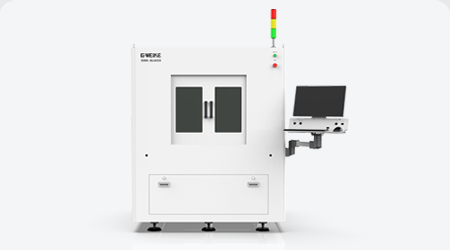
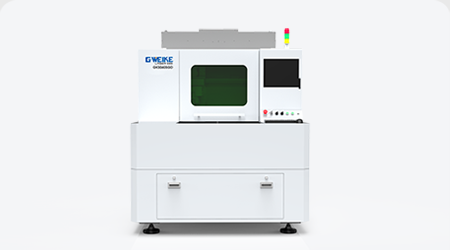
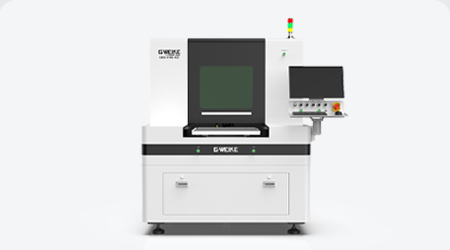
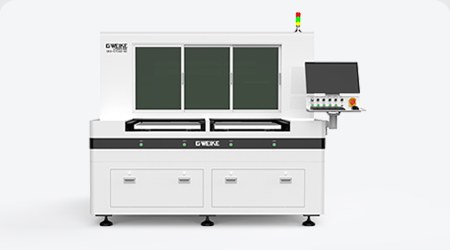
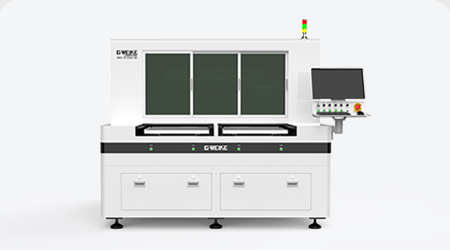
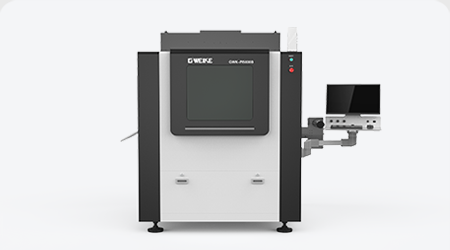
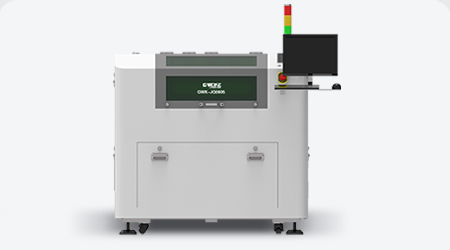
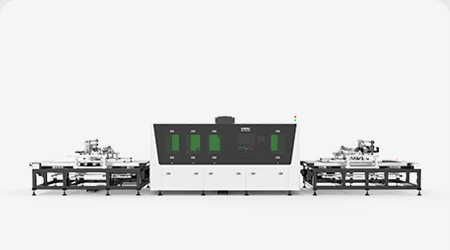
Precision laser cutting & drilling machines
Click any model for full specs and configuration details.
Related technical guides and catalog resources
Build technical context around ultrafast processing, glass laser cutting, process parameters and micro-nano product selection.
Ultrafast Laser Machining Guide
Understand how ultrafast lasers process glass, ceramic, film and precision materials.
Read guide →Glass Laser Cutting Machine Guide
Learn about glass laser processing, edge quality, chipping control and applications.
Read guide →Glass Process Parameters
Review practical process windows, quality factors and sample-test qualification points.
Read guide →Ultrafast Laser Platform
Browse the GWEIKE ultrafast glass and micro-nano product category.
View platform →Micro & Nano Laser Catalog
Download catalog resources for glass cutting, glass drilling, film cutting and precision laser systems.
Download catalog →Precision laser cutting & drilling — what buyers ask first
Quick answers to the questions that come up in most procurement conversations. For application-specific advice, send your material and drawing for a sample test.
What is a precision laser cutting or drilling machine?
A precision laser cutting or drilling machine produces small kerf width or controlled hole quality, low edge defects and tight positioning accuracy, typically using picosecond, UV, MOPA, fiber or CO₂ laser sources matched to the material and tolerance target.
How precise is laser cutting in microns?
Industrial precision laser cutting machines reach repeatability of about ±0.002 to ±0.01 mm and edge chipping of 5–80 microns depending on laser source, material and process parameters.
Which laser type is most precise for glass, drilling and film?
For brittle glass cutting, ultrafast picosecond laser processing typically gives low chipping and microcrack risk. For glass drilling, MOPA or ultrafast laser configurations may be selected by hole requirement. UV, green and CO₂ sources may be more suitable for FPC, PET, OCA and other film workflows depending on application.
How do I choose the right precision laser machine?
Start from the part: material, thickness, geometry, edge tolerance and production volume. Then select the laser source and motion configuration. A sample test on real material is the most reliable validation step.
Test the precision on your actual material
Send a sample part with your tolerance target. GWEIKE engineers will recommend the right precision laser configuration and return a measured cut report.