

Metal laser cutting machine
A metal laser cutting machine in most buyer searches refers to a CNC fiber laser system for sheet metal fabrication (stainless steel, carbon steel, aluminum, galvanized sheet). Some configurations also support tube/pipe cutting, but sheet metal remains the primary selection driver.
Fast path to the right machine (sheet-first):
- Start with your daily thickness and required edge quality (burr/oxidation tolerance).
- Choose a bed size aligned with your sheet stock and nesting workflow.
- Decide on enclosed + exchange table and automation based on takt time and shifts.
Machine fundamentals
See a metal laser cutting machine in action
This short video shows a real fiber laser cutting machine processing metal parts. Watch it to better understand cutting speed, edge quality, and system configuration before exploring specific models.
Choose the right machine in 60 seconds
Most “wrong machine” outcomes come from mismatch between sheet thickness + edge requirement and the selected power/gas/enclosure/automation. Use the checklist below to shortlist the right configuration.
Buyer checklist
- Sheet materials: SS / CS / Al / GI
- Typical thickness: daily jobs vs rare maximum
- Sheet size: 3015 / 4020 / 6025
- Part profile: hole-heavy, sharp corners, thin webs
- Throughput: parts/day + shifts
- Automation: manual vs loader/unloader + tower
Engineer checklist
- Edge quality target: burr/dross tolerance, oxidation allowance
- Gas strategy: N2 clean edge vs O2 productivity
- Process window: stability across thickness variation
- Reflective metals: Al/Cu protection and optics discipline
- Extraction: galvanized fumes and fine particulates
- Software: nesting + pierce library + monitoring (optional)
Fastest way to get a correct configuration
Send DXF + material + thickness + daily volume (and tube profile if applicable). We’ll recommend a power range, gas strategy, and automation level.
Request Free Sample Test & QuotePower–thickness recommendation
Use this table as a practical starting point. Final results depend on nozzle, focus, pierce strategy, gas purity, and the edge quality you accept. For verified references, use the cutting data links.
| Material (sheet) | Typical thickness range | Recommended laser power (starting range) | Assist gas | Notes | Reference |
|---|---|---|---|---|---|
| Stainless steel (SS) | 1–6 mm | 1.5–6 kW | N2 | Clean edge & low oxidation; gas purity matters. | laser cutting data |
| Carbon steel (CS) | 1–12 mm | 3–12 kW | O2 / N2 | Oxygen boosts speed; nitrogen improves paint-ready edge. | laser cutting data |
| Aluminum (Al) | 1–8 mm | 3–12 kW | N2 / Air | Reflective risk: stable optics + protection strategy is critical. | laser cutting data |
| Galvanized steel (GI) | 0.5–3 mm | 1.5–6 kW | Air / N2 | Manage fumes/spatter; coating affects stability. | galvanized sheet metal laser cutting |
| Tube (secondary) | Depends on wall thickness | Select by wall thickness + features | N2 / O2 | Tube is covered as supporting references; see tube section below. | tube capability |
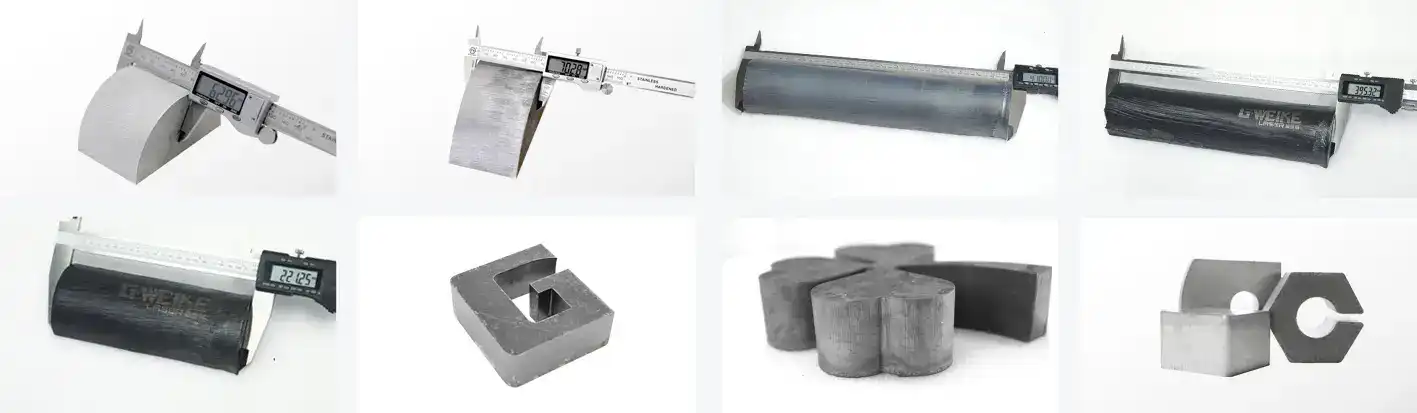
| Tube slot misalignment | Features drift, inconsistent geometry | Chuck slip, tube bend, origin errors, insufficient supports | Chuck pressure; calibration; tube straightness | Add supports; recalibrate; improve clamping and anti-collision setup |
How to use this table
- Select power for your typical thickness first (daily jobs), then validate edge quality (burr/dross/oxidation).
- If parts include many small holes or thin webs, stability and pierce strategy can be more important than straight-line speed.
- If nitrogen cutting is required (cosmetic/paint-ready edge), prioritize gas supply stability and nozzle/optics discipline.
Machine types: sheet metal, tube, combo, and automated lines
Choose the configuration based on your dominant work mix. The goal is to avoid “over-buying” CAPEX or “under-buying” a process window that can’t hold quality.
| Configuration | Best for | What to check | Typical upsides |
|---|---|---|---|
| Sheet metal laser cutting machine | Nested sheet parts | Bed size, power range, acceleration, nesting workflow | Best throughput for sheet; easiest automation integration |
| Tube laser cutting machine | Frames, racks, furniture, structural profiles | Chuck range, supports, anti-collision, optional bevel capability | Efficient tube processing; reduces secondary operations |
| Sheet and tube laser cutting machine | Job shops, mixed orders | Changeover time, tube range limits, programming workflow | One footprint for mixed sheet and tube production |
| Automated line | Multi-shift plants, takt-time control | Loader/unloader cycle, tower capacity, uptime & maintenance | Lower labor per part; stable cycle time |
Explore metal laser cutting machine categories
Sheet metal laser cutting machines
Flat-bed fiber laser systems for stainless steel, carbon steel, aluminum, galvanized sheet, and other metal sheet production.
View sheet metal laser cutting machines →Tube laser cutting machines
Dedicated tube and pipe cutting systems for round tube, square tube, rectangular tube, and structural profiles.
View tube laser cutting machines →Sheet and tube laser cutting machines
Combination systems for workshops and factories that process both flat sheet metal and tube parts.
View sheet and tube laser cutting machines →Fiber laser cutting machine overview
Compare GWEIKE fiber laser cutting machines by machine type, power range, cutting format, and production needs.
View all fiber laser cutting machines →Selection & specs: power, bed size, enclosure, installation
Selection guides (recommended)


Cutting capability: how thick can fiber laser cut?
If you are shortlisting power, start with your daily thickness range and edge quality requirements—then validate a stable process window.
Capability reference
Sheet metal materials & cutting data (engineering evidence)
Material guides & process references
Troubleshooting matrix (burr, dross, oxidation, cut-through)
Keep troubleshooting operational: symptom → likely causes → fast checks → fix direction. The goal is stable sheet cutting results across your production mix.
| Problem | What you see | Typical root causes | Fast checks | Fix direction |
|---|---|---|---|---|
| Burr / dross | Rough bottom edge, slag | Focus off, nozzle wear/misalignment, insufficient gas, speed mismatch | Nozzle centering; protective lens condition; gas pressure/purity | Tune focus; replace nozzle; adjust speed/gas; validate process window |
| Not cutting through | Intermittent cut-through | Low power margin, poor pierce strategy, dirty optics, unstable gas | Pierce timing; lens check; gas supply stability | Improve pierce recipe; clean optics; increase power margin if needed |
| Oxidation on SS | Dark edge, poor cosmetic finish | Wrong gas strategy, low N2 purity/pressure, stand-off issues | Confirm N2 strategy; nozzle type; pressure/purity | Switch/upgrade N2; tune stand-off; stabilize nozzle/lens |
| Warping on thin sheet | Part lifts/distorts | Heat accumulation, poor support, wrong path sequence | Review cutting order; sheet support/hold-down | Optimize sequencing; micro-joints; adjust speed/power; improve support |
Tube & sheet-tube combo capability (specs, use cases & limits)
Important: keep the hub focused on sheet metal
While this hub focuses on sheet metal laser cutting machines, many systems also support tube and pipe processing. The links below are material-specific tube references used as capability evidence and should not change the hub’s main topic.
When tube / combo belongs in your configuration
- Tube-only: best for high-volume tube work (frames, racks, furniture structures) where tube accuracy and supports matter most.
- Sheet-tube combo: best for job shops and factories running mixed orders. Confirm changeover time and tube range limits.
| Capability item | Why it matters | What to confirm |
|---|---|---|
| Chuck range | Determines what OD/side range you can clamp reliably. | Max/min OD (round) + side range (square/rectangle), and whether auto-centering is supported. |
| Max tube length & supports | Long tubes sag; supports protect accuracy and reduce collisions. | Max length, number/type of supports, and how supports move during cutting. |
| Anti-collision & calibration | Tube features drift if rotation/origin is off. | Rotation calibration workflow, origin setting, and anti-collision protection logic. |
| Bevel (optional) | Needed for weld prep and some structural tube parts. | Bevel angle range, cut quality limits, and CAM/programming workflow. |
| Combo changeover | Mixed production wins only if changeover is fast and repeatable. | Sheet↔tube switching steps, typical minutes, and whether fixtures/tools are required. |
Practical limit to remember
If tube is >50% of your daily volume, a dedicated tube platform usually delivers better stability and throughput. If tube is occasional, a combo can be the most efficient footprint—just validate tube range + supports + changeover.
Tube materials & methods
Comparisons & alternatives (optional but high-value)
Process comparisons
Price & budget
Pricing guide
Recommended reading & technical evidence
1) Machine types & how it works
2) Selection: power, bed size, enclosure, installation
3) Cutting capability & thickness
4) Sheet metal materials & cutting data
5) Tube cutting: pipes & profiles
6) Comparisons & alternatives
FAQ
1) What is a metal laser cutting machine?
A metal laser cutting machine is a CNC (typically fiber) laser system designed to cut sheet metal and/or tube with repeatable edge quality, controllable heat input, and automation-friendly workflows.
2) How much power do I need for stainless steel laser cutting?
For common stainless sheet work (about 1–6 mm), buyers often shortlist 1.5–6 kW depending on throughput and edge quality requirements. Validate on your parts and confirm a stable process window.
3) Can one machine cut both sheet metal and tube?
Yes. A sheet & tube combo system is a common option for mixed production. Confirm tube range (chuck), supports, changeover time, and whether bevel cutting is needed.
4) What assist gas should I use for stainless steel?
Nitrogen is commonly used to achieve a clean, low-oxidation edge. Oxygen can increase speed on some materials but may oxidize edges; choose based on downstream finishing and quality targets.
5) How do I reduce burr and dross?
Most burr/dross issues relate to focus position, nozzle condition/centering, gas flow/pressure, and speed mismatch. Use the troubleshooting matrix to isolate causes, then validate changes within a stable process window.
6) Is it safe to cut galvanized sheet metal with a laser?
It can be done, but you must manage fumes and coating behavior. Ensure proper ventilation/dust extraction and optimize settings to reduce spatter and burr. See the galvanized guide under Technical evidence.
7) When do I need automation (loader/unloader or tower)?
Automation is most valuable when labor per part is high, you run multiple shifts, or you need consistent takt time. Evaluate payback using throughput, handling method, and rework rate.
Request a recommended configuration (sheet-first)
To get the fastest recommendation, send: material + thickness + part size + daily volume (and tube profile details only if tube work is part of your production mix).
What to send
- DXF / drawing (optional but recommended)
- Sheet material + thickness range
- Sheet size and part dimensions
- Quality requirement (burr/oxidation tolerance)
- Target throughput (parts/day or shifts)
- (Optional) tube profile + wall thickness + length
Need stable cutting results on your sheet parts?
Share DXF + material + thickness. We’ll recommend a sheet-focused configuration (power range + bed size + enclosure/automation), then validate via sample test if needed. Tube/pipe capability can be added as a secondary requirement.